Why Does Wes Anderson Use Miniatures in His Films?
TL;DR
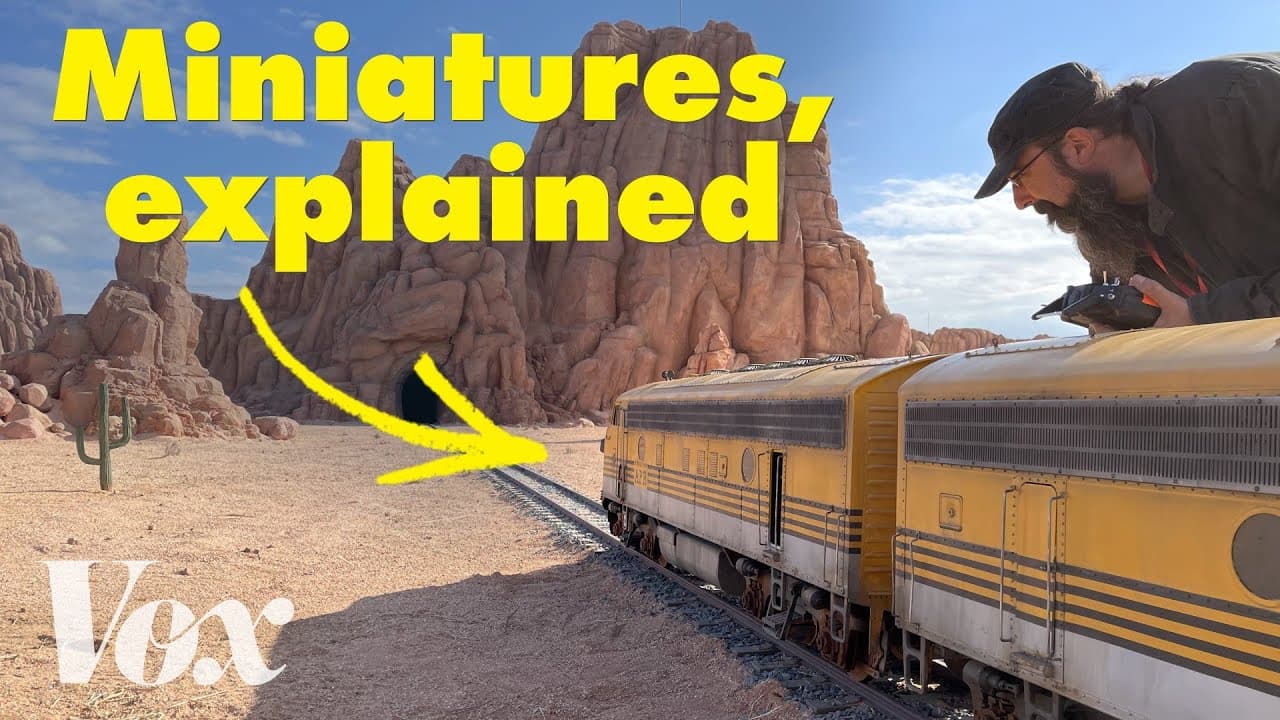
Wes Anderson uses miniatures in his films to achieve a unique artistic quality that enhances storytelling and creates stylized narratives. This traditional filmmaking technique allows for intricate detail and a tangible aesthetic that CGI often lacks. Filmmakers utilize miniatures alongside digital effects to create expansive sets and visually striking scenes.
Transcript
One thing I love in movies is miniatures. Like, did you know the Poltergeist house was only 42 inches (107 cm) wide? And the DeLorean from “Back to the Future” is a miniature. So were the kids in “E.T.” Okay. Okay. I know what you're thinking. Those are all old movies. Of course they use miniatures, ya old grandpa. And you're not wrong. All th... Read More
Key Insights
- Miniatures are a traditional filmmaking technique that many filmmakers, including Wes Anderson, still use to create realistic and stylized worlds.
- Simon Weisse, a model maker, has worked on several Wes Anderson films, creating intricate miniatures that blend seamlessly into the film's narrative.
- Miniatures are used for expansive sets, fantasy vehicles, and explosive scenes, providing a cost-effective and visually striking alternative to CGI.
- The scale of miniatures has increased over time to ensure greater detail and realism, with some models being as large as 4 meters wide.
- Filmmakers use techniques like forced perspective and strategic lighting to make miniatures appear life-sized, enhancing their visual impact on screen.
- While CGI is prevalent, miniatures offer a tangible, artistic quality that some directors prefer for their unique texture and authenticity.
- The integration of miniatures with CGI and live-action elements allows for a seamless blend of traditional and modern filmmaking techniques.
- Despite the rise of CGI, miniatures remain a popular choice in commercials and films for their artistic value and nostalgic appeal.
Install to Summarize YouTube Videos and Get Transcripts
Explore YouTube Video Summarizer or Get YouTube Transcript Extractor
Questions & Answers
Q: How do filmmakers make miniatures appear life-sized?
Filmmakers use techniques such as forced perspective, strategic lighting, and specific camera lenses to make miniatures appear life-sized. By adjusting the focus and distance, they can create the illusion of a larger scale. Additionally, filming in bright sunlight enhances realism, and using wider lenses allows for a more expansive view.
Q: Why do some filmmakers prefer miniatures over CGI?
Some filmmakers prefer miniatures over CGI for their tangible, artistic quality and unique texture. Miniatures offer a sense of authenticity and nostalgia that CGI cannot replicate. Directors like Wes Anderson appreciate the old-fashioned techniques and the ability to create stylized, handcrafted worlds that resonate with audiences on a different level.
Q: What challenges do filmmakers face when using miniatures?
Filmmakers face several challenges when using miniatures, including the need for precise detailing to ensure realism, the difficulty of filming with natural elements like water and fire, and the necessity of achieving the correct scale. Additionally, integrating miniatures with CGI and live-action footage requires careful planning and execution to maintain a seamless visual narrative.
Q: How has the use of miniatures evolved in modern filmmaking?
In modern filmmaking, the use of miniatures has evolved with advancements in technology and filmmaking techniques. The scale of miniatures has increased to provide greater detail, and they are often combined with CGI for enhanced realism. Despite the prevalence of digital effects, miniatures remain popular for their unique aesthetic and ability to create visually striking, tangible worlds.
Q: What role do miniatures play in films like The Grand Budapest Hotel?
In films like The Grand Budapest Hotel, miniatures play a crucial role in establishing the film's whimsical and stylized aesthetic. They are used to create expansive sets and intricate details that enhance the narrative and visual storytelling. The use of miniatures allows for a handcrafted, artistic quality that aligns with Wes Anderson's unique filmmaking style.
Q: Why are miniatures still used in commercials and films today?
Miniatures are still used in commercials and films today for their artistic value and ability to create realistic, detailed worlds. They offer a tangible alternative to CGI, providing a unique texture and authenticity that resonates with audiences. Additionally, miniatures can be a cost-effective solution for creating expansive sets and intricate designs.
Q: What are the benefits of using miniatures in filmmaking?
The benefits of using miniatures in filmmaking include the ability to create detailed, tangible worlds that enhance the visual narrative. They offer a unique aesthetic that CGI cannot replicate and can be a cost-effective solution for creating expansive sets and fantasy vehicles. Miniatures also provide a sense of nostalgia and authenticity that appeals to both filmmakers and audiences.
Q: How do filmmakers integrate miniatures with CGI and live-action elements?
Filmmakers integrate miniatures with CGI and live-action elements by carefully planning the visual composition and using techniques like greenscreen and forced perspective. This combination allows for a seamless blend of traditional and modern filmmaking techniques, enhancing the storytelling and visual impact. The integration process requires meticulous attention to detail to ensure a cohesive and realistic final product.
Summary & Key Takeaways
-
Miniatures have been a staple in filmmaking for decades, offering a tangible and detailed method for creating expansive and fantastical worlds. Wes Anderson is among the filmmakers who continue to use this technique, valuing its artistic quality and ability to create stylized narratives.
-
Simon Weisse, a renowned model maker, has crafted miniatures for films like The Grand Budapest Hotel, demonstrating the intricate work involved in making these models appear life-sized through careful attention to detail, scale, and perspective.
-
While CGI dominates modern filmmaking, miniatures still hold an important place, providing a unique aesthetic and practical benefits for creating realistic sets and vehicles, with filmmakers often combining them with digital effects for enhanced storytelling.
Read in Other Languages (beta)
Share This Summary 📚
Summarize YouTube Videos and Get Video Transcripts with 1-Click
Try YouTube Summary with ChatGPT & Claude or YouTube Transcript Generator
Explore More Summaries from Vox 📚
Summarize YouTube Videos and Get Video Transcripts with 1-Click
Try YouTube Summary with ChatGPT & Claude or YouTube Transcript Generator