What Are the Molecular Machines in Your Body?
TL;DR
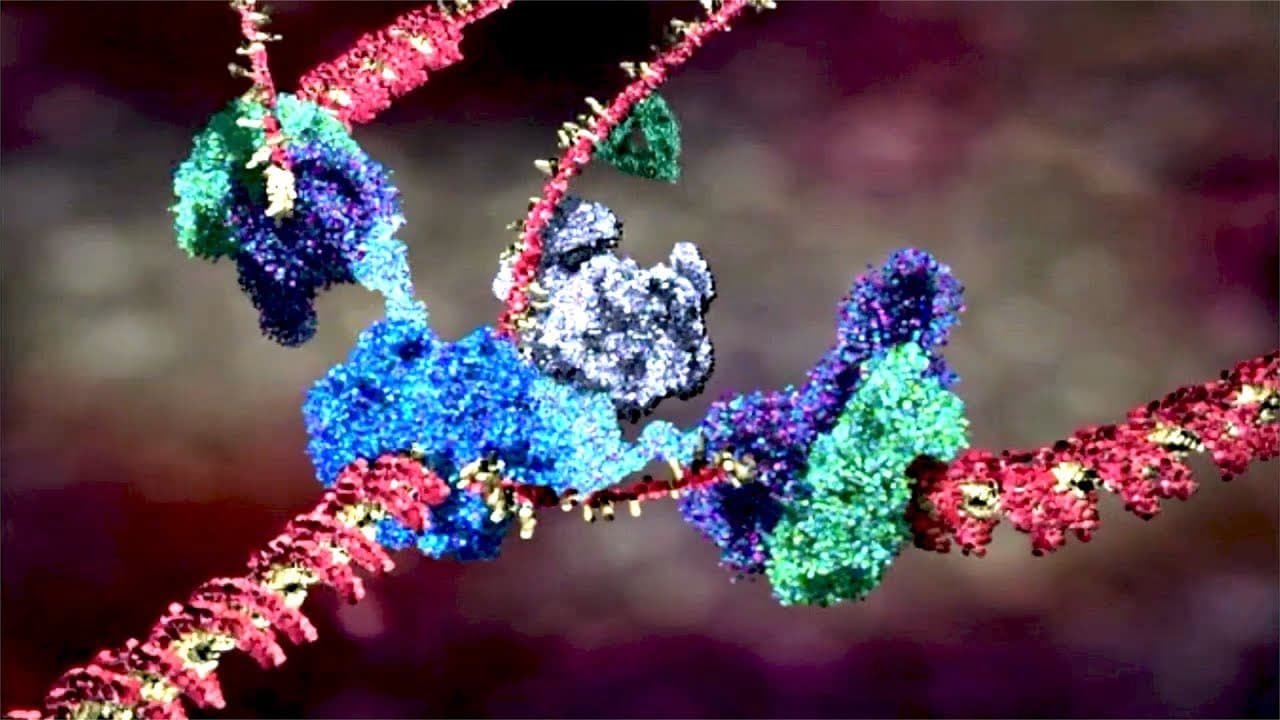
Molecular machines in the body, such as helicase and kinetochore, are essential for cell division by unwinding DNA and separating chromosomes. These tiny structures enable the replacement of billions of cells that die each day, indicating potential for future development of nanobots for cellular repair. Understanding their mechanisms could unlock significant medical advancements.
Transcript
These are tiny molecular machines, and they are doing this inside your body - right now. To understand why, we have to zoom out. Every day, in an adult human body, 50 to 70 billion of your cells die. Either they're stressed, or damaged, or just old. But this is normal - in fact, it's called "programmed cell death". But, to make up for all these los... Read More
Key Insights
- 🥳 Billions of cells die every day in the human body, but cell division replaces them.
- 🎰 Molecular machines, such as helicase and kinetochore, are essential for DNA replication and chromosome separation during cell division.
- ❓ The kinetochore is one of the most sophisticated molecular mechanisms in the body, ensuring accurate chromosome separation.
- 🎰 The existence of these molecular machines suggests the possibility of developing nanobots for repairing the body's cells.
- 🦾 Further research is needed to fully understand the mechanics of chromosome separation during cell division.
- 👨🔬 Scientists, such as Drew Berry, have created accurate depictions of these molecular machines through detailed research.
- 🎰 The complexity and precision of these molecular machines inside our bodies are astounding.
Install to Summarize YouTube Videos and Get Transcripts
Explore YouTube Video Summarizer or Get YouTube Transcript Extractor
Questions & Answers
Q: What is programmed cell death, and why is it important?
Programmed cell death, or apoptosis, is a normal process in which cells die due to stress, damage, or old age. It is essential to maintaining healthy cellular function and eliminating unnecessary or faulty cells.
Q: How does DNA replication occur during cell division?
DNA replication begins with the unwinding and separation of the two strands of DNA by a molecular machine called helicase. One strand is copied continuously while the other is assembled section by section in the opposite direction.
Q: What is the role of histones and chromatin in preventing DNA tangling?
DNA, once replicated, is wrapped around proteins called histones, forming nucleosomes. These nucleosomes are bundled into chromatin fibers and further coiled to form chromosomes. This organization prevents DNA tangling and ensures proper cell division.
Q: What is the function of the kinetochore during cell division?
The kinetochore is a complex structure consisting of hundreds of proteins. It connects chromosomes to microtubule fibers and helps align them correctly. It also plays a role in sensing tension and signaling when the chromosome is ready to divide.
Summary & Key Takeaways
-
Every day, billions of cells die in the human body, but cell division creates new cells to replace them.
-
Cell division, also known as mitosis, requires the use of tiny molecular machines.
-
These machines, such as helicase and kinetochore, play crucial roles in unwinding DNA and separating and aligning chromosomes during cell division.
Read in Other Languages (beta)
Share This Summary 📚
Summarize YouTube Videos and Get Video Transcripts with 1-Click
Try YouTube Summary with ChatGPT & Claude or YouTube Transcript Generator
Explore More Summaries from Veritasium 📚



Summarize YouTube Videos and Get Video Transcripts with 1-Click
Try YouTube Summary with ChatGPT & Claude or YouTube Transcript Generator