What Is the Most Controversial Idea in Evolution?
TL;DR
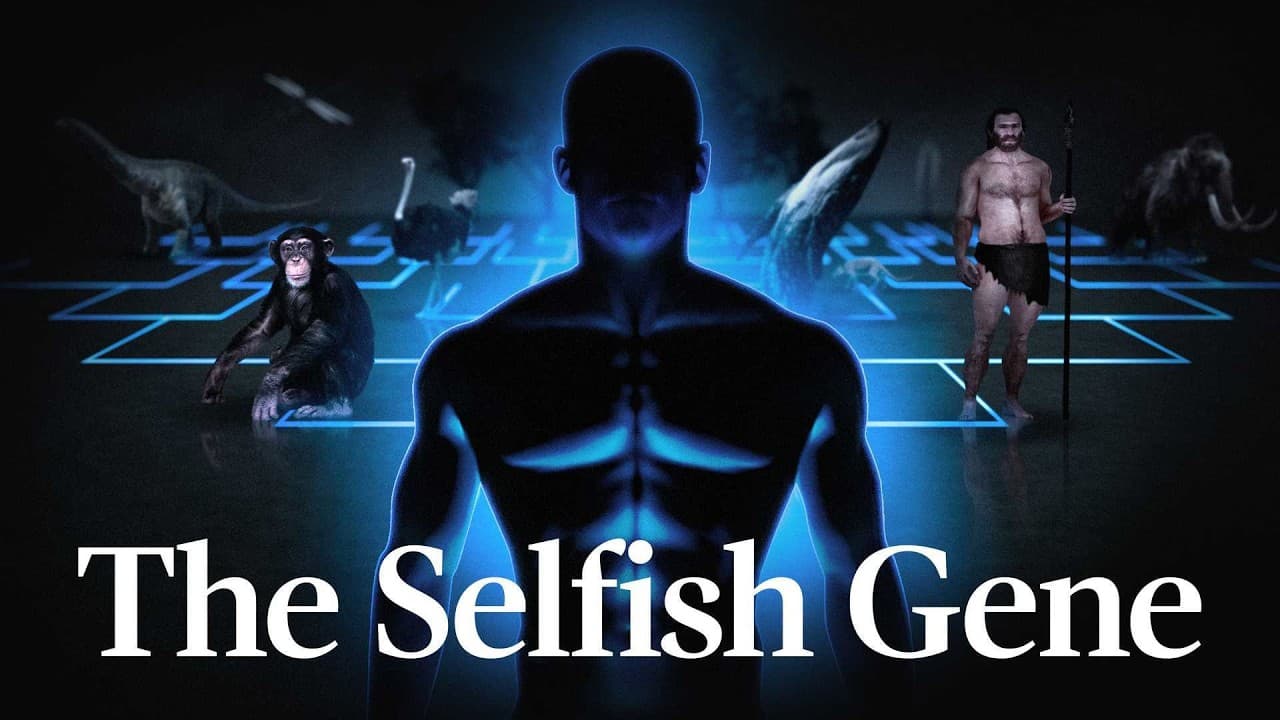
The video explores the concept that natural selection is fundamentally about the survival of the fittest genes rather than individuals or species. It explains the role of genes in evolution, highlighting how traits that aid gene survival become prevalent. The discussion also covers kin selection and critiques of the gene-centric view, emphasizing the complexity and randomness in evolution.
Transcript
If you want to know if someone really understands evolution, just ask them this one weird question. Why does poop smell bad? Oh. Oh, gosh. Because it has bacteria in it, I guess? Microbiome, probably. Trash- Yeah, trash from the gut. ... of the body. The food we eat? Because of the chemicals? Farts don't always smell bad. Yeah. Well, that's a diff... Read More
Key Insights
- Poop smells bad to humans because it contains bacteria that can be harmful, but it smells good to flies due to its nutrients.
- Altruism in nature challenges the idea of selfish individuals, as seen in bees, ants, and other animals that sacrifice for the group.
- Natural selection requires replication and a pruning process to favor certain traits, but species don't replicate like individuals.
- The origin of life involved simple molecules gaining stability and complexity over time, leading to the first replicators.
- Genes are the core unit of natural selection, replicating traits that enhance survival and reproduction.
- Kin selection explains altruistic behaviors as strategies to preserve shared genes among relatives.
- Genetic drift shows that not all evolutionary changes are due to natural selection; chance plays a role.
- The Selfish Gene theory posits that genes drive evolution, but it faces criticisms for oversimplification and implying agency.
Install to Summarize YouTube Videos and Get Transcripts
Explore YouTube Video Summarizer or Get YouTube Transcript Extractor
Questions & Answers
Q: Why does poop smell bad to humans?
Poop smells bad to humans because it contains bacteria that can be harmful if ingested. This aversion to the smell is an evolutionary adaptation to avoid potential pathogens. In contrast, flies find the smell attractive as it indicates a nutrient-rich food source.
Q: How does altruism fit into natural selection?
Altruism in nature can be explained by kin selection, where individuals perform selfless acts to help relatives who share their genes. This behavior increases the likelihood that shared genes will be passed on, even if it reduces the individual's own survival chances.
Q: What is the gene-centric view of evolution?
The gene-centric view of evolution, popularized by Richard Dawkins' book 'The Selfish Gene,' posits that genes are the primary unit of natural selection. Traits that enhance gene survival and replication become more common, driving evolution at the genetic level rather than focusing on individuals or species.
Q: What is genetic drift and how does it affect evolution?
Genetic drift is the random fluctuation of gene variants in a population, particularly in small populations or for traits not subject to natural selection. It can lead to the spread of less advantageous genes purely by chance, highlighting the role of randomness in evolution alongside natural selection.
Q: Why do most animals reproduce sexually despite the apparent inefficiency?
Sexual reproduction introduces genetic variation by mixing genes from two parents, which can be advantageous in adapting to changing environments. While it seems inefficient because only half of each parent's genes are passed on, the variation it provides can benefit the genes that regulate sexual reproduction.
Q: What role do mutations play in evolution?
Mutations introduce new genetic variations, which can be beneficial, harmful, or neutral. Beneficial mutations may enhance an organism's survival and reproductive success, becoming more common through natural selection. Mutations are a key driver of evolutionary change, providing raw material for selection to act upon.
Q: Why is the gene considered the unit of natural selection?
The gene is considered the unit of natural selection because it can independently influence traits that affect survival and reproduction. It is stable enough to be faithfully copied across generations, unlike smaller units like nucleotides or larger ones like chromosomes that do not replicate as cohesive units.
Q: What are the criticisms of the Selfish Gene theory?
Critics argue that the Selfish Gene theory oversimplifies evolution by implying genes have agency and downplaying the role of chance. It suggests all genes are selected for, ignoring genetic drift. The theory also faces challenges in explaining complex genetic interactions and environmental influences on gene expression.
Summary & Key Takeaways
-
The video discusses the role of genes in evolution, emphasizing that natural selection favors the survival of the fittest genes rather than individuals or species. It explores the concept of kin selection, where altruistic behaviors help preserve shared genes among relatives.
-
The video critiques the gene-centric view, noting that genetic drift and chance also play roles in evolution. It explains that genes are the core unit of natural selection, replicating traits that enhance survival and reproduction, but not all genes are subject to selection.
-
The video uses simulations to illustrate how traits evolve and highlights the complexity of genetic interactions. It concludes that while genes drive evolution, the process is influenced by environmental factors and randomness, challenging the notion of 'selfish' genes.
Read in Other Languages (beta)
Share This Summary 📚
Summarize YouTube Videos and Get Video Transcripts with 1-Click
Try YouTube Summary with ChatGPT & Claude or YouTube Transcript Generator
Explore More Summaries from Veritasium 📚

Summarize YouTube Videos and Get Video Transcripts with 1-Click
Try YouTube Summary with ChatGPT & Claude or YouTube Transcript Generator