How can we build safe superintelligence and agents?
TL;DR
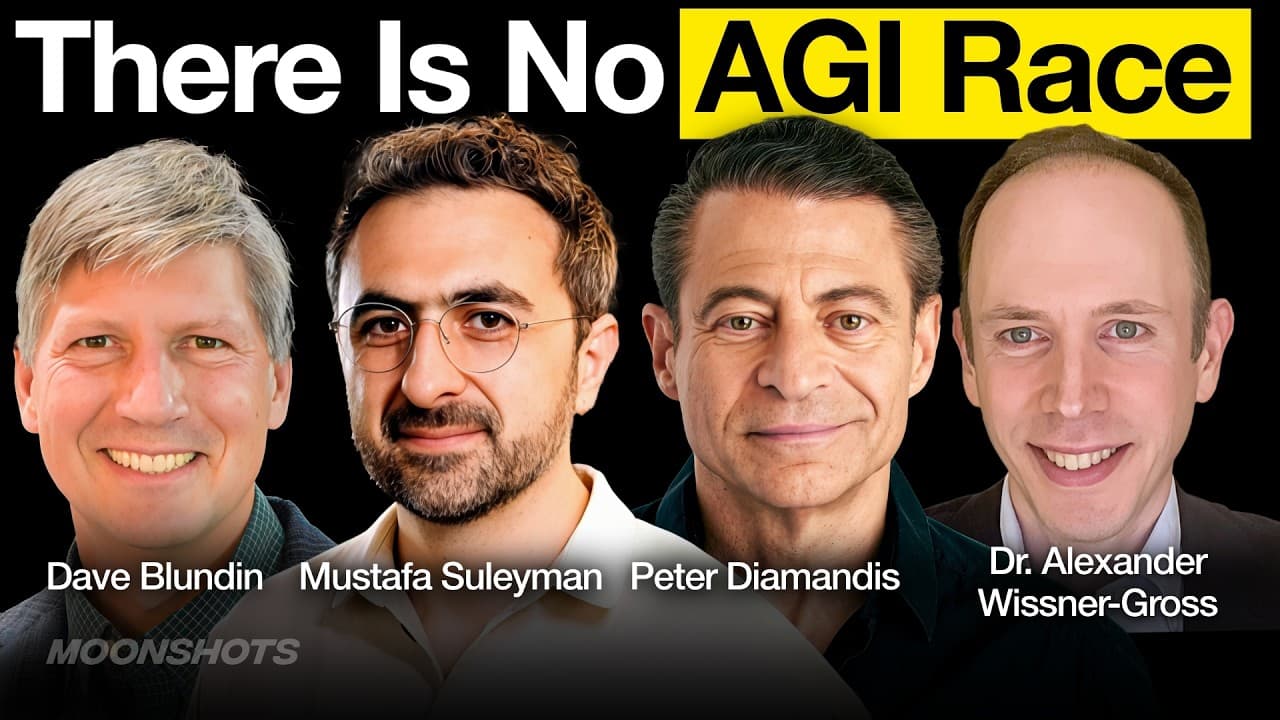
Mustafa Suleyman argues there is no clear AGI race and emphasizes safety as a moonshot priority. He describes a transition from traditional software to agent based interfaces and contends that Microsoft should focus on open access through APIs while certifying reliability and trust. The conversation explores long term foundations for safe, scalable AI at scale.
Transcript
What's the mandate from SATA? Is it win AGI? I don't think there's really a winning of AGI. I'm not sure there's a race. One of the OGs of the AI world, Mustafa Saliman is the CEO now of Microsoft AI. He spent more than a decade at the forefront of this industry before uh we even had gotten to feel it in the past couple of years. Now, fundamentally... Read More
Key Insights
- Mustafa argues there is no winning AGI race and that the race concept may be the wrong metaphor for AI progress.
- The path forward involves moving from traditional software interfaces to agent based systems that operate with user context 24/7.
- Microsoft aims to provide open access through APIs while building certified agents that emphasize reliability, safety, and trust.
- The company leverages its scale in data centers and enterprise relationships to support a stable foundation for AI deployment.
- Open source versus open access is viewed as a spectrum where access and certification are prioritized.
- The industry should balance rapid model deployment with careful safety measures and governance to manage risk.
- The shift to agentic AI implies new economic benchmarks focused on agents performing tasks with reliability and trust.
Install to Summarize YouTube Videos and Get Transcripts
Explore YouTube Video Summarizer or Get YouTube Transcript Extractor
Questions & Answers
Q: What is Mustafa Suleyman's view on the AGI race and its finish line?
Mustafa suggests that there is not a true winning or finish line in an AGI race. He describes the metaphor as potentially misleading because technologies and knowledge proliferate widely and rapidly. He emphasizes a long term, safe, and steady progression rather than a zero sum contest, focusing on how to guide development responsibly.
Q: How does Mustafa describe the transition Microsoft is pursuing with AI?
He explains a shift from traditional operating systems, search engines, apps, and browsers to a world of AI agents and companions. He envisions interfaces becoming subsumed into conversational agents that can operate with full context and act as a constant assistant, enabling users to do less direct computing and more task automation.
Q: What role do APIs play in Microsoft’s AI strategy according to the interview?
APIs are described as a core part of Microsoft’s platform approach. They will provide powerful models and enable others to be productive. The distinction between API and agent may blur as agents themselves could be certified and reliable, with open access being a key feature, integrating safety and trust into the API based ecosystem.
Q: How does Mustafa view open source versus open access for AI models?
He leans toward open access rather than pure open source, suggesting that while small open source models exist, the emphasis is on broad access to powerful models via APIs. This aligns with Microsoft’s platform strategy of providing infrastructure and tooling that enables enterprise safety, security, and trust in AI deployments.
Q: What does Mustafa say about safety and a moonshot approach?
Safety is framed as a moonshot, a bold long term goal requiring significant human and computational effort. He indicates that while shipping models quickly matters, creating a foundation that ensures reliability, security, and ethical considerations is essential for the widespread and safe adoption of agentic AI.
Q: How does the interview describe Microsoft’s scale and its effect on AI development?
The discussion highlights Microsoft as a massive, resource rich company with extensive data center capacity and enterprise relationships. This scale provides stability, trust, and the ability to invest in durable AI infrastructures and first party products across domains, which is viewed as a competitive advantage for safe, long term AI deployment.
Q: What is the envisioned end state of AI agents in everyday life according to the video?
Agents are imagined as real life assistants embedded in daily activities, capable of handling complex tasks across contexts and maintaining user specific information. This vision emphasizes convenience, efficiency, and sustained context awareness, with agents gradually taking on more autonomous and reliable roles in both work and personal life.
Q: What governance or safety considerations are emphasized in the conversation?
The conversation centers on safety, trust, and reliability as central pillars for agent development. There is an expectation that agents carry certifications of safety and be governed by stringent security measures. This governance framework is presented as essential to ensure responsible deployment and user protection in a rapidly advancing AI landscape.
Summary & Key Takeaways
-
Mustafa argues there is no winner take all AGI race and emphasizes a non zero sum view of progress.
-
Microsoft is positioned as a platform of platforms with a focus on safety, trust, and certifiable agents.
-
The discussion covers shifting user interfaces to AI agents and the importance of safe, scalable infrastructure at scale.
Read in Other Languages (beta)
Share This Summary 📚
Summarize YouTube Videos and Get Video Transcripts with 1-Click
Try YouTube Summary with ChatGPT & Claude or YouTube Transcript Generator
Explore More Summaries from Peter H. Diamandis 📚

Summarize YouTube Videos and Get Video Transcripts with 1-Click
Try YouTube Summary with ChatGPT & Claude or YouTube Transcript Generator