How Did Starbucks Grow Into an $80B Business?
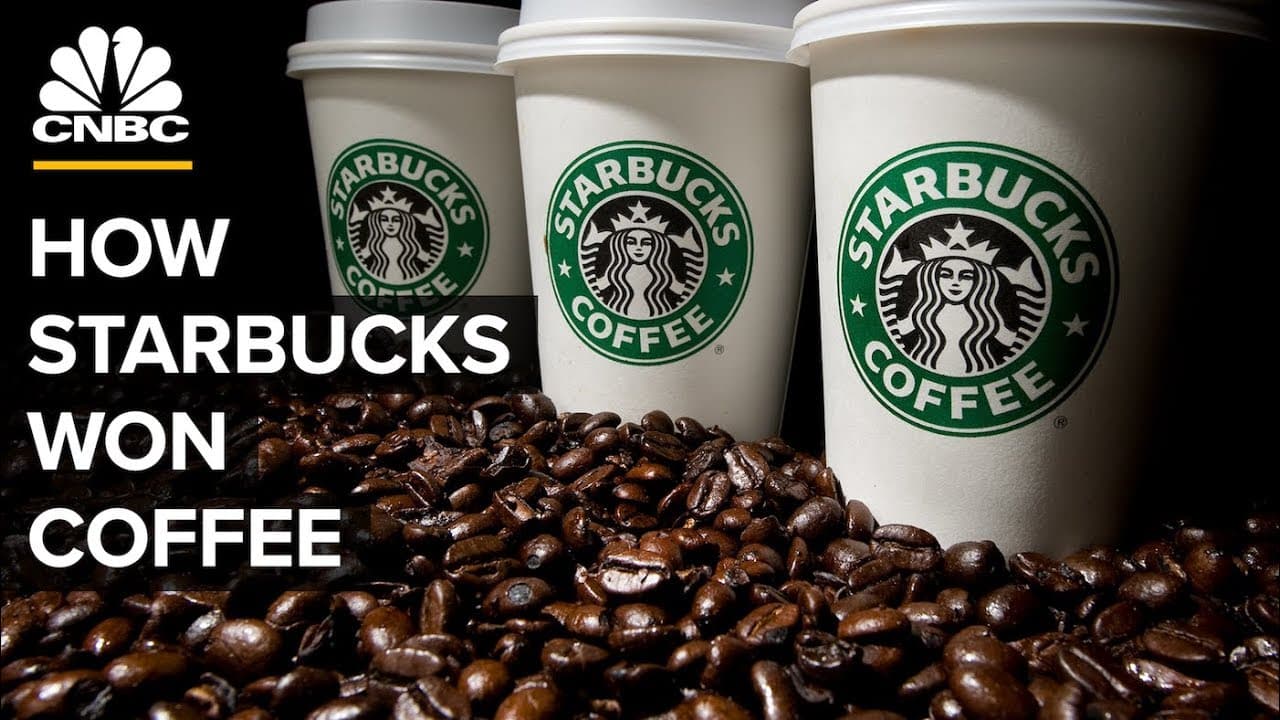
TL;DR
Starbucks became an $80 billion business by turning a Seattle coffee bean shop into a global cafe chain, then scaling aggressively under Howard Schultz. Its growth depended on premium coffee, espresso-based drinks, and a distinctive store experience, but market saturation eventually reduced transactions at individual locations, forcing the company to close stores, refine expansion, and develop lighter drinks, delivery, and upscale Roasteries.
Transcript
With nearly 30,000 cafes across the globe, Starbucks has become more than just a household name. From its iconic cups, often adorned with misspelled names, to the espresso inside them, Starbucks has catapulted from one coffee bean shop in Seattle to a sprawling $80 billion business over the last 47 years. Starbucks sales account for 57 percent of t... Read More
Key Insights
- Starbucks began as a coffee bean shop and roastery at Seattle's Pike Place Market in 1971. Its founders focused on supplying high-quality beans to customers accustomed to instant or canned coffee, because American coffee culture offered little demand for cafes or espresso-based beverages at the time.
- Howard Schultz transformed Starbucks by proposing that its bean stores become Italian-inspired cafes. After Starbucks served its first latte in 1984 and the experiment succeeded, Schultz partnered with investors to buy the company for $3.8 million four years later, when he was 34.
- Aggressive expansion was the central growth strategy under Schultz. Starbucks had 165 stores when it went public in 1992, surpassed 1,000 locations by 1996, entered Japan and Singapore, and reached 2,000 locations only three years after the public offering.
- Starbucks more than quadrupled its cafe count between 2000 and 2007, growing from 3,500 stores to over 15,000. It opened an average of 1,500 stores annually during that period, while sales increased from $2 billion to $9.4 billion.
- The 2007 financial crash exposed Starbucks' vulnerability to reduced discretionary spending. Its stock price fell by 50 percent as consumers pulled back from expensive coffee, prompting the company to bring Howard Schultz back and replace aggressive expansion with an operational and customer-experience turnaround.
- Schultz's turnaround centered on restoring coffee quality and the theater of cafe service. Starbucks closed every U.S. location for one afternoon to retrain more than 135,000 baristas, resumed in-house grinding, removed automatic espresso machines, and temporarily stopped selling breakfast sandwiches.
- Store saturation can increase company-wide sales while weakening individual locations. With more than 14,000 U.S. stores, Starbucks made its cafes compete with one another, reduced transactions at individual stores, and relied partly on price increases that risked driving customers away.
- Starbucks responded to stagnating visits by closing more stores, focusing future expansion, promoting cold brew and Refreshers, planning broader delivery, and developing Starbucks Reserve Roasteries. The Shanghai Roastery initially averaged $64,000 in daily sales, twice what a regular cafe made in a week.
Install to Summarize YouTube Videos and Get Transcripts
Explore YouTube Video Summarizer or Get YouTube Transcript Extractor
Questions & Answers
Q: How did Starbucks become an $80 billion business?
Starbucks grew by evolving from a Seattle coffee bean shop into an international cafe chain. Howard Schultz introduced an Italian-inspired cafe concept, acquired the company for $3.8 million, and pursued aggressive expansion. Starbucks combined premium coffee with espresso-based drinks, recognizable cups, and a distinctive store experience. By 2017, it operated 28,000 cafes worldwide, although this scale also created store saturation and sales cannibalization.
Q: What did Starbucks originally sell when it opened?
Starbucks originally sold roasted coffee beans rather than prepared espresso drinks. The founders opened a coffee bean shop and roastery at Seattle's Pike Place Market in 1971, with assistance from Alfred Peet. Customers bought beans to take home, or employees ground the beans for them in the store. This model reflected the limited American cafe culture and weak demand for espresso-based beverages during the 1970s.
Q: How did Howard Schultz change the Starbucks business model?
Howard Schultz questioned why Starbucks did not sell prepared beverages after joining as its professional Director of Marketing and Sales. Following a 1983 trip to Italy, he proposed transforming the company's coffee bean stores into cafes. Starbucks tested the idea by serving its first latte in 1984. The experiment succeeded, and Schultz later partnered with investors to purchase Starbucks and expand the cafe model aggressively.
Q: How quickly did Starbucks expand under Howard Schultz?
Starbucks expanded from 165 stores at its 1992 public offering to more than 1,000 locations by 1996, including its first international cafes in Japan and Singapore. It reached 2,000 locations three years after going public. Between 2000 and 2007, its store count rose from 3,500 to over 15,000, with an average of 1,500 openings per year and 2,500 openings in 2007 alone.
Q: Why did Starbucks struggle during the 2007 financial crash?
Starbucks struggled because its rapid expansion coincided with a sharp reduction in consumer spending. Cash-strapped customers backed away from expensive coffee habits, the company's growth halted, and its stock price fell by 50 percent. The downturn revealed that opening stores rapidly could not replace a compelling customer experience. Starbucks responded by bringing Howard Schultz back, slowing expansion, closing cafes, and retraining employees.
Q: How did Howard Schultz restore Starbucks after returning?
Schultz halted growth and redirected attention toward coffee quality and the cafe experience. Starbucks closed more than 600 cafes in 2008 and another 300 in 2009, while laying off around 6,700 baristas. It also closed every U.S. store for one afternoon to retrain more than 135,000 baristas, restored in-house grinding, and removed automatic espresso machines that reduced the theater of drink preparation.
Q: Why can having too many Starbucks stores hurt sales?
A dense store network can cause Starbucks locations to compete with one another for the same customers. With more than 14,000 U.S. locations, customers can easily switch between nearby cafes, so total company sales may rise while transactions and comparable sales at individual stores weaken. Starbucks attempted to offset lower transactions with higher prices, but frequent or rapid price increases could also push customers away.
Q: How did Starbucks respond to changing customer preferences?
Starbucks began shifting attention away from sugar-heavy beverages as customers showed greater interest in lighter choices. Its signature Frappuccinos contained an average of 57 grams of sugar, more than double the recommended daily limit stated in the transcript. The company promoted cold brew and fruity Refreshers, planned delivery for a quarter of company-owned stores by mid-2019, and continued developing experiential Reserve Roasteries.
Summary & Key Takeaways
-
Starbucks began in Seattle in 1971 as a coffee bean shop and roastery, supported by Peet's founder Alfred Peet. It initially sold high-quality beans rather than prepared drinks. After joining the company, Howard Schultz proposed an Italian-inspired cafe model, and Starbucks served its first latte in 1984 before Schultz acquired the company.
-
Schultz pursued aggressive expansion after buying Starbucks for $3.8 million. The company grew from 165 stores when it went public in 1992 to more than 15,000 cafes by 2007. Sales rose from $2 billion to $9.4 billion between 2000 and 2007, but the financial crash exposed weaknesses in its rapid growth.
-
After returning during the downturn, Schultz closed underperforming stores, retrained baristas, and restored the cafe experience. Starbucks later resumed expansion and reached 28,000 cafes by 2017, creating concerns about sales cannibalization. Its response included targeted closures, more focused growth, lighter beverages, delivery, and tourist-oriented Starbucks Reserve Roasteries.
Read in Other Languages (beta)
Share This Summary 📚
Summarize YouTube Videos and Get Video Transcripts with 1-Click
Try YouTube Summary with ChatGPT & Claude or YouTube Transcript Generator
Explore More Summaries from CNBC 📚






Summarize YouTube Videos and Get Video Transcripts with 1-Click
Try YouTube Summary with ChatGPT & Claude or YouTube Transcript Generator