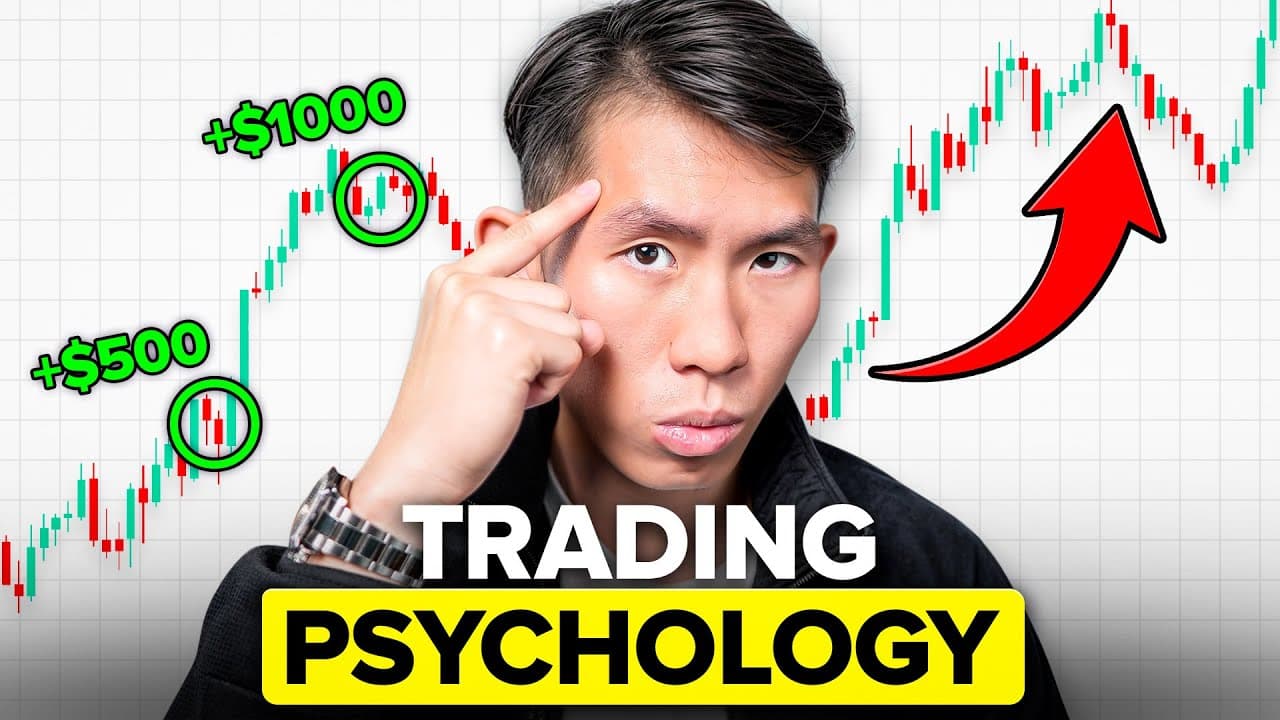
How to Master Trading Psychology and Emotions in 48 Minutes
TL;DR
Master trading psychology by developing both a technical edge, a tested strategy with positive expectancy, and a mental edge that keeps fear, greed, and revenge trading from controlling execution. Build a precise trading plan, then validate it through hundreds or thousands of back-tested and forward-tested trades before risking real money. Read on to see how market mechanics, testing, and data-driven confidence work together.
Transcript
99% of Traders fail within their first five years and it's not because the markets are unfair it's because they never Master two key things their mindset and their strategy as someone who had buat the odds and helped hundreds of students became six figure Traders I'm going to show you exactly how to become a top 1% Trader that actually wins on a co... Read More
Key Insights
- 99% of traders fail within their first five years, not because markets are unfair, but because they never master two things: their mindset and their strategy.
- Trading psychology is useless if you lack a proven system. Advice like 'control your emotions' does nothing while you are stuck in a losing cycle using a random strategy found on YouTube.
- An edge is a system with positive expectancy over time. It does not guarantee winning 100% of trades but increases the odds of success and gives a competitive advantage over the competition.
- A trading plan is a set of criteria that tells you exactly when to enter the market and when to exit, removing guesswork and giving you confidence in your execution.
- Back testing evaluates a strategy against past market data across hundreds or thousands of trades to confirm it has positive expectancy before any real money is risked.
- Forward testing, or paper trading, exposes a strategy to live conditions like slippage and spreads without risking real money, covering what back testing cannot fully account for.
- Lack of confidence shows up two ways: traders jump into trades too early on impulse, or hesitate at the perfect entry waiting for a perfect confirmation that never comes.
- Proving your edge with real data from hundreds of trades removes roughly 90% of emotions, so you stop second guessing, don't panic during losing streaks, and don't close winners early.
Install to Summarize YouTube Videos and Get Transcripts
Explore YouTube Video Summarizer or Get YouTube Transcript Extractor
Questions & Answers
Q: How do you master trading psychology and emotions?
Master both the technical edge, which is your strategy, and the mental edge, which is your mindset. Build a mechanical trading plan with clear entry and exit criteria, then back test and forward test it until real data gives you confidence to follow it without fear-driven second guessing.
Q: Why do 99% of traders fail within their first five years?
According to the speaker, 99% of traders fail within their first five years because they do not master both mindset and strategy. Many can analyze charts but still chase losses, revenge trade, and let fear and greed control their decisions until they quit.
Q: Can trading psychology alone make you profitable?
No; psychology techniques cannot compensate for an unprofitable or unproven system. However, even an 80% win-rate strategy can lose money when the trader lacks emotional control, so consistent profitability requires both strategy and mindset.
Q: What is a trading edge?
A trading edge is a system with positive expectancy over time that increases the odds of success without guaranteeing wins on 100% of trades. It takes the form of a trading plan with specific criteria for entering and exiting the market.
Q: What does the market mechanics strategy include?
The speaker's market mechanics edge combines market structure, institutional zones, liquidity concepts, and order flow. These components identify the trend direction, potential entries before big money enters, liquidity sweeps, and whether supply or demand controls the market.
Q: How does order flow show whether supply or demand controls the market?
Heavy selling volume and many sell orders indicate that supply is in control, making continued downward movement more likely. Overwhelming buying volume and buy orders indicate stronger demand, leading the speaker to look for buying opportunities.
Q: What is the difference between back testing and forward testing?
Back testing evaluates a strategy against historical price action over hundreds or thousands of trades to determine whether it has positive expectancy. Forward testing, also called paper trading, tests it under live conditions without risking real money and exposes factors such as slippage and spreads.
Q: How does proving a trading edge reduce emotional decisions?
Data from hundreds or thousands of back-tested and forward-tested trades gives traders evidence that their system can work across different market conditions. According to the page, this confidence removes roughly 90% of emotions, reducing second guessing, panic during losing streaks, and the tendency to close winners early.
Summary & Key Takeaways
-
The video splits trading mastery into two parts: the technical edge (your strategy) and the mental edge (your mindset). You need both, because a great strategy fails without emotional control, and psychology techniques fail without a profitable system. Point blank, mastering only one guarantees you never make it.
-
The speaker's edge is market mechanics: market structure to read trend direction, institutional zones to enter before big money, liquidity concepts to time entries after a liquidity sweep, and order flow to identify whether supply or demand controls the market. Together these form a trading plan with positive expectancy.
-
Before risking real money, you must back test against historical data and forward test in live conditions to prove the edge works across different market environments. This data-driven confidence eliminates doubt, prevents revenge trading and hesitation, and lets decisions come from logic rather than fear or social media gut feelings.
Read in Other Languages (beta)
Share This Summary 📚
Summarize YouTube Videos and Get Video Transcripts with 1-Click
Try YouTube Summary with ChatGPT & Claude or YouTube Transcript Generator
Explore More Summaries from The Trading Geek 📚
Summarize YouTube Videos and Get Video Transcripts with 1-Click
Try YouTube Summary with ChatGPT & Claude or YouTube Transcript Generator