Could Passive Investing Lead to a Stock Market Crash?
TL;DR
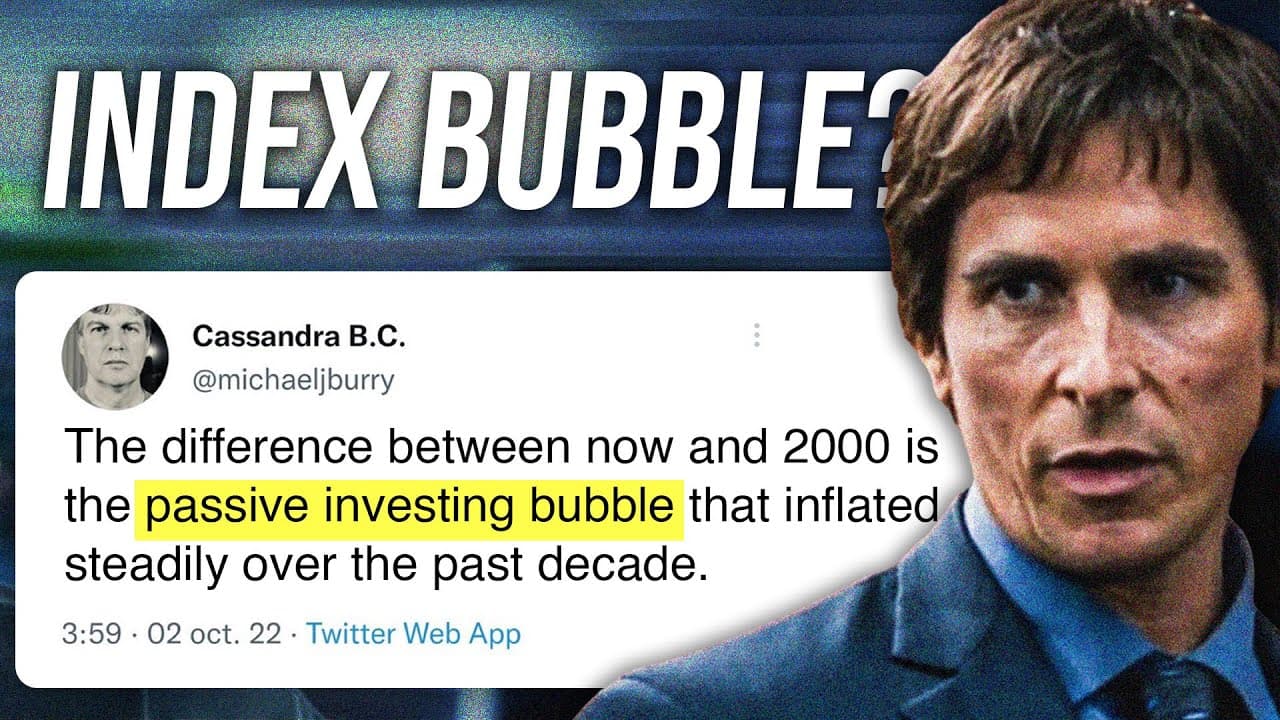
Michael Burry warns that the rise of passive investing could inflate stock prices and ultimately create a market bubble. He argues that this situation could become dangerous if mass panic selling of market-tracking ETFs occurs, potentially amplifying a stock market crash. The dominance of passive funds undermines price discovery, resulting in valuations disconnected from actual company performance.
Transcript
do you happen to own index funds as a part of your stock portfolio I do my YouTube buddies do my accountant does heck even my old school friends do well what if I told you the famous Market tracking Index Fund might be fueling a massive stock market bubble well recently that's exactly what legendary investor Michael Barry said on Twitter quote the ... Read More
Key Insights
- 🤨 Passive investing popularity has raised concerns about artificial inflation of stock prices.
- 👣 Market-tracking Index Funds could amplify stock market crash risks during panic selling.
- ❓ Price discovery is removed from the market due to passive investing behavior.
- ❓ The dominance of passive investment may not be beneficial for overall market stability.
- 👁️🗨️ Passive investing bubble concerns stem from index inclusion rather than company performance.
- 🔁 Panic selling of ETFs could trigger a negative feedback loop and prompt further stock price declines.
- 🚙 Passive investing vehicles have a minimal effect on trading volumes of underlying securities despite their market share.
Install to Summarize YouTube Videos and Get Transcripts
Explore YouTube Video Summarizer or Get YouTube Transcript Extractor
Questions & Answers
Q: What is a passive investing bubble, and why is it a concern?
A passive investing bubble occurs when investors buy stocks based on index inclusion rather than fundamental performance, leading to overinflated prices. This is concerning as it can destabilize the market when investors panic sell.
Q: How does passive investing impact stock prices and market stability?
Passive investing can remove price discovery from the market, leading to artificial inflation of stock prices. If a large number of passive investors panic sell, it could trigger a market crash due to amplified selling volume.
Q: What role do market-tracking Index Funds play in the passive investing bubble?
Market-tracking Index Funds represent diversification across the entire market, but their popularity has raised concerns about overinflated stock prices. As passive instruments hold a significant percentage of S&P 500 company shares, they can influence market dynamics.
Q: How do smaller cap stocks in large indexes fare during a market crash?
Smaller cap stocks in large indexes face the risk of being disproportionately affected during a market crash if passive investors mass sell ETFs. This could lead to significant price drops in less liquid equity markets.
Summary & Key Takeaways
-
Michael Barry warns that the popularity of passive investing could lead to a stock market bubble.
-
Passive investing removes price discovery, leading to overinflation of stock prices.
-
Panic selling of market-tracking ETFs could amplify stock market crash risks.
Read in Other Languages (beta)
Share This Summary 📚
Summarize YouTube Videos and Get Video Transcripts with 1-Click
Try YouTube Summary with ChatGPT & Claude or YouTube Transcript Generator
Explore More Summaries from New Money 📚
Summarize YouTube Videos and Get Video Transcripts with 1-Click
Try YouTube Summary with ChatGPT & Claude or YouTube Transcript Generator