How to Implement N-Step Deep Q Learning in PyTorch
TL;DR
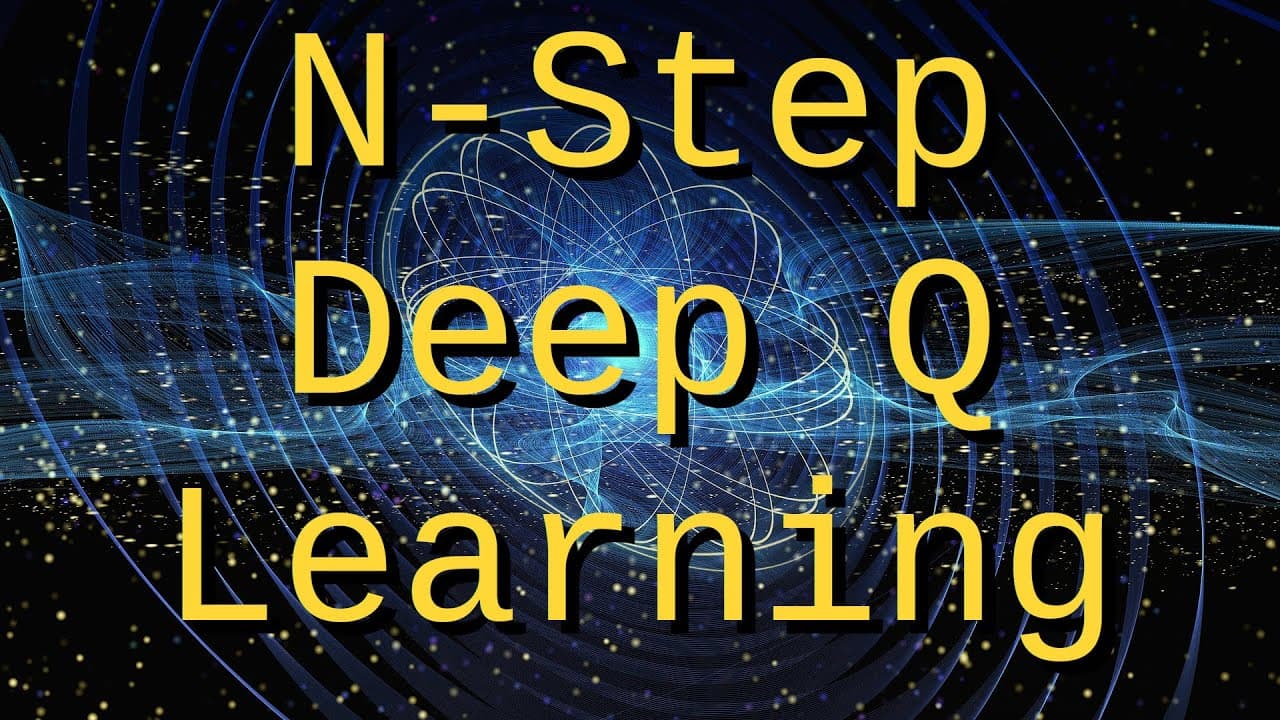
To implement n-step deep Q learning using PyTorch, start by following DeepMind's original paper which outlines an asynchronous method. Use the provided starter code to set up a multi-threaded environment that computes returns every 20 steps, facilitating gradient calculations for a more efficient training process.
Transcript
welcome back everybody for another deep reinforcement learning tutorial in today's video you are going to learn how to implement n-step deep Q learning I provide some starter code for you so all you have to do is follow along let's get started so the paper we are working off of is deepmind's original paper on asynchronous methods for deep reinforce... Read More
Key Insights
- 🏮 This tutorial focuses on implementing n-step deep Q learning based on DeepMind's paper on asynchronous methods for deep reinforcement learning.
- 😒 The algorithm uses PyTorch for efficient tensor computation and automatic differentiation.
- 👨💻 The code includes starter code and instructions to facilitate the implementation process.
- 🍵 It follows a multi-threaded approach to handle parallel environments and maximize training efficiency.
- 😆 The n-step algorithm computes returns every n steps to update the Q-values and improve action selection.
- 👨💻 The code includes several helper functions for environment preprocessing and managing shared memory.
- 🧵 The tutorial emphasizes the importance of monitoring individual threads to evaluate learning progress accurately.
Install to Summarize YouTube Videos and Get Transcripts
Explore YouTube Video Summarizer or Get YouTube Transcript Extractor
Questions & Answers
Q: What is the main paper that this tutorial is based on?
The tutorial is based on DeepMind's original paper on asynchronous methods for deep reinforcement learning, which kickstarted the A3C algorithm.
Q: What is the key idea of n-step deep Q learning?
The key idea is to use returns computed every n steps to calculate gradients and update the Q-values for better action selection.
Q: How does the multi-threaded approach work in this code?
Each thread has its own local agent that interacts with the environment and updates its parameters. The global agent combines the gradients from each thread and updates the shared parameters.
Q: Why is PyTorch recommended for this implementation?
PyTorch provides efficient tensor computation and automatic differentiation, making it suitable for deep reinforcement learning algorithms.
Summary & Key Takeaways
-
This tutorial focuses on implementing n-step deep Q learning using PyTorch, following DeepMind's original paper on asynchronous methods for deep reinforcement learning.
-
The provided code includes starter code and instructions to implement the Deep Q learning agent.
-
The algorithm runs for a specified number of steps and computes returns every 20 steps to calculate gradients.
-
The code uses a multi-threaded approach to handle parallel environments and the training process.
Read in Other Languages (beta)
Share This Summary 📚
Summarize YouTube Videos and Get Video Transcripts with 1-Click
Try YouTube Summary with ChatGPT & Claude or YouTube Transcript Generator
Explore More Summaries from Machine Learning with Phil 📚




Summarize YouTube Videos and Get Video Transcripts with 1-Click
Try YouTube Summary with ChatGPT & Claude or YouTube Transcript Generator