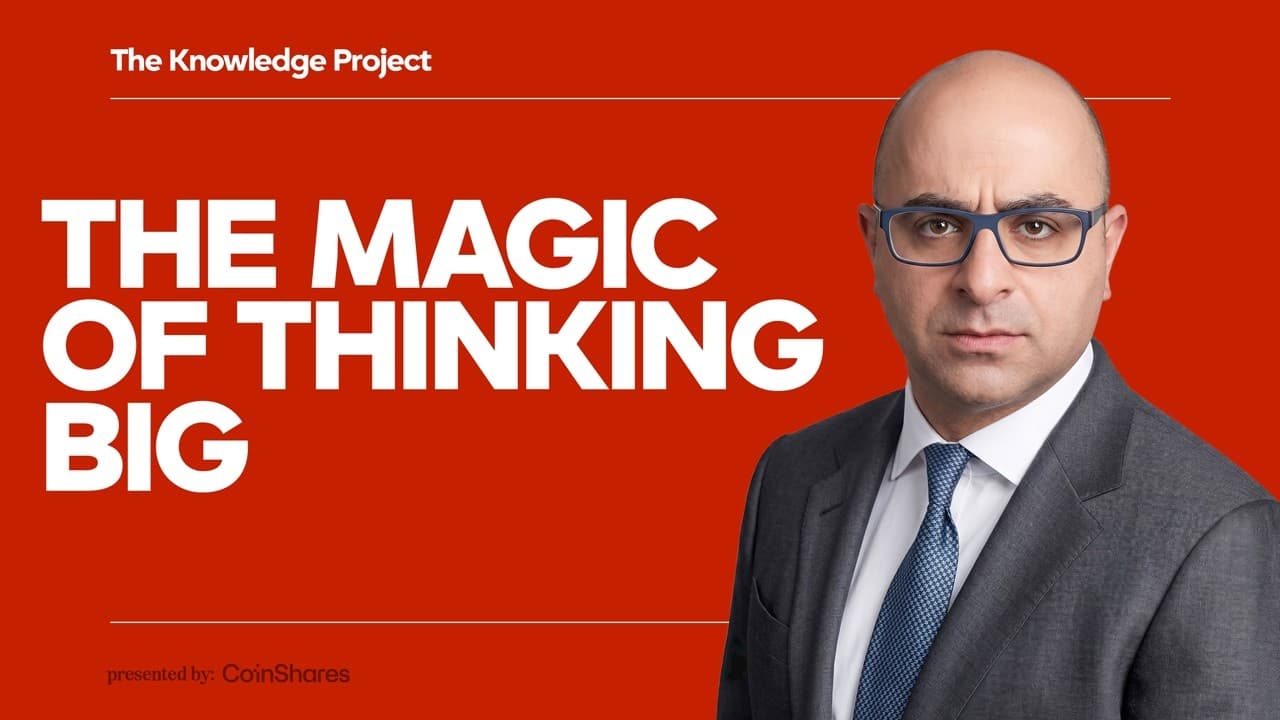
How Did Engineer Mario Harik Come to Run a $25B Company?
TL;DR
Mario Harik says engineering prepared him to run a $25B company by giving him a disciplined framework for defining goals, collecting data, designing solutions, testing outcomes, and tracking KPIs. He argues that this problem-solving mindset must be paired with people skills because individuals do not operate with engineering-style predictability or perfection. Read on for his approach to strategy, leadership, employee development, and avoiding ego-driven complacency.
Transcript
In my mind, what ego is, you think that you're so good at something that you stop learning. >> How does a software engineer end up as the CEO of one of the largest trucking companies in the world? >> Well, I think engineering gives you a very good road map and a very good framework of solving problems. I have young kids and I always tell them whene... Read More
Key Insights
- Engineering principles provide a framework for problem-solving and data-driven decision-making in business.
- A CEO's primary goal is to define and execute a strategy that creates shareholder value.
- KPIs are critical for monitoring the effectiveness of business strategies and making necessary adjustments.
- People skills are essential for managing teams and fostering a collaborative, data-driven culture.
- Setting big goals encourages continuous growth and prevents complacency in business.
- Feedback loops and team dynamics are crucial for achieving strategic objectives and improving performance.
- Capital allocation is a key responsibility of a CEO, requiring careful analysis to maximize shareholder returns.
- Continuous learning and adaptability are vital for personal and professional growth in leadership roles.
Install to Summarize YouTube Videos and Get Transcripts
Explore YouTube Video Summarizer or Get YouTube Transcript Extractor
Questions & Answers
Q: How did engineering skills help Mario Harik become a CEO?
Engineering taught Mario Harik to identify a problem or goal, collect relevant data, define requirements, build a solution, and test the outcome. He says this disciplined, data-driven framework helped him solve business problems, achieve goals, and run a trucking company effectively.
Q: How does an engineering mindset help a CEO define and execute strategy?
Harik says a CEO must first define an overall strategy for growing earnings and creating shareholder value. The engineering mindset provides a structured way to set that strategy, monitor its performance, and create action plans for moving each KPI from one value to another.
Q: What role do KPIs play in Mario Harik’s leadership approach?
KPIs show whether the company is achieving the intended levels of its strategy. Harik monitors them on a daily, weekly, and monthly basis, then develops an action plan or solution for each KPI that needs to improve.
Q: Why are people skills necessary alongside engineering skills?
Engineering supplies a problem-solving framework, but Harik says people do not operate with the predictability or perfection of an engineered process. A CEO must translate that framework into loving people, believing in them, and helping team members become the best versions of themselves.
Q: What did Mario Harik learn about managing different people?
Harik learned that every person has distinct biases, idiosyncrasies, and ways of thinking. He focuses on how individuals solve problems, deliver value, and treat others with respect rather than imposing one method on everyone.
Q: Why can perfectionism be a problem for an engineering leader?
Harik once believed every project, task, and piece of software had to be exactly right, simple, and free of bugs. He later recognized that the human mind does not operate in perfection, so managing people requires flexibility and appreciation for different approaches.
Q: What did Mario Harik learn from Brad Jacobs at XPO?
Harik describes Brad Jacobs as a distinctive entrepreneur who started eight multi-billion-dollar companies from scratch across different industries. He says Jacobs relies on a framework and method for building great companies that endure and create shareholder value, which Jacobs also outlined in two books.
Q: How does Mario Harik define ego in leadership?
Harik defines ego as believing you are so good at something that you stop learning. His definition makes continued learning a safeguard against becoming overly confident or complacent.
Summary & Key Takeaways
-
Engineering principles provide a structured approach to problem-solving and decision-making in business, helping CEOs define strategies and monitor performance through KPIs. People skills complement this by fostering a collaborative, data-driven culture within teams.
-
Setting ambitious goals is crucial for preventing complacency and driving continuous growth. Feedback loops and team dynamics play an essential role in achieving strategic objectives and improving overall performance.
-
Capital allocation requires careful analysis to maximize shareholder returns, while continuous learning and adaptability are vital for personal and professional growth in leadership roles.
Read in Other Languages (beta)
Share This Summary 📚
Summarize YouTube Videos and Get Video Transcripts with 1-Click
Try YouTube Summary with ChatGPT & Claude or YouTube Transcript Generator
Explore More Summaries from The Knowledge Project Podcast 📚



Summarize YouTube Videos and Get Video Transcripts with 1-Click
Try YouTube Summary with ChatGPT & Claude or YouTube Transcript Generator