How to Build a Temperature-Controlled Water Circulator
TL;DR
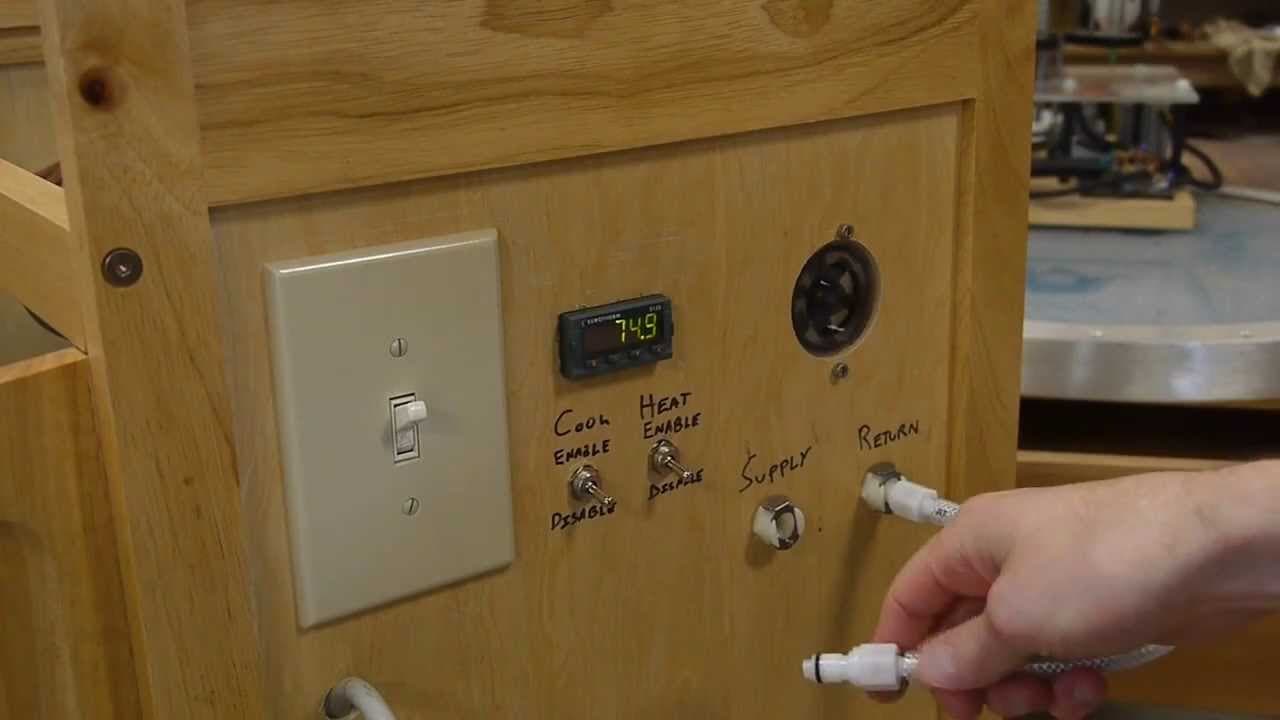
To build a temperature-controlled water circulator, combine a water pump, air conditioner, and heater, all regulated by a PID controller. Incorporate manual override switches for flexibility and use a repurposed air conditioning unit for efficient cooling. This setup eliminates the need for external water sources while providing precise temperature management.
Transcript
hey everyone this is a project that I just finished this is a temperature-controlled water circulator so I've got a lot of things in the shop that require cooling water to diffusion pumps magnetron a ruby laser tube and it's nice to have a supply of cool water without going outside and connecting up like the garden hose I mean not only is that wast... Read More
Key Insights
- 💦 The homemade water circulator provides efficient cooling for various equipment, eliminating the need for wasteful and uncontrolled external water sources.
- 🎮 The PID controller ensures accurate temperature control, maintaining the desired temperature for optimal equipment performance.
- 🧑🦽 The manual override switches offer flexibility for temperature adjustments based on individual requirements.
- 😷 The author repurposed components from a medical device and a window air conditioning unit to construct the water circulator.
- ✋ Modifications were made to the relay system to handle the higher power requirements of the air conditioner.
- 👻 The circulator is housed in a wooden case, allowing for easy portability and minimal noise disruption.
- 💇 Adequate airflow is ensured by cutting away parts of the air conditioning unit's cabinet, allowing efficient heat removal.
Install to Summarize YouTube Videos and Get Transcripts
Explore YouTube Video Summarizer or Get YouTube Transcript Extractor
Questions & Answers
Q: What are the main components of the temperature-controlled water circulator?
The main components of the water circulator are a water pump, air conditioner, heater, and a PID controller.
Q: How does the PID controller help in maintaining the desired temperature?
The PID controller continuously monitors the temperature and adjusts the cooling or heating accordingly to maintain the setpoint temperature.
Q: What is the purpose of the manual override switches?
The manual override switches allow the user to bypass the PID controller and adjust the cooling or heating manually, providing flexibility in temperature control.
Q: How did the author modify the relay system to accommodate the air conditioner's power requirements?
The author removed the internal relay of the PID controller and added their own relay to handle the higher power demands of the air conditioner.
Summary & Key Takeaways
-
The author has built a temperature-controlled water circulator to provide cooling water to various equipment in their shop.
-
The circulator consists of a water pump, air conditioner, and heater, all controlled by a PID controller.
-
Manual override switches allow for adjustments to the temperature settings, providing flexibility in cooling.
Read in Other Languages (beta)
Share This Summary 📚
Summarize YouTube Videos and Get Video Transcripts with 1-Click
Try YouTube Summary with ChatGPT & Claude or YouTube Transcript Generator
Explore More Summaries from Applied Science 📚

Summarize YouTube Videos and Get Video Transcripts with 1-Click
Try YouTube Summary with ChatGPT & Claude or YouTube Transcript Generator