How China Could Shape the Next Phase of AI
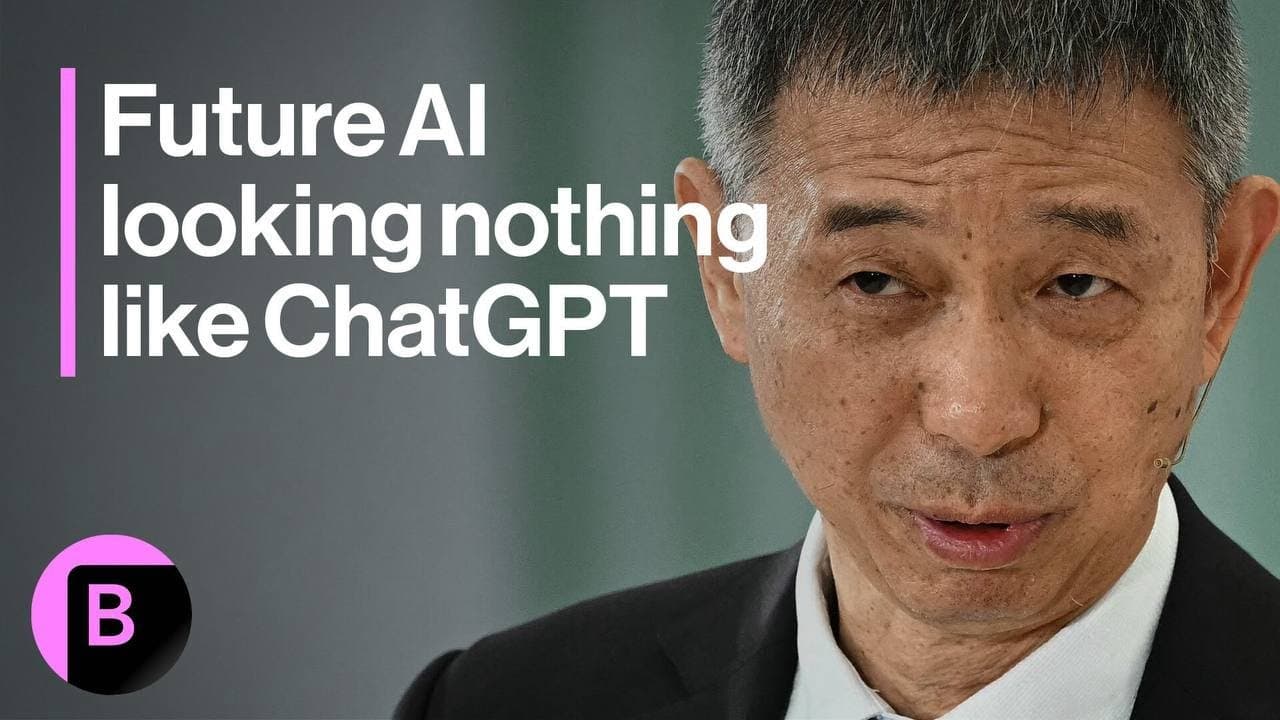
TL;DR
Artificial intelligence is becoming useful because stronger computing capabilities can now address real problems rather than artificial exercises. China could accelerate its development by serving as a large testbed where competing teams rapidly deploy, evaluate, and mature new technology, while current advantages remain vulnerable because the field is still at an early stage.
Transcript
Dr. Wang, I want to thank you so much for joining us on Bloomberg. What is capturing your attention the most today in artificial intelligence technology? It is the change in the way actually how we doing things and actually how we think about things. Okay. So, you know, and I have a psychology background. So artificial intelligence as a word, as an... Read More
Key Insights
- Artificial intelligence is now addressing real problems because the underlying technology has moved beyond the shaky stage in which researchers mainly worked on artificial exercises with limited practical meaning.
- Computing capability changes how people think about tasks because sufficiently large increases can make entirely different approaches possible, similar to how a car, airplane, or rocket changes the planning of a journey.
- Artificial intelligence capabilities form a continuum rather than cleanly separated categories, so labels such as general intelligence and superintelligence may describe growing capability without identifying a clear fundamental boundary.
- Robotics remains a distinct discipline with its own fundamental technologies, while artificial intelligence can serve as a new engine that enables robots to perform tasks in different and more capable ways.
- China's market functions as a technology testbed because rapid deployment and real use can expose weaknesses, generate feedback, and help new systems become mature rather than merely providing customers for finished products.
- Broad experimentation is valuable even when most projects eventually disappear, because varied attempts help developers explore possibilities and discover which technologies, products, and approaches can survive practical testing.
- Collective competition can maintain fast technological iteration even when one organization slows down, because different teams can take turns advancing while rivals observe, respond, and potentially catch up.
- Current advantages are not necessarily lasting barriers because artificial intelligence remains early in its development, leaving room for new participants to enter, improve, and challenge existing leaders over a long journey.
Install to Summarize YouTube Videos and Get Transcripts
Explore YouTube Video Summarizer or Get YouTube Transcript Extractor
Questions & Answers
Q: How has artificial intelligence changed since its early research stage?
Artificial intelligence has shifted from shaky technology focused largely on toy problems to technology capable of addressing real problems. Earlier work often tested ideas through artificial exercises that had little practical meaning. The important change is that current capabilities can be applied to problems that matter outside the research setting, making artificial intelligence increasingly useful in actual work and decision-making.
Q: How does greater computing power change human thinking?
Greater computing power can change the methods people consider possible, not merely make an existing method faster. Wang compares this effect to transportation: a bicycle, car, airplane, and rocket each produce a different way of planning a journey. In the same way, sufficiently stronger computing capability can expand the solution space and encourage people to rethink how a task should be approached.
Q: What is the difference between AI, AGI, and superintelligence?
Wang does not view these labels as clearly separated forms of intelligence. He describes artificial intelligence as a continuum in which capability grows over time, much as human abilities develop through education. The labels may identify perceived stages, but they do not necessarily mark fundamental boundaries. From this perspective, the central issue is increasing capability rather than assigning each advance to a distinct category.
Q: How does artificial intelligence relate to robotics?
Artificial intelligence can be deployed in robots, but robotics remains a separate field with its own fundamental technologies. Wang compares the relationship to a vehicle and its engine: the vehicle remains a vehicle even when its power system changes. Artificial intelligence can therefore act as a different engine for robotics, enabling new capabilities without making robotics and artificial intelligence the same discipline.
Q: Why can China serve as a testbed for artificial intelligence?
China can serve as a testbed because developers can bring technologies into a large, active market and evaluate them through practical use. Wang argues that technology does not fully mature until it reaches the market. In this view, the market is more than a place to sell completed products. It is an environment for testing, refining, and establishing new technologies.
Q: Why are failed artificial intelligence projects still useful?
Failed projects can still contribute by exploring possibilities and revealing which ideas do not work in practice. Wang expects most experiments to disappear over time, but he does not consider that outcome inherently bad. A wide range of attempts helps the broader ecosystem test designs, learn from deployment, and identify approaches that deserve further development, even when individual ventures do not survive.
Q: Can China's artificial intelligence progress remain fast if one company slows down?
China's progress can remain fast collectively even when a particular organization cannot sustain the same pace. Wang argues that no single company or person can move at maximum speed indefinitely. A competitive ecosystem distributes momentum across many teams, allowing one group to advance while another pauses. Rivals can then respond, improve, and possibly regain leadership through repeated cycles of iteration.
Q: Can new companies still compete in artificial intelligence?
New companies can still enter because Wang sees artificial intelligence as a long journey that remains near its beginning. He does not believe the advantages held today automatically create barriers that prevent others from catching up. Short-term leadership is therefore less important than continued improvement, creativity, and persistence. Participants may advance, fall behind, and recover as technology moves toward later stages.
Summary & Key Takeaways
-
Wang Jian argues that artificial intelligence has progressed from shaky technology addressing artificial exercises to practical technology capable of tackling real problems. He believes expanding computing capability changes not only the speed of existing work, but also how people imagine possible methods, much like new forms of transportation expand conceivable journeys.
-
Wang treats artificial intelligence, general intelligence, and superintelligence as points on a continuous path of growing capability rather than fundamentally separate categories. He applies similar reasoning to robotics, describing artificial intelligence as a new engine that can power robots while maintaining that robotics remains a distinct field with its own fundamental technologies.
-
China's market can help artificial intelligence mature by allowing developers to deploy and test technologies quickly. Wang expects many experiments to disappear, but considers that exploration useful. Competition among numerous teams can sustain rapid collective iteration even when individual organizations temporarily slow down, creating repeated opportunities to advance, fall behind, and catch up.
Read in Other Languages (beta)
Share This Summary 📚
Summarize YouTube Videos and Get Video Transcripts with 1-Click
Try YouTube Summary with ChatGPT & Claude or YouTube Transcript Generator
Explore More Summaries from Bloomberg Television 📚






Summarize YouTube Videos and Get Video Transcripts with 1-Click
Try YouTube Summary with ChatGPT & Claude or YouTube Transcript Generator