How Does the Photoresist Liftoff Method Work for Aluminum?
TL;DR
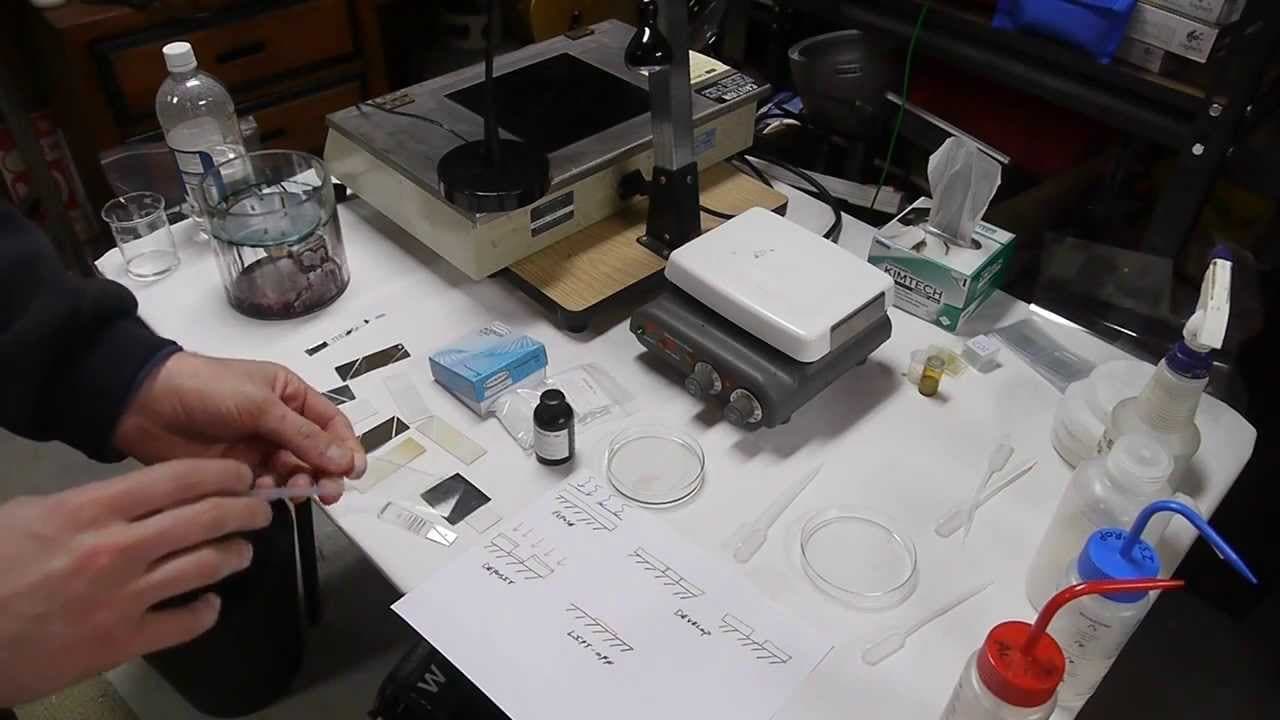
The photoresist liftoff method involves spin coating a substrate with photoresist, exposing it to UV light, developing it, and then thermally depositing aluminum. This technique allows for patterning without using etchants, making it easier to layer different materials without damaging underlying structures. The choice between positive and negative photoresists can affect the deposition results.
Transcript
hey everyone I thought I'd give you an update on my thin film transistor progress so whenever we want to make something like a TFT or display technology or anything like that we have to have a way to pattern all these thin films on a substrate and so I'm going to show you one possible method called photoresist liftoff so the process starts by loadi... Read More
Key Insights
- 🔨 The spin coater is a cost-effective tool used to apply photoresist evenly onto a substrate.
- 🙂 The exposure to ultraviolet light causes a visible color change in the photoresist, indicating successful exposure.
- 🤘 Sodium metal silicate pentahydrate is a more forgiving developer compared to sodium hydroxide.
- 🥼 Alcohol or acetone should not be used to rinse the photoresist-coated substrate as it may degrade the photoresist.
- 🥼 Thermal deposition of aluminum is an alternative to sputtering for coating the substrate.
- 🔺 The angle of the walls created during the deposition process can influence the cleanliness of the coating.
- 👻 The photoresist liftoff method allows for layering of materials without the need for etchants.
Install to Summarize YouTube Videos and Get Transcripts
Explore YouTube Video Summarizer or Get YouTube Transcript Extractor
Questions & Answers
Q: What is the purpose of the spin coater in the photoresist liftoff method?
The spin coater is used to evenly distribute the photoresist on a substrate by spinning it at high speeds. This ensures a consistent layer thickness and promotes uniformity in the pattern.
Q: Why is it important to drive off solvents from the photoresist on the hot plate?
By heating the substrate with the photoresist, the solvents present in the photoresist are evaporated, leaving only the base polymer. This is necessary to create a stable foundation for the subsequent exposure process.
Q: Why is a negative photoresist preferred over a positive photoresist in some cases?
With a negative photoresist, the angle of the walls formed during the deposition process is more inclined, allowing for cleaner and more precise coating. Positive photoresists can result in unwanted material deposition due to the steeper wall angle.
Q: What are the advantages of using the photoresist liftoff method without etchants?
The absence of etchants allows for the deposition of multiple layers without worrying about compatibility issues. Different materials can be layered without the risk of harming the underlying layers during the etching process.
Summary & Key Takeaways
-
The content discusses the process of patternizing thin films on a substrate using the photoresist liftoff method, including steps such as spin coating, exposing to ultraviolet light, developing, and thermal deposition of aluminum.
-
The author highlights the challenges faced in using certain chemicals and materials in the process, such as using a positive photoresist versus a negative photoresist, and the thickness of the aluminum layer.
-
The technique allows for layering without the need for etchants, providing flexibility in the deposition of different materials.
Read in Other Languages (beta)
Share This Summary 📚
Summarize YouTube Videos and Get Video Transcripts with 1-Click
Try YouTube Summary with ChatGPT & Claude or YouTube Transcript Generator
Explore More Summaries from Applied Science 📚


Summarize YouTube Videos and Get Video Transcripts with 1-Click
Try YouTube Summary with ChatGPT & Claude or YouTube Transcript Generator