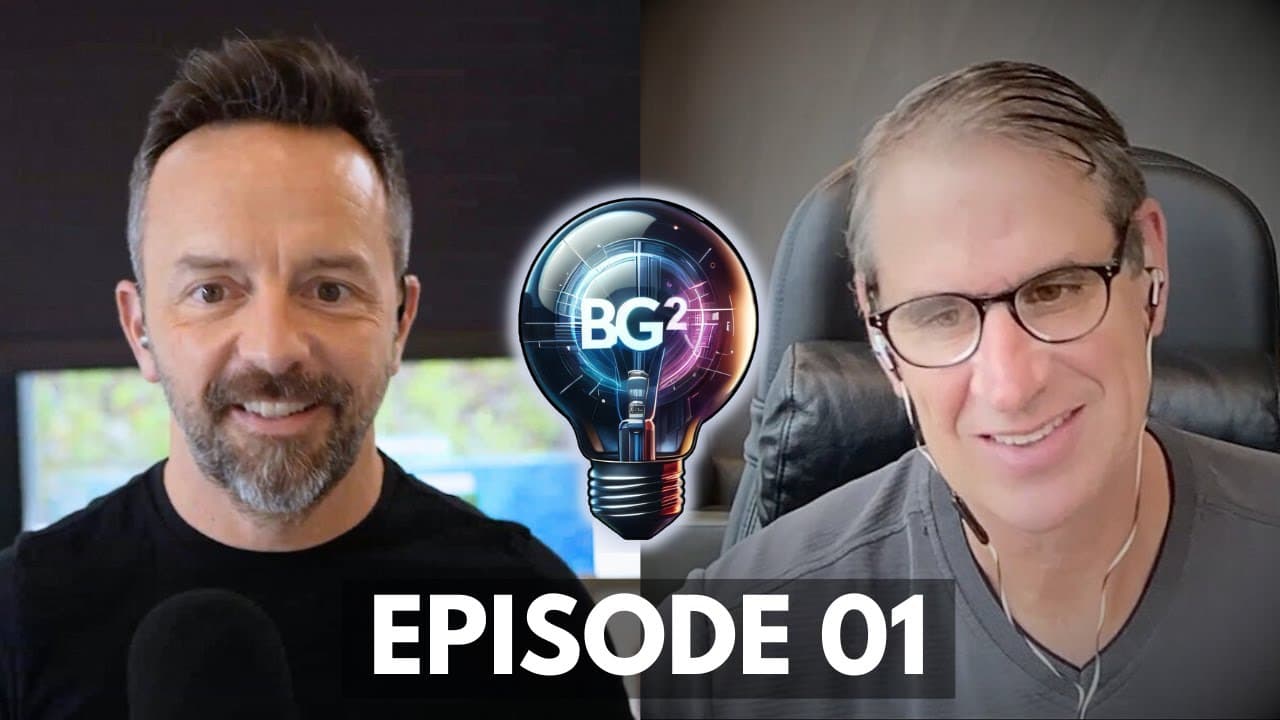
BG2 E01: Can You Trust AI Valuations? Bill Gurley and Brad Gerstner on MANG VC
TL;DR
AI valuations set through Big Tech investments deserve skepticism because cloud credits and circular payments can inflate revenue without generating new cash. Bill Gurley and Brad Gerstner examine MANG, Microsoft, Amazon, Nvidia, and Google, which grew from almost no venture investing six or seven years ago to roughly $25 billion last year. Read on to understand how these deals can distort valuations and the wider venture market.
Transcript
you know the number one question I get from Founders who come in here the number one question I get from my LPS is where are we in this correction what stage of grief are we in bill and when does it end BG squ hey man good to see you good to be seing of course you know to the audience do your own homework work make your own investing decisions we a... Read More
Key Insights
- The surge in venture capital is concentrated in four companies Bill Gurley calls 'MANG' — Microsoft, Amazon, Nvidia, and Google — which went from almost no VC investing six or seven years ago to roughly $25 billion last year.
- A large part of Microsoft's investment in OpenAI was not cash but credits for cloud services, and Gurley speculates other cloud providers made copycat transactions out of fear of losing relevance or market share.
- Revenue generated when startups spend investment credits back on the investor's services is 'low quality revenue' because it is cashless — reusing the credit brings in zero cash while the provider still amortizes costs against big capex.
- The circular structure means a company gives cash to a startup as investment, and the startup hands it back as payment, described as taking money out of your left pocket and putting it in your right pocket.
- Using your balance sheet to drive your income statement is considered a 'no no,' since booking revenue that originated as your own investment dollars distorts the true financial picture.
- Big market distortions, like those Gurley saw from zero interest rates and the Vision Fund era, can make the established rules of the ecosystem stop applying, creating a messy playing field for other players.
- AI startup valuations, such as an investment into OpenAI at a reported $90 billion, deserve skepticism because they are not arm's-length transactions between independent parties.
- A calcium CT scan costs less than a hundred dollars, takes under 30 minutes, needs no doctor referral, and is non-invasive, yet standard-of-care incentives keep doctors tracking cholesterol instead.
Install to Summarize YouTube Videos and Get Transcripts
Explore YouTube Video Summarizer or Get YouTube Transcript Extractor
Questions & Answers
Q: Can investors trust AI valuations set by Big Tech?
Bill Gurley argues that investors should be skeptical because some valuation-setting transactions are not at arm's length. When an investor also supplies the cloud services purchased with its investment or credits, the resulting price may not reflect an independent market valuation.
Q: What does MANG mean in venture capital?
MANG refers to Microsoft, Amazon, Nvidia, and Google. Gurley's team found that their combined venture investing rose from almost nothing six or seven years ago to roughly $25 billion last year, with the capital concentrated in only a few companies.
Q: Why does Bill Gurley call some AI cloud revenue low quality?
He calls it low quality because it can be cashless. When a startup spends cloud credits supplied by its investor, the provider reports revenue when the credits are used but receives zero new cash from that reuse.
Q: How does circular financing between Big Tech and AI startups work?
A large technology company invests in an AI startup through cash or cloud credits, and the startup then purchases the investor's cloud services. Gurley compares the arrangement to moving money from your left pocket to your right pocket because the invested funds return as payment.
Q: How can cloud-credit investments distort a company's financial picture?
The structure can make revenue appear stronger even though it originated from the company's own investment. Gurley describes this as using the balance sheet to drive the income statement, while the cloud provider still amortizes costs associated with large capital expenditures.
Q: Why has Big Tech venture investment in AI increased so sharply?
Gurley says Microsoft recognized that AI could significantly affect products such as Copilot, Office, and other productivity applications while also feeling behind in the market. He suggests other cloud providers pursued similar deals because they feared losing relevance or market share.
Q: Why does Gurley worry that AI investing will create a wider market distortion?
He believes the scale of credit-based investment could change how the venture ecosystem operates. He compares the risk with the zero-interest-rate and Vision Fund era, when billions flowed into companies and established market rules stopped applying consistently.
Q: Why do Bill Gurley and Brad Gerstner recommend a calcium CT scan?
They describe it as a non-invasive test that costs less than a hundred dollars, takes under 30 minutes, and requires no doctor referral. Gerstner argues that it directly shows whether plaque is present in an artery, while the established standard of care focuses on tracking cholesterol.
Summary & Key Takeaways
-
Bill Gurley and Brad Gerstner launch BG2 by examining why venture capital has exploded, arguing the growth is concentrated in four firms Gurley labels MANG — Microsoft, Amazon, Nvidia, and Google — which went from near-zero VC activity six or seven years ago to about $25 billion last year, unevenly distributed.
-
Gurley explains that Microsoft invested in OpenAI partly with cloud credits rather than cash, and other cloud providers followed with copycat deals. Because startups spend those credits back on the investors' services, the resulting revenue is cashless and low quality, inflating both revenue and valuations.
-
He warns this circular financing creates a market distortion, like the zero-interest-rate and Vision Fund era, where established rules stop applying. The pair also discuss getting a calcium CT scan, a cheap, quick, non-invasive test they argue the medical establishment resists due to standard-of-care incentives.
Read in Other Languages (beta)
Share This Summary 📚
Summarize YouTube Videos and Get Video Transcripts with 1-Click
Try YouTube Summary with ChatGPT & Claude or YouTube Transcript Generator
Explore More Summaries from Bg2 Pod 📚



Summarize YouTube Videos and Get Video Transcripts with 1-Click
Try YouTube Summary with ChatGPT & Claude or YouTube Transcript Generator