5 MIT Principles That Made Me a Multimillionaire CEO
TL;DR
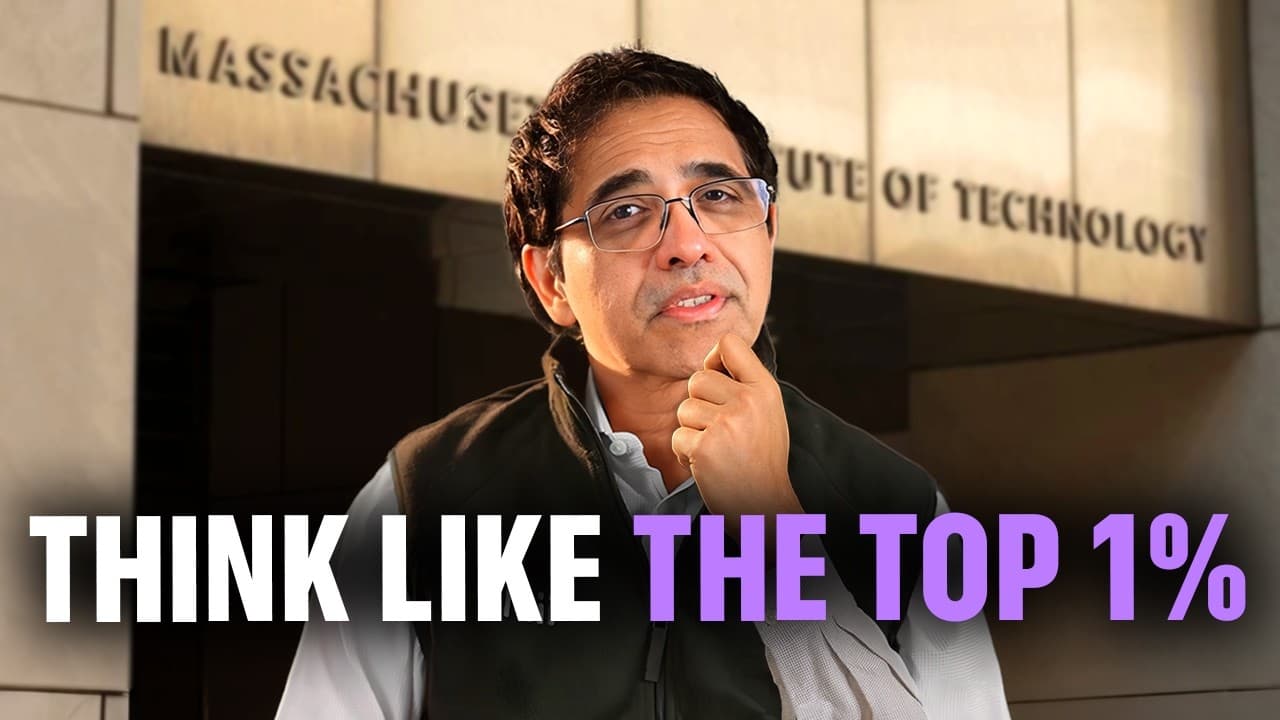
The five MIT principles behind the speaker’s success are respectful rulebreaking, ruthless prioritization, first-principles thinking, learning by building, and collaboration. His three-eye filter asks whether a task is important, impactful, and irreversible, while MIT’s “mind and hand” approach turns ideas into real experiments. Read on for practical frameworks, including the facts-assumptions-next-step method and lessons from MIT’s legendary dome hacks.
Transcript
Today, I'm going to share every single thing I learned at MIT that made me become a multi-millionaire. I've been the CEO, board member, investor at tech companies that created billions of dollars in value. And this success is due to five principles I learned at MIT that shaped how I work, learn, make decisions under pressure. So, if you want to sho... Read More
Key Insights
- Respectful rulebreaking is understanding a system so deeply you can have fun with it without breaking it, shown by MIT students assembling a full police car atop the great dome piece by piece in 1994 with total precision.
- The fire hose test proves effort alone cannot save you: MIT floods students with impossible workloads so they learn clarity, choosing not between good and bad but between valuable and more valuable.
- The three eye model filters decisions by asking whether something is important (matters in a year), impactful (moves the needle), and irreversible (fixable if it breaks).
- First principles thinking means asking what you truly know, what you assume, and what remains untested, then rebuilding from the bottom up rather than just solving the surface problem.
- Elon Musk broke rockets down to raw materials like aluminum, titanium, and carbon fiber, discovering real cost was about 2% of the assumed $65 million, then rebuilt the rocket from the ground up.
- Deconstructing a problem beats working harder: cutting four product lines to one and shipping fast for feedback doubled a company's revenue in 18 months.
- The mind and hand approach means building the thing you are thinking about to learn fast, exemplified by MIT's IAP month whose only rule is to build something real.
- You cannot graduate alone: shared struggle against impossible odds builds unbreakable bonds, so surviving means learning to trust, rely on, and collaborate with others.
Install to Summarize YouTube Videos and Get Transcripts
Explore YouTube Video Summarizer or Get YouTube Transcript Extractor
Questions & Answers
Q: What five MIT principles helped the speaker become a multimillionaire CEO?
The principles are respectful rulebreaking, choosing what matters under overwhelming demands, solving problems from first principles, learning by building real things, and collaborating with others. The speaker says they shaped how he works, learns, and makes decisions under pressure as a CEO, board member, and investor.
Q: What lesson do MIT’s Great Dome hacks teach?
The hacks teach respectful rulebreaking: understand a system deeply enough to play with or improve it without damaging it. In 1994, students assembled a full-size police car on the dome piece by piece and calculated its curvature precisely enough to leave no scratches.
Q: What is MIT’s fire hose test?
The fire hose test is the overwhelming workload that forces students to accept that they cannot do everything. The speaker describes facing three problem sets, two lab reports, a research paper, and a career fair on the same day, teaching him to choose between valuable and more valuable work.
Q: What is the three-eye model for prioritizing decisions?
The three-eye model asks whether a choice is important, impactful, and irreversible. Specifically, will it matter a year from now, will it move the needle rather than create busywork, and can it be fixed later if it breaks?
Q: How does first-principles thinking solve complex problems?
First-principles thinking separates what is known from what is merely assumed, then rebuilds the problem from the bottom up. The speaker’s framework is to summarize the problem, create columns for facts, assumptions, and the next step, and select one test to run that week.
Q: What example shows the business value of simplifying a problem?
The speaker describes cutting four product lines down to one and shipping quickly to gather feedback. That decision doubled the company’s revenue in 18 months, illustrating why deconstructing and testing a problem can outperform simply working harder.
Q: What does MIT’s “mind and hand” approach mean?
The approach means building the thing you are thinking about so that real-world feedback accelerates learning. During MIT’s four-week Independent Activities Period in January, the speaker built EMIT, a startup connecting venture capitalists with entrepreneurs, and had more than 1,200 people test it without first writing a business plan.
Q: Why does the speaker say success requires collaboration?
MIT’s impossible challenges taught the speaker that no one graduates or succeeds alone. Shared struggle builds trust and strong relationships, so progress depends on learning to rely on and collaborate with other people.
Summary & Key Takeaways
-
MIT's legendary dome hacks, like the 1994 police car and later R2-D2 and Captain America's shield, embody engineering precision mixed with light-hearted humor. They teach respectful rulebreaking: understand a system deeply enough to play with it without breaking it, and never lose your sense of play or creativity.
-
The fire hose test overwhelms students with impossible workloads to teach clarity over capacity. The lesson is to filter ruthlessly using three questions before saying yes: is it important, is it impactful, and is it irreversible. Building this filter prevents mistaking activity for progress when demands never stop.
-
First principles thinking deconstructs complex problems into facts, assumptions, and next steps, then rebuilds from the bottom. Paired with the mind and hand approach of building small real versions fast and rebuilding from feedback, plus the truth that you cannot succeed alone, these principles turn ideas into mastery through collaboration.
Read in Other Languages (beta)
Share This Summary 📚
Summarize YouTube Videos and Get Video Transcripts with 1-Click
Try YouTube Summary with ChatGPT & Claude or YouTube Transcript Generator
Explore More Summaries from Sandeep Swadia 📚

Summarize YouTube Videos and Get Video Transcripts with 1-Click
Try YouTube Summary with ChatGPT & Claude or YouTube Transcript Generator