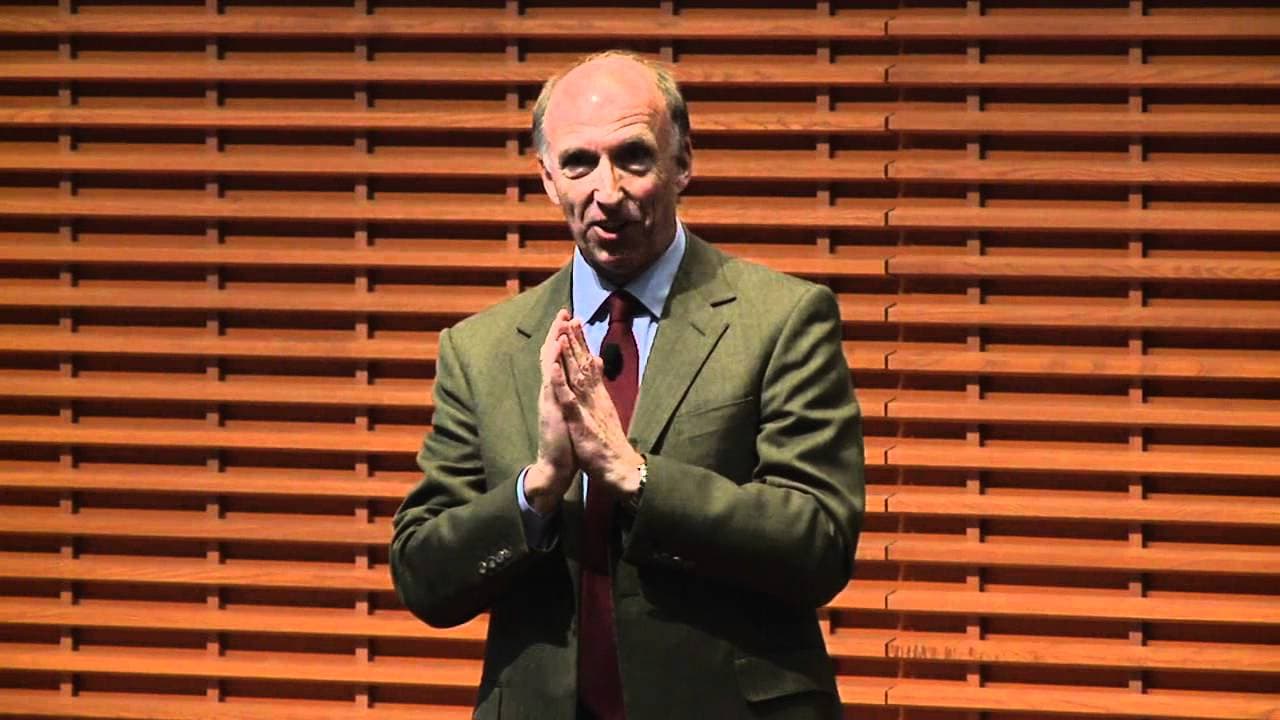
Ian Davis: View from the Top
TL;DR
Leadership is best understood not by personality traits but by what leaders actually do in the eyes of their followers. Effective leaders share five common actions, two of which are setting a clear direction everyone in the organization can recognize, and initiating change rather than merely managing the status quo. Leadership is also non-hierarchical, multifaceted, and driven by context.
Transcript
Speaker 1: I'm thrilled to be back at Stanford. When I say back at Stanford, I didn't study here. In fact, I do not have an MBA as you'll spot very quickly. But I have been here before and it really is just a great place. I also had the chance of spending the weekend here and to get to know some of you. So to those of you that have had the chanc... Read More
Key Insights
- Leadership is a non-hierarchical concept, independent of position. Many people in leadership positions are not real leaders, while many who hold no formal title exercise genuine leadership. The military recognizes this by treating sergeants and platoon leaders as true leaders.
- Leadership is multifaceted and takes many forms beyond business or military, including ring leaders, gang leaders, thought leaders, and fashion leaders. Channeling leadership through a single narrow prism, as business schools sometimes do, misses valuable types.
- Leadership is contextually driven and cannot be examined in isolation from its setting. Leading a high-tech company differs entirely from leading a food company, a medical faculty, or a regiment, and heritage matters even for firms making identical products.
- Leadership cannot be reliably defined by characteristics such as good listening, authenticity, or vision. Many great leaders Davis worked with listened appallingly, seemed inauthentic, or had no vision, so generalized trait lists are interesting but not helpful.
- The best way to explain leadership is through what leaders actually do, viewed from the perspective of followers. Defining leadership by followership, like explaining success by studying mistakes, offers a clearer lens than abstract characteristics.
- Effective leaders, whatever their walk of life, all do five things. Davis frames leadership around these consistent actions rather than what leaders say, because what matters is what followers observe them actually doing.
- Setting a direction is the first thing all leaders do. It may be a vision, culture, written plan, or something never explicitly stated, but people in the organization know where it is going even if they disagree with or dislike that direction.
- Initiating things is the second action of effective leaders. Leaders do not just manage the status quo; they start change, and initiation can even mean stopping wrong things, as failing to halt bad ideas during the dot-com boom showed.
Install to Summarize YouTube Videos and Get Transcripts
Explore YouTube Video Summarizer or Get YouTube Transcript Extractor
Questions & Answers
Q: What are the five things that all effective leaders do according to Ian Davis?
Ian Davis argues that all effective leaders, whatever their walk of life, consistently do five things in the eyes of their followers rather than merely saying them. In this portion of his talk he details the first two: setting a direction, whether a vision, culture, or plan that people in the organization can recognize, and initiating things, meaning starting change or even stopping wrong things rather than simply managing the status quo.
Q: Why does Ian Davis say leadership is non-hierarchical?
Davis says leadership is non-hierarchical because people confuse holding a leadership position with actually exercising leadership. Many senior people in leadership roles are not real leaders, while many who hold no title exercise genuine leadership. He notes the military recognizes this by treating sergeants and platoon leaders as leaders, and in good organizations people lead at all levels, from secretaries up to the chairman.
Q: How does Ian Davis define what makes a good leader?
Davis defines leadership by what leaders actually do rather than by their characteristics. He rejects trait-based definitions like being a good listener, authentic, or visionary, because many great leaders he observed listened appallingly, seemed inauthentic, or lacked vision. Instead he looks at leadership from the perspective of followers, identifying five consistent actions that effective leaders take, whatever their field or walk of life.
Q: What does Ian Davis mean by leadership being contextually driven?
Davis means that leadership cannot be understood in isolation from its context. The leadership task differs completely depending on the industry, organization, and culture involved. Leading a high-tech company is unlike leading a food company, a medical faculty, or a regiment, and leading Japanese or Brazilian people differs from leading a Silicon Valley group. Even firms making identical products require different leadership if their heritage differs, such as Korea versus Munich.
Q: Why does Ian Davis say leadership cannot be defined by characteristics?
Davis says trait-based definitions fail because the supposed qualities of great leaders often do not hold up. After 30 years of observation, he found many good leaders listened appallingly, were not particularly authentic, and had no vision or belief in it. He recalls one brilliant CEO noting the line between vision and hallucination is very small. Such generalizations are interesting but not helpful, and they discourage people who do not fit the mold.
Q: What did Ian Davis mean by the emergence of the geek as a leader?
Davis calls the rise of the geek as a leader one of the great developments of the past twenty years, and a logical consequence of the move to a knowledge economy. As economies become more knowledge-based, more geeks will become leaders. He warns audiences not to dismiss the geeky, nerdy people in the corner, promising that some of them will surpass everyone else as leaders, alongside fashion and social leaders.
Q: What does it mean that leaders set a direction?
Setting a direction is the first action Davis attributes to all leaders. It may take the form of a vision, a culture, a written strategic plan, or something articulated informally or even never stated, as in many family businesses. What matters is not the technique but that people in the organization know where it is going. They may dislike, disapprove of, or disagree with the direction, but they know what it is.
Q: Why does Ian Davis say leaders initiate things rather than manage the status quo?
Davis identifies initiation as the second action of effective leaders, because leaders do not simply maintain the status quo but start things in pursuit of their direction. Initiation can even mean stopping wrong things from happening, as failing to halt bad decisions during the dot-com boom and bust showed. He distinguishes this from entrepreneurship and warns that leaders who constantly talk about change often spend more time talking than actually doing it.
Summary
In this video, the speaker shares his perspectives on leadership based on his observations and experiences working with various leaders in different sectors. He emphasizes that leadership is not confined to hierarchical positions and that it is a multi-faceted concept driven by context. The speaker identifies five key actions that all leaders do: setting a direction, initiating, sustaining momentum, motivating others, and leading by example. He concludes by providing tips for individuals to develop their own leadership skills and encourages them to think about their context, enhance self-awareness, build leadership skills, and nurture leadership in others.
Questions & Answers
Q: What does the speaker note about the concept of leadership at the beginning of the speech?
The speaker highlights that leadership is a non-hierarchical concept that goes beyond positions of leadership. He mentions that not all people in leadership positions are actually leaders, and that leaders can be found at all levels within organizations.
Q: According to the speaker, what are some different types of leadership?
The speaker mentions that leadership can take many forms, including business leadership, military leadership, ring leadership, gang leadership, thought leadership, and fashion leadership. He argues that leadership should not be limited to a narrow prism and should be recognized in various contexts.
Q: How does the speaker emphasize the importance of understanding context in leadership?
The speaker emphasizes that leadership is contextually driven and that the leadership tasks within different industries, organizations, and cultural settings can vary greatly. He suggests that understanding the context is crucial for effective leadership and mentions examples of leadership challenges in different contexts.
Q: What does the speaker observe about leader characteristics?
The speaker questions the usefulness of generalizing leader characteristics, such as being a good listener or being authentic, based on his observations of various leaders. He argues that great leaders can exhibit different characteristics and that focusing on what leaders actually do is a more valuable approach.
Q: What are the five key actions that all leaders do according to the speaker?
The five key actions that all leaders do, according to the speaker, are setting a direction, initiating, sustaining momentum, motivating others, and leading by example. He explains that these actions can be observed in effective leaders across various sectors and contexts.
Q: What tips does the speaker provide for individuals to develop their own leadership skills?
The speaker suggests that individuals should spend time understanding their context, enhance self-awareness, build leadership skills through teaching, coaching, learning, reading, and experience, and nurture leadership in others by giving them opportunities, encouragement, and challenge.
Takeaways
Leadership is a non-hierarchical and multifaceted concept that is driven by context. Effective leaders set a direction, take initiative, sustain momentum, motivate others, and lead by example. Individuals can develop their own leadership skills by understanding their context, enhancing self-awareness, building skills through teaching and experience, and nurturing leadership in others. It is important to recognize that leadership can be impactful in both for-profit and social sectors, and good intentions should be accompanied by thoughtful actions and considerations of impact.
Summary & Key Takeaways
-
Ian Davis, a retired McKinsey senior partner and former Managing Director, addresses Stanford Graduate School of Business students in the View From The Top series. He offers perspectives on leadership drawn from observing many leaders across business, non-profit, and public sectors over roughly 35 years, rather than telling his own personal leadership story.
-
He frames leadership with three contextual points: it is non-hierarchical, meaning it is independent of position and found at all organizational levels; it is multifaceted, spanning thought, fashion, and social leaders including the rise of the geek in the knowledge economy; and it is contextually driven by industry, culture, and setting.
-
Davis argues leadership cannot be defined by characteristics like listening or authenticity, since great leaders often lack them. Instead he defines it by what leaders do in the eyes of followers. He identifies five shared actions, describing two: setting a direction people recognize, and initiating change rather than managing the status quo.
Read in Other Languages (beta)
Share This Summary 📚
Summarize YouTube Videos and Get Video Transcripts with 1-Click
Try YouTube Summary with ChatGPT & Claude or YouTube Transcript Generator
Explore More Summaries from Stanford Graduate School of Business 📚

Summarize YouTube Videos and Get Video Transcripts with 1-Click
Try YouTube Summary with ChatGPT & Claude or YouTube Transcript Generator