What Is the Briggs-Rauscher Oscillating Reaction?
TL;DR
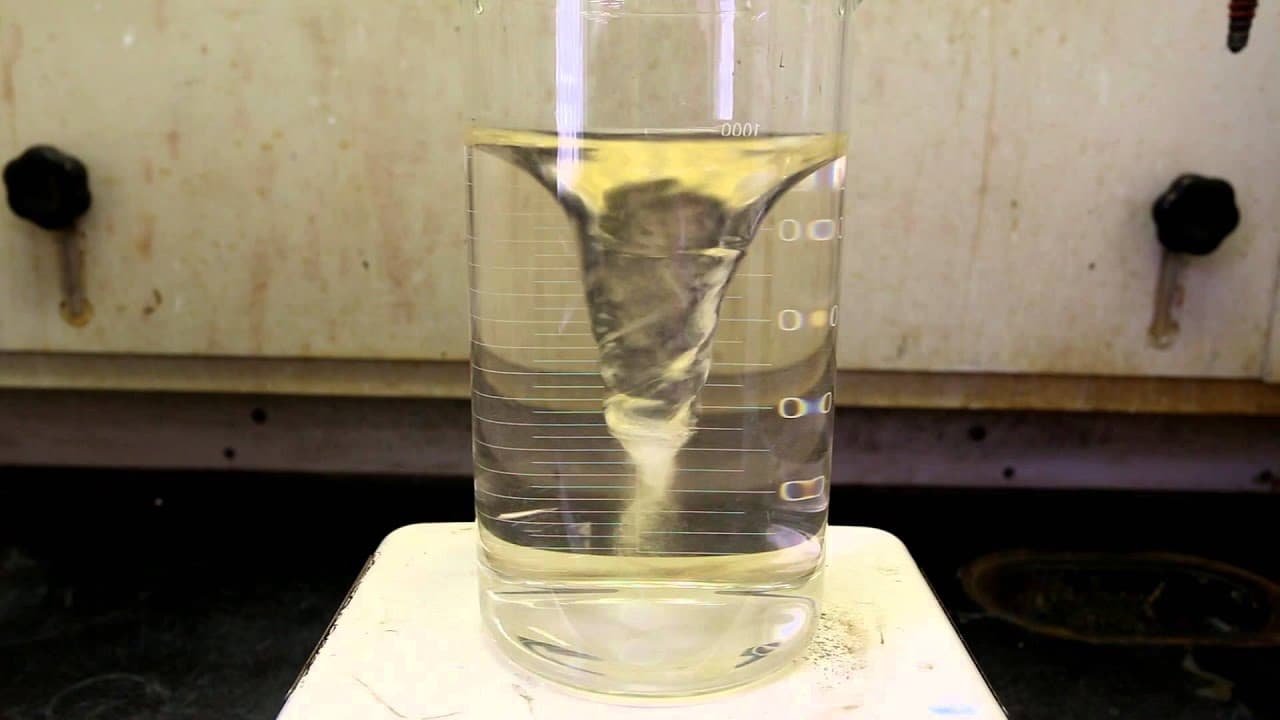
The Briggs-Rauscher reaction is a unique oscillating chemical reaction characterized by striking color changes. It involves a complex interplay between two processes: a fast radical process generating iodine and a slower non-radical process that depletes it, resulting in a cyclic color change from yellow to blue and then clear. Safety precautions are essential due to the use of hazardous chemicals.
Transcript
this experiment requires the use of a couple dangerous chemicals proper safety equipment should be worn at all times the Briggs rauscher reaction is one of the very few known oscillating chemical reactions it is a very good demonstration reaction as it has quite striking color changes for this experiment we need to make three different solutions so... Read More
Key Insights
- 💱 The Briggs Rauscher reaction is an oscillating chemical reaction known for its distinct color changes.
- 😒 The experiment involves the use of dangerous chemicals, and proper safety equipment should be worn.
- ❓ The reaction consists of two main reactions: one that generates iodine and one that depletes iodine.
- 🚱 The color changes in the reaction are due to a battle between radical and non-radical processes.
- 😘 The radical process produces hypoiodous acid quickly at low iodide concentrations, while the non-radical process produces it slowly at high iodine concentrations.
- 🏍️ The duration of each cycle decreases as the reaction continues.
- ❓ The reaction involves complex reactions between various chemo molecules.
Install to Summarize YouTube Videos and Get Transcripts
Explore YouTube Video Summarizer or Get YouTube Transcript Extractor
Questions & Answers
Q: What is the Briggs Rauscher reaction and why is it considered a good demonstration reaction?
The Briggs Rauscher reaction is an oscillating chemical reaction that exhibits striking color changes. It is considered a good demonstration reaction because of its visual appeal and the complexity of its underlying processes.
Q: What chemicals are required for the Briggs Rauscher reaction experiment?
The experiment requires potassium iodate, concentrated sulfuric acid, malonic acid (or acetone), manganese sulfate monohydrate, soluble starch, and hydrogen peroxide.
Q: How are the solutions prepared for the experiment?
Solution A is prepared by dissolving potassium iodate and concentrated sulfuric acid in water. Solution B is prepared by mixing soluble starch, malonic acid (or acetone), boiling hot water, manganese sulfate monohydrate, and water. Solution C is prepared by mixing hydrogen peroxide and water.
Q: What causes the color changes in the Briggs Rauscher reaction?
The color changes in the reaction are caused by a battle between radical and non-radical processes. The reaction begins with the radical process dominating, leading to the production of iodine and the solution turning yellow. The formation of a blue-black starch complex marks the end of the radical process.
Summary & Key Takeaways
-
The Briggs Rauscher reaction is an oscillating chemical reaction known for its distinct color changes.
-
The experiment requires the use of three different solutions with specific chemical components.
-
The color changes in the reaction are a result of a battle between radical and non-radical processes.
Read in Other Languages (beta)
Share This Summary 📚
Summarize YouTube Videos and Get Video Transcripts with 1-Click
Try YouTube Summary with ChatGPT & Claude or YouTube Transcript Generator
Explore More Summaries from NileRed 📚



Summarize YouTube Videos and Get Video Transcripts with 1-Click
Try YouTube Summary with ChatGPT & Claude or YouTube Transcript Generator