Reacting to Social Media - Computerphile
TL;DR
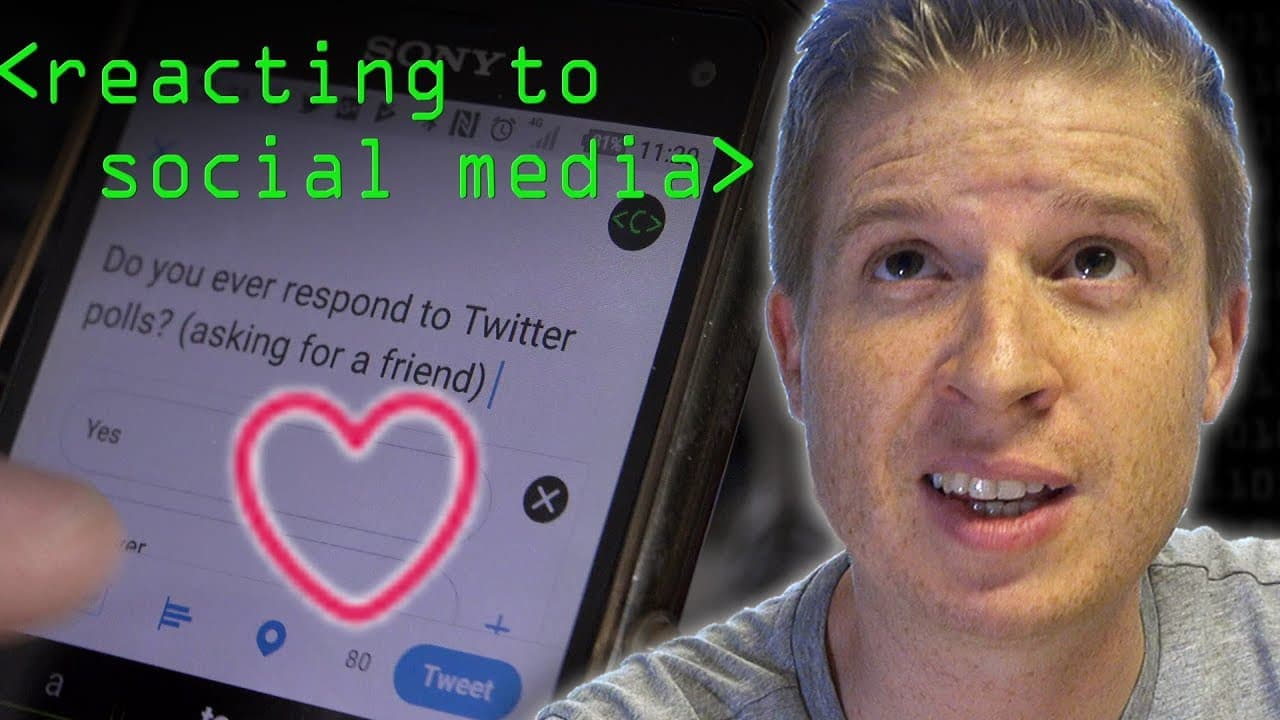
Understanding the reasons behind why people use the favorite/like button on social media platforms and examining the design choices that encourage or discourage certain behaviors.
Transcript
so we've just done a video on feedback and feed through and we had this board layout helping to explain the difference in the last video we had a google doc as the kind of artifact user interface and a user times multiple people so let's quickly connect that to twitter because we're going to talk about twitter and facebook for twitter the artifact ... Read More
Key Insights
- 👤 Twitter and Facebook have different artifact user interfaces, with tweets and social media posts as the primary artifacts, respectively.
- 👤 Conducting surveys and gathering factual data rather than hypothetical data is essential to understand user behavior.
- ⏯️ The favorite/like button on Twitter underwent a change to a heart icon to better align with its primary use cases.
- 👤 Balancing simplicity and options is crucial in user interface design to ensure ease of use and promote user engagement.
- 👤 The introduction of additional response options in social media platforms aims to provide users with more expressive communication tools.
- 👤 The design of software evolves based on user needs and behaviors, with social media platforms constantly adapting to accommodate user preferences.
- 🔉 Technology advancements have reduced barriers to implementing more expressive communication features in social media platforms.
Install to Summarize YouTube Videos and Get Transcripts
Explore YouTube Video Summarizer or Get YouTube Transcript Extractor
Questions & Answers
Q: Why did Twitter change the favorite button to a heart?
Twitter changed the favorite button to a heart because it was deemed a universally recognized symbol for expressing liking, approval, or finding something emotionally stimulating. The change better aligned the button's icon with its primary use cases.
Q: Should there be more than one button for expressing different responses on social media platforms?
Adding multiple buttons for different responses can potentially increase complexity and barriers for users. It is crucial to strike a balance between offering options and ensuring ease of use. Adding too many buttons can confuse users and decrease their motivation to engage with the platform.
Q: Why did Facebook not initially introduce a dislike button?
The dislike button did not exist initially on Facebook because the main purpose of the button was to show approval of a post. Facebook later introduced a range of responses to address the need for expressing emotions beyond simply liking a post, but without directly implying disapproval.
Q: Is there a cultural difference in how social media icons like the favorite/like button are used?
There may be cultural differences in how people use social media icons, including the favorite/like button. British users, for example, might be less inclined to use icons like tears to express their emotions, while other cultures may be more direct. However, it would be interesting to see if there are quantifiable differences in their usage.
Summary & Key Takeaways
-
The content discusses the differences in artifact user interfaces between Twitter and Facebook, where tweets and social media posts are the main artifacts.
-
The speaker presents an example study on why people use the favorite/like button on Twitter, highlighting the importance of gathering factual data rather than hypothetical data.
-
The study resulted in the identification of 25 reasons why people favorite/like tweets, showcasing the complexity of user behavior and the need for proper design considerations.
Read in Other Languages (beta)
Share This Summary 📚
Summarize YouTube Videos and Get Video Transcripts with 1-Click
Try YouTube Summary with ChatGPT & Claude or YouTube Transcript Generator
Explore More Summaries from Computerphile 📚






Summarize YouTube Videos and Get Video Transcripts with 1-Click
Try YouTube Summary with ChatGPT & Claude or YouTube Transcript Generator