How to implement OAuth 2.0 with PKCE in Node.js
TL;DR
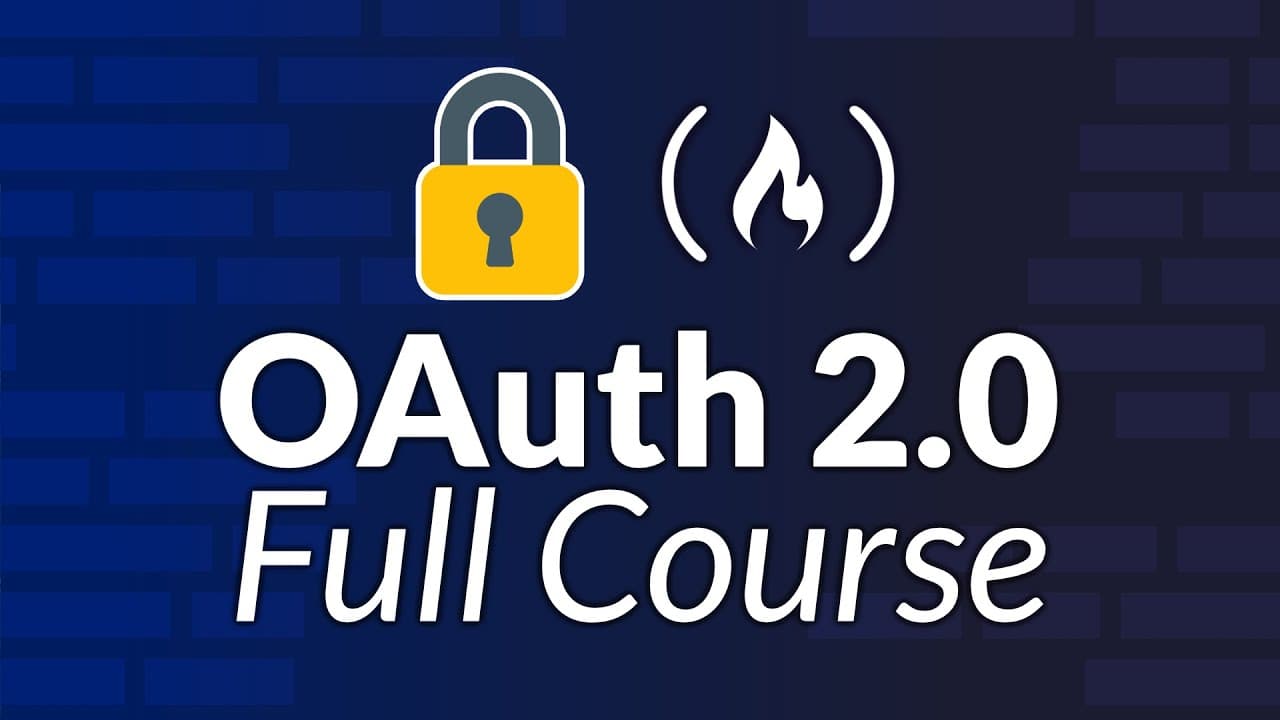
OAuth 2.0 with PKCE provides secure delegated access by issuing short lived access tokens and, in public clients, using a code verifier and code challenge to prevent code interception. The course covers building an authorization server, a resource server, and a client app that uses authorization code flow with PKCE, including token exchange, JWKS, and error troubleshooting.
Transcript
Welcome to this deep dive into OOTH 2.0, the industry standard framework for delegated authorization. In this course, you will learn to build a fully functional OOTH ecosystem from the ground up. Harris begins by breaking down the four essential roles: resource owner, client, authorization server, and resource server. Before going into modern secur... Read More
Key Insights
- OAuth 2.0 uses four roles: resource owner, client, authorization server, and resource server, to separate duties and minimize password exposure.
- PKCE stands for Proof Key for Code Exchange and is crucial for public clients, preventing interception of the authorization code by requiring a verifiable code challenge during token exchange.
- Tokens are short lived credentials used to access APIs; refresh tokens extend sessions but require secure handling to renew access tokens.
- An authorization server issues codes and tokens, while a resource server validates tokens, ensuring only authorized clients can access protected data.
- JWTs and JWKS are used to securely sign and publish public keys so resource servers can verify tokens without exposing private keys.
- OpenID Connect is often layered on top of OAuth 2.0 to provide user authentication in addition to authorization.
- The client app uses the authorization code flow with PKCE, exchanging an authorization code for tokens through a secure server interaction.
- Debugging common issues like JWKS misconfigurations or Axios 400 errors is essential for maintaining a functioning OAuth ecosystem.
Install to Summarize YouTube Videos and Get Transcripts
Explore YouTube Video Summarizer or Get YouTube Transcript Extractor
Questions & Answers
Q: A real search query question about the video (e.g. 'How to...', 'What is...', 'Why does...'). Question 1
What is OAuth 2.0 and how does PKCE improve security for public clients like single page apps and mobile apps, according to the video? OAuth 2.0 defines roles and flows to grant limited access without sharing passwords, while PKCE adds a verifier and challenge to the authorization code flow, preventing intercepted codes from being exchanged by attackers. The video explains the roles, tokens, and the flow in practical terms for implementation.
Q: Question 2
How do the four OAuth roles interact to enable secure delegated access as described in the tutorial? The resource owner authenticates and consents, the client app requests access, the authorization server issues codes and tokens after validation, and the resource server enforces access by validating tokens. This separation ensures passwords are never exposed to the client and access is strictly scoped and time bounded.
Q: Question 3
What components are built in the project to demonstrate OAuth 2.0 end to end, and what is the role of each? The authorization server issues tokens and handles login, the resource server protects an API and validates tokens, and the client app performs the authorization code flow plus PKCE and then calls the protected API. Together they illustrate the full delegated access pattern.
Q: Question 4
Why is PKCE particularly important for public clients, and how does the code verifier and code challenge mechanism work in practice? PKCE prevents attackers from exchanging stolen authorization codes because the authorization code requires the code verifier, which is created by the client and validated by the authorization server using a hashed challenge. This avoids the need for client secrets in public apps.
Q: Question 5
What is the purpose of JWKS in the OAuth setup described, and how does it help resource servers verify tokens? JWKS publishes the public keys used to verify JWT signatures, allowing resource servers to confirm that tokens were issued by the legitimate authorization server without exposing private keys. This enables secure token validation across services.
Q: Question 6
What are the practical steps outlined for setting up the three separate servers in the tutorial, and what ports are used for each? The tutorial describes creating three folders for the authorization server, resource server, and client app, then running them on distinct ports: 3000 for the auth server, 4000 for the client, and 5000 for the resource server. This separation mirrors a real microservice style deployment.
Q: Question 7
How are tokens exchanged in the end to access protected resources, and what ensures the client can refresh access without re-authenticating? The client exchanges the authorization code for an access token at the token endpoint, then uses the token to call the protected API. A refresh token, when used, obtains new access tokens without requiring the user to log in again, maintaining user session securely.
Q: Question 8
What troubleshooting tips are highlighted for common OAuth issues, such as JWKS errors or Axios 400 responses, and why are these important? The video emphasizes verifying JWKS endpoint availability, ensuring keys are correctly published, and checking request/response details for 400 errors in Axios, as these are frequent causes of failed token validation or token exchange. Proper debugging keeps the OAuth flow intact.
Summary & Key Takeaways
-
OAuth 2.0 with PKCE enables secure delegated access by issuing temporary access tokens and using code challenges to protect authorization codes. The course demonstrates building a complete end to end flow with an authorization server, a resource server, and a client app, plus practical debugging steps.
-
The tutorial explains the four OAuth roles, the purpose of access and refresh tokens, and how PKCE adds a layer of security for public clients, while OpenID Connect can handle user authentication atop OAuth.
-
The walkthrough emphasizes practical setup, code organization, and debugging strategies for common JWKS and Axios 400 errors, tying concepts directly to runnable Node.js code.
Read in Other Languages (beta)
Share This Summary 📚
Summarize YouTube Videos and Get Video Transcripts with 1-Click
Try YouTube Summary with ChatGPT & Claude or YouTube Transcript Generator
Explore More Summaries from freeCodeCamp.org 📚



Summarize YouTube Videos and Get Video Transcripts with 1-Click
Try YouTube Summary with ChatGPT & Claude or YouTube Transcript Generator