How do robots help reconstruct Pompeii frescoes with AI and robotics?
TL;DR
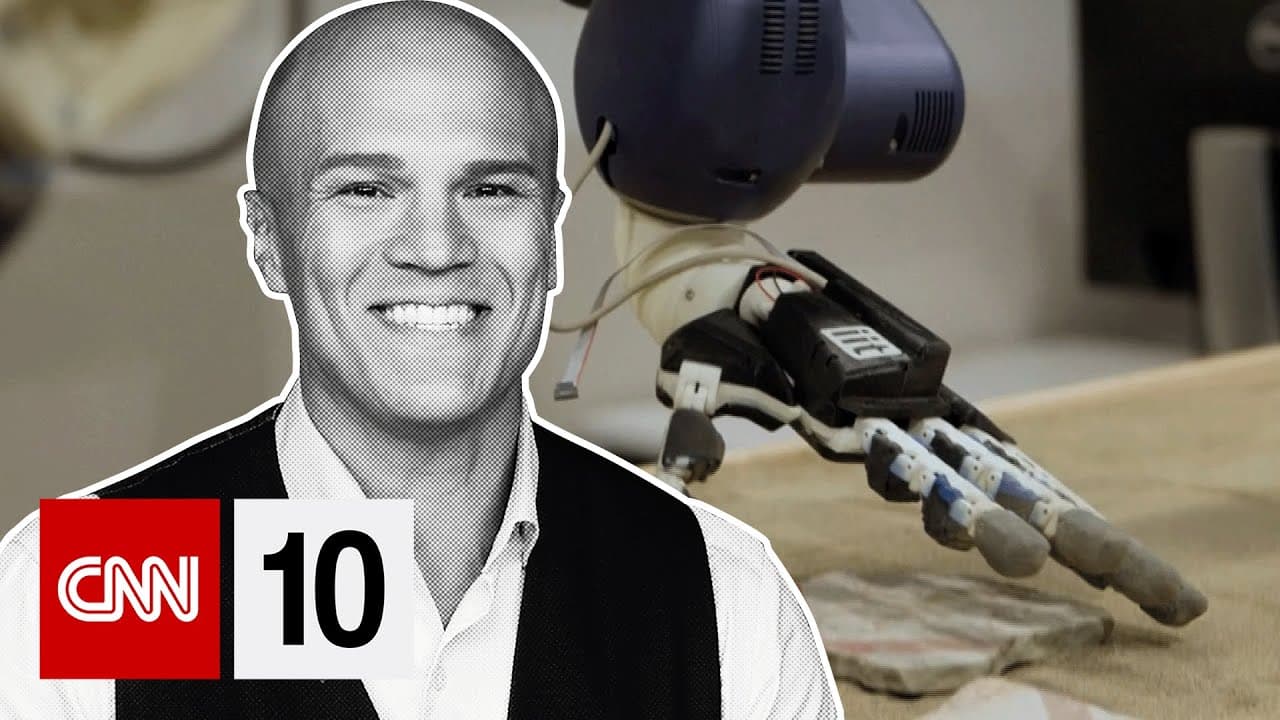
Robots equipped with AI assist archaeologists by sorting and reassembling tiny Pompeii fresco fragments, enabling virtual reconstruction while preserving original art. The project reimagines how technology blends with heritage work, and experts say it will transform archaeology rather than replace it. This approach highlights a future where machines aid cultural interpretation.
Transcript
What's up, sunshine? Welcome to the show. I'm Koi Wire here with your news for Tuesday, December 9th. A brain teaser Tuesday for you. What two coins add up to 30 cents, but one of them is not a nickel? 10 seconds. Go. What two coins add up to 30 cents? One of them is not a nickel. All right, time's up. If you said a quarter and a nickel, you're cor... Read More
Key Insights
- Robots and AI are used to sort and reassemble tiny Pompeii fresco fragments, enabling more efficient and accurate restoration. The process mirrors solving multiple jigsaw puzzles at once, albeit without a guiding picture, highlighting the complexity of historical artifacts.
- The project is funded by the European Union and involves collaboration between archaeologists and cutting edge robotics to preserve cultural heritage while advancing scientific methods.
- Experts argue that automation will dramatically change archaeology workflows but will not replace human experts, instead enhancing interpretation of artworks, daily life, and social structures from the past.
- The technology aims to balance preservation with progress, leveraging precision robotic arms to handle delicate fragments and reduce human risk during reconstruction tasks.
- This initiative demonstrates how modern tech can bring ancient art into the present by creating new pathways for study and public engagement with history.
- Kits and AI tools used in Pompeii work serve as a model for other restoration projects, potentially expanding the role of robotics in cultural preservation.
- The narrative frames technology as a complementary force that assists archaeologists in solving complex historical puzzles and expanding accessibility to heritage sites.
- More videos from this channel:
- More from this channel: CNN 10
Install to Summarize YouTube Videos and Get Transcripts
Explore YouTube Video Summarizer or Get YouTube Transcript Extractor
Questions & Answers
Q: How do the AI and robots work together to reconstruct Pompeii frescoes
AI analyzes fragment shapes, colors, and edge patterns to group pieces likely belonging to the same section, while twin robotic arms physically handle and fit fragments. The system repeats the process across multiple puzzles, progressively building a coherent image of the fresco. This collaboration reduces manual handling time and minimizes damage risk.
Q: What is the purpose of using robotics in Pompeii restoration
Robotics are used to sort and gently reassemble tiny fragments that would be difficult to manage by hand. The aim is to accelerate reconstruction, improve accuracy, and preserve fragile pieces. By automating repetitive tasks, archaeologists can focus more on interpretation and research about the social and daily life depicted in the artworks.
Q: Will robots replace archaeologists
No, experts say robots will not replace archaeologists but will dramatically change how work is done. Robots handle precise, delicate tasks and large volumes of pieces, while humans guide interpretation, context, and historical significance. The partnership enhances both efficiency and the depth of cultural insight obtained from the artifacts.
Q: What challenges do the robots face in reconstruction
Challenges include matching irregular fragment shapes, accounting for weathered surfaces, and aligning fragments without an overarching reference image. AI must infer the correct position of each piece, while robotic arms must manipulate fragile materials without causing further damage. Ongoing validation ensures accuracy and fidelity to original designs.
Q: How does this project influence future restoration work
The project demonstrates a scalable model where AI and robotics can assist in various restoration contexts beyond Pompeii. It highlights safer handling of delicate artifacts and faster reconstruction timelines, potentially lowering costs and enabling more frequent conservations. It also opens new avenues for public engagement through digital replicas.
Q: What role does the EU play in this research
The European Union funds the Repair program, enabling collaboration between archaeologists and cutting edge robotics. This support accelerates development of AI algorithms and robotic techniques, promotes cross border expertise sharing, and reinforces European commitments to preserving cultural heritage through innovative technology.
Q: How does this technology affect interpretation of artifacts
By reconstructing scenes more accurately, AI aided restoration can reveal details about daily life and social structures in ancient times. This deeper insight helps researchers build a more complete historical narrative and provides educators and the public with clearer depictions of Pompeian life.
Q: What is the broader significance of this AI restoration effort
The effort showcases how modern technology can extend the life of cultural heritage and broaden access to ancient artworks. It exemplifies a future where automated systems support experts in conservation, enabling more efficient work while preserving the integrity and story of historical artifacts.
Summary & Key Takeaways
-
The report explains how EU funded Repair uses twin robotic arms and AI to piece together Pompeii fresco fragments, streamlining reconstruction efforts.
-
Archaeologists acknowledge robots will change but not replace their discipline, emphasizing enhanced interpretation of daily life and social structures in ancient contexts.
-
The broader CNN10 segment covers Syria’s anniversary, K-pop awards discussions, and a teacher using TikTok to help students, showing how technology and media intersect real-world events.
Read in Other Languages (beta)
Share This Summary 📚
Summarize YouTube Videos and Get Video Transcripts with 1-Click
Try YouTube Summary with ChatGPT & Claude or YouTube Transcript Generator
Explore More Summaries from CNN 10 📚





Summarize YouTube Videos and Get Video Transcripts with 1-Click
Try YouTube Summary with ChatGPT & Claude or YouTube Transcript Generator