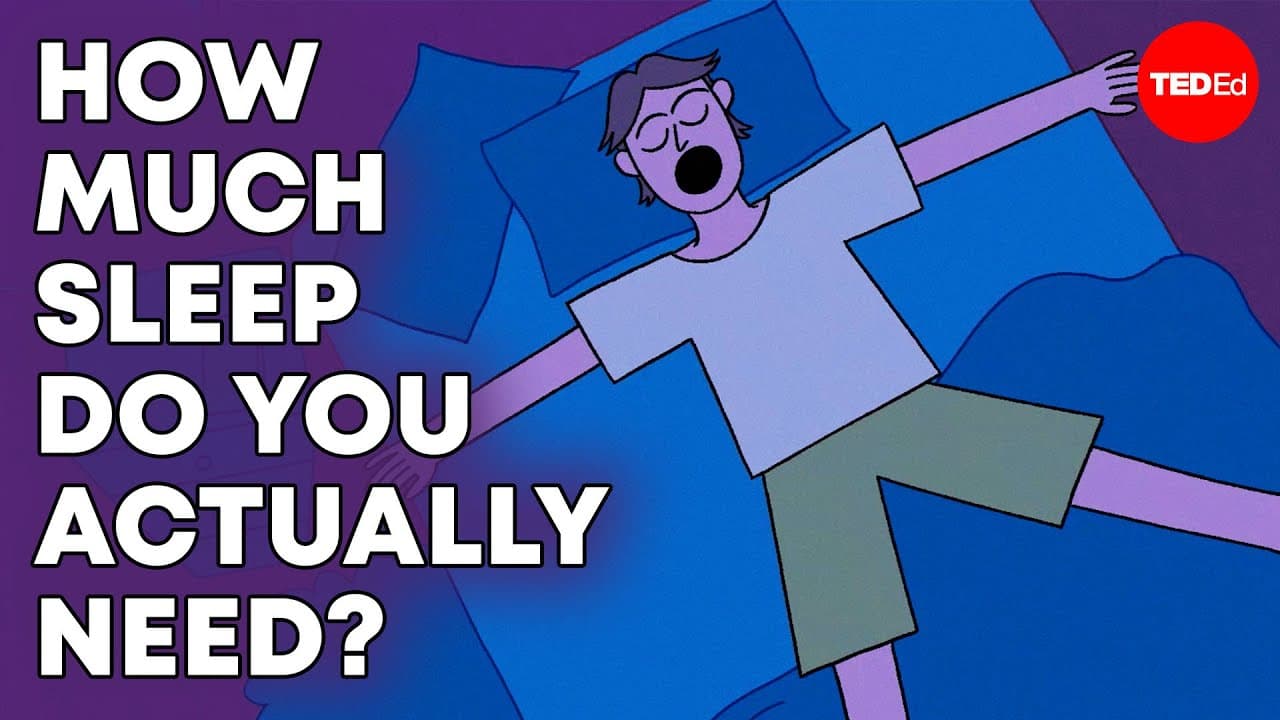
How Does Sleep Loss Affect the Teenage Brain?
TL;DR
Teenagers need 8 to 10 hours of sleep, but early school schedules force many to wake before their biological clocks are ready. Chronic sleep loss harms attention, learning, emotional processing, judgment, mental and physical health, and driving safety. Starting middle and high schools at 8:30 a.m. or later can increase sleep, improve attendance and academic performance, and reduce car crashes.
Transcript
It's 6:00 in the morning, pitch black outside. My 14-year-old son is fast asleep in his bed. I flip on the light and physically shake the poor boy awake. because I know that, like ripping off a Band-Aid, it's better to get it over with quickly. Sound brutal, but perhaps familiar? Every morning I ask myself, how can I, knowing what I know, be doing ... Read More
Key Insights
- Teenage sleep deprivation is widespread, with only about 1 in 10 American teenagers receiving the recommended 8 to 10 hours of sleep each night. Early school schedules are identified as the major policy-related factor preventing adequate sleep.
- Puberty delays the teenage biological clock, partly through a later release of melatonin. Teenagers typically begin releasing melatonin around 11 p.m., approximately two hours later than adults or younger children, so they naturally become ready for sleep later.
- Waking a teenager at 6 a.m. is biologically comparable to waking an adult at 4 a.m. This schedule removes sleep associated with learning, memory consolidation, and emotional processing, creating a daily conflict between school requirements and adolescent biology.
- Chronic sleep loss can resemble stereotypical teenage behavior, including moodiness, irritability, laziness, and depression. Sleep-deprived teenagers also struggle with concentration and attention, and some display behavioral signs that mimic ADHD.
- Adolescent brain development includes growth in regions responsible for reasoning, problem solving, judgment, and controlling impulsive behavior. Insufficient sleep impairs the brain processes teenagers need to manage the risky and impulsive tendencies associated with adolescence.
- Teen sleep problems are linked with serious behavioral and mental health outcomes. Teens with sleep problems were 55% more likely to have recently used alcohol, while every hour of lost sleep was associated with increases in hopelessness and suicide attempts.
- Severe sleep restriction creates a major driving risk. Getting five hours of sleep or less per night can impair a teenager to a level described as equivalent to driving with a blood alcohol content above the legal limit.
- Later school starts produce measurable benefits, including more sleep, better attendance, lower dropout rates, improved test performance, better health, and fewer crashes. One district recorded 25% fewer absences, while another reported a 70% reduction in car crashes.
Install to Summarize YouTube Videos and Get Transcripts
Explore YouTube Video Summarizer or Get YouTube Transcript Extractor
Questions & Answers
Q: Why do teenagers naturally fall asleep later?
Teenagers naturally become sleepy later because puberty delays their biological clock, which regulates periods of alertness and sleepiness. This shift is partly driven by melatonin timing. Teenage bodies wait until around 11 p.m. to begin releasing melatonin, approximately two hours later than adults or younger children, making very early bedtimes difficult to achieve biologically.
Q: How much sleep do teenagers need each night?
Sleep scientists and pediatricians recommend that teenagers receive 8 to 10 hours of sleep each night. However, only about 1 in 10 American teenagers reaches that amount. Early school start times are presented as the major policy factor behind this shortage because they require students to wake hours before their biological clocks indicate readiness.
Q: How does sleep deprivation affect teenage learning?
Sleep deprivation reduces teenagers' ability to concentrate and causes their attention to plummet. Waking them before their biological clocks are ready also removes sleep strongly associated with learning, memory consolidation, and emotional processing. Some sleep-deprived teenagers display behavior that resembles ADHD, while districts adopting later starts report gains in math and reading standardized test scores.
Q: How does sleep loss affect teenage mood and mental health?
Chronic sleep loss can contribute to moodiness, irritability, laziness, and depression, characteristics often attributed simply to adolescence. In a study of more than 30,000 high school students, each hour of lost sleep was associated with a 38% increase in feeling sad or hopeless and a 58% increase in teen suicide attempts.
Q: Why is driving while sleep deprived dangerous for teenagers?
Driving while severely sleep deprived is dangerous because inadequate sleep impairs thinking, attention, judgment, and functional ability. Studies cited in the talk found that sleeping five hours or less per night creates impairment equivalent to driving with a blood alcohol content above the legal limit. Later school starts can improve community safety by reducing teen car crashes.
Q: What are the benefits of later school start times?
Districts with later school start times report that teenagers get more sleep, attend school more consistently, drop out less often, and perform better academically. Math and reading standardized test scores rise by 2 to 3 percentage points. Mental and physical health improve, families are happier, and car crash rates can also decline substantially.
Q: Why should middle and high schools start after 8:30 a.m.?
Major medical organizations recommend that middle and high schools start no earlier than 8:30 a.m. because adolescent biological clocks shift later during puberty. An early schedule forces students to wake before their bodies are ready, restricting sleep needed for learning, memory, emotional processing, concentration, judgment, physical health, mental health, and safe driving.
Q: What prevents schools from adopting later start times?
School districts may face logistical concerns involving bus routes, transportation costs, sports schedules, and care before or after school. However, districts of different sizes that adopted later schedules found that many fears were unfounded. The challenges were outweighed by improvements in student sleep, attendance, academic performance, health, family well-being, and public safety.
Summary & Key Takeaways
-
Puberty delays the teenage biological clock, partly because melatonin release begins around 11 p.m., approximately two hours later than in adults or younger children. Waking a teenager at 6 a.m. is therefore biologically comparable to waking an adult at 4 a.m., depriving teens of sleep important for learning and emotional processing.
-
Chronic sleep deprivation can reduce concentration and attention, produce behavior resembling ADHD, and contribute to moodiness, irritability, depression, risky behavior, substance use, and unsafe driving. Sleep problems are also associated with sadness, hopelessness, suicide attempts, obesity, heart disease, and diabetes, while caffeine can leave adolescents tired but wired.
-
Later school start times help teenagers sleep longer and are associated with better attendance, lower dropout rates, higher standardized test scores, improved health, happier families, and fewer car crashes. Although districts face transportation, sports, and care-related challenges, successful schedule changes show that these concerns can be outweighed by broad benefits.
Read in Other Languages (beta)
Share This Summary 📚
Summarize YouTube Videos and Get Video Transcripts with 1-Click
Try YouTube Summary with ChatGPT & Claude or YouTube Transcript Generator
Explore More Summaries from TED-Ed 📚





Summarize YouTube Videos and Get Video Transcripts with 1-Click
Try YouTube Summary with ChatGPT & Claude or YouTube Transcript Generator