What Is an Operating System and Its Key Functions?
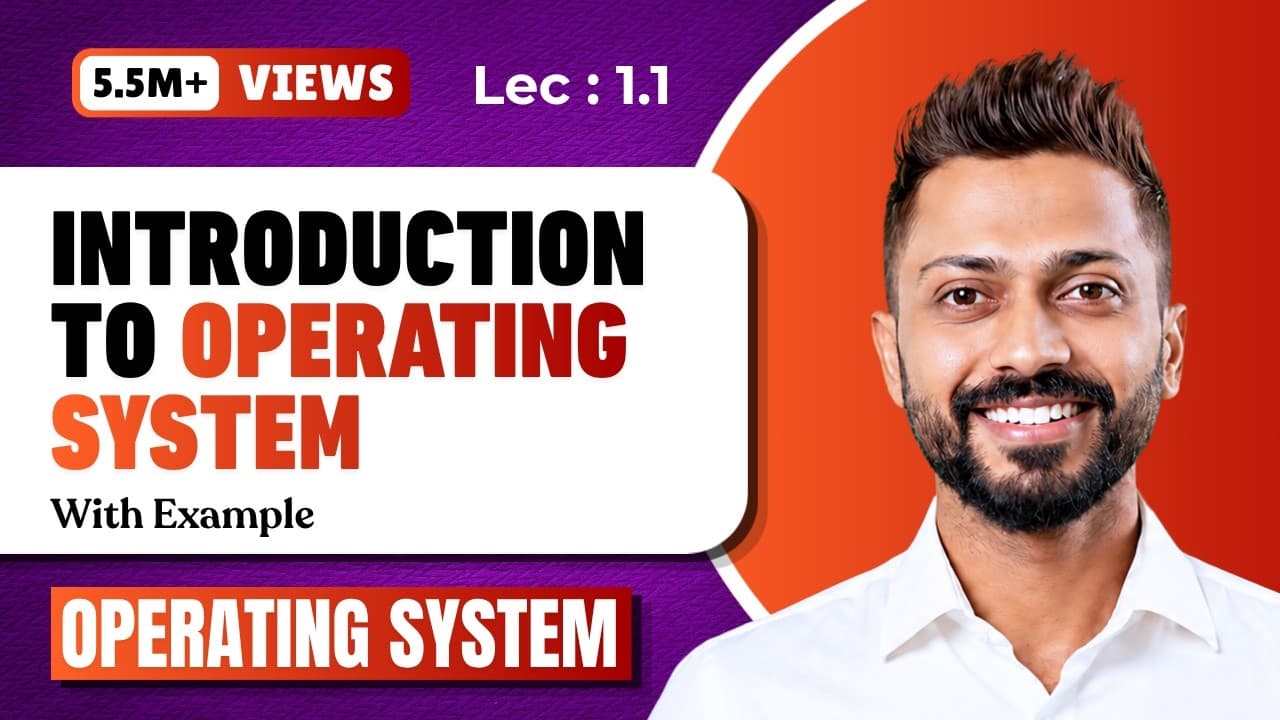
TL;DR
An operating system is essential software that acts as an interface between users and hardware, simplifying interactions. It manages resources, ensures efficient task execution (throughput), and provides security and privacy through user authentication and process isolation. Key functionalities include process and storage management, allowing multiple applications to run seamlessly.
Transcript
Hello Friends, Welcome to Gate Smashers The topic is Introduction to operating system and its functionalities Before starting this video, I would like to request my viewers to please subscribe to my channel if you haven't yet And please press the bell button So you can keep getting notifications of all latest videos In this video first we&a... Read More
Key Insights
- Operating systems serve as an interface between the user and hardware, simplifying the interaction and management of computer resources.
- Without an operating system, users would need to write complex programs to access hardware directly, complicating user interaction.
- Convenience is a primary goal of operating systems, with Windows historically dominating the market due to its user-friendly interface.
- Throughput, the number of tasks executed per unit time, is crucial for modern operating systems, with Linux excelling in this area.
- Operating systems manage resources, ensuring efficient allocation and deallocation, particularly in environments with multiple users.
- Process management is a key function, allowing multiple applications to run concurrently through CPU scheduling and task prioritization.
- Storage management involves organizing data on secondary storage devices, using file systems to maintain data integrity and accessibility.
- Security is integral to operating systems, providing user authentication and process isolation to protect data and system integrity.
Install to Summarize YouTube Videos and Get Transcripts
Explore YouTube Video Summarizer or Get YouTube Transcript Extractor
Questions & Answers
Q: What is the primary function of an operating system?
The primary function of an operating system is to act as an interface between the user and the hardware, facilitating communication and management of computer resources. It simplifies user interaction with the system, allowing for efficient execution of tasks without needing to write complex programs for hardware access.
Q: Why is convenience a major goal of operating systems?
Convenience is a major goal because it allows users to interact with their computers in a straightforward and intuitive manner. Operating systems like Windows have historically dominated the market by offering user-friendly interfaces that make it easy for users to perform various tasks without needing technical expertise.
Q: How does an operating system manage resources?
An operating system manages resources by allocating and deallocating hardware and software resources efficiently. It acts as a resource governor, particularly in multi-user environments, ensuring that resources like CPU, memory, and storage are distributed appropriately among users and processes to prevent overload and ensure smooth operation.
Q: What role does process management play in an operating system?
Process management is crucial as it allows multiple applications to run simultaneously by managing their execution through CPU scheduling. The operating system prioritizes tasks, allocates CPU time, and ensures that processes do not interfere with each other, maintaining system stability and efficiency.
Q: How does an operating system ensure data security and privacy?
Operating systems ensure data security and privacy through user authentication and process isolation. They require passwords for access, use security protocols like Kerberos for password protection, and isolate processes to prevent unauthorized access and data interference, maintaining the integrity of the system.
Q: What is the significance of throughput in operating systems?
Throughput is significant because it measures the number of tasks an operating system can execute within a given time frame. High throughput indicates efficient task execution, which is essential for modern operating systems that need to handle multiple processes quickly and effectively, as seen in systems like Linux.
Q: What is the difference between storage management and memory management?
Storage management involves organizing and maintaining data on secondary storage devices like hard disks, using file systems to ensure data integrity. Memory management, on the other hand, focuses on the allocation and deallocation of memory in RAM, ensuring efficient use of limited memory resources for executing processes.
Q: How do operating systems facilitate user interaction with hardware?
Operating systems facilitate user interaction with hardware by providing a user-friendly interface that abstracts the complexity of hardware control. Users can interact with applications and perform tasks without directly handling hardware commands, as the operating system manages these interactions seamlessly through system calls and interfaces.
Summary & Key Takeaways
-
The video introduces operating systems as crucial software that interfaces between users and hardware, simplifying interactions and enhancing convenience. It explains the necessity of operating systems in managing complex user-hardware interactions, which would otherwise require intricate programming.
-
Operating systems are highlighted for their role in resource management, ensuring efficient use of hardware in multi-user environments. The video discusses the importance of throughput, with Linux noted for its efficiency in executing numerous tasks within a given timeframe.
-
Security and privacy are emphasized as critical functions of operating systems, with mechanisms like user authentication and process isolation preventing unauthorized access and ensuring data integrity. The video also touches on process and storage management as vital components of operating systems.
Read in Other Languages (beta)
Share This Summary 📚
Summarize YouTube Videos and Get Video Transcripts with 1-Click
Try YouTube Summary with ChatGPT & Claude or YouTube Transcript Generator
Explore More Summaries from Gate Smashers 📚




Summarize YouTube Videos and Get Video Transcripts with 1-Click
Try YouTube Summary with ChatGPT & Claude or YouTube Transcript Generator