How to Reduce Landing Page Conversion Anxiety
TL;DR
Reduce conversion anxiety by giving prospects useful value before requesting information, limiting forms to necessary and easier fields, providing immediate results, and placing credibility indicators near calls to action. In the featured landing page test, a redesigned instant quote process increased the lead rate by 262% at a 99% confidence level.
Transcript
thank you very much Austin I'm flint mcgoffin and we begin yet another clinic the title of today's Clinic is 263 per higher conversion rate how reducing anxiety helped one company improve conversion rate threefold there's much in a title like that we want you to be interested in this particular case study where we saw this 263 Improvement we want y... Read More
Key Insights
- Anxiety is concern or fear within the conversion process, and it can stop the sequence of small commitments that leads to a sale. A single no can undo the progress created by many earlier micro yeses.
- Friction is psychological resistance or annoyance, while anxiety is concern or fear. Research across more than 10,000 experiments found that these forces require different corrective approaches, so simplifying a process alone may not resolve the concerns preventing conversion.
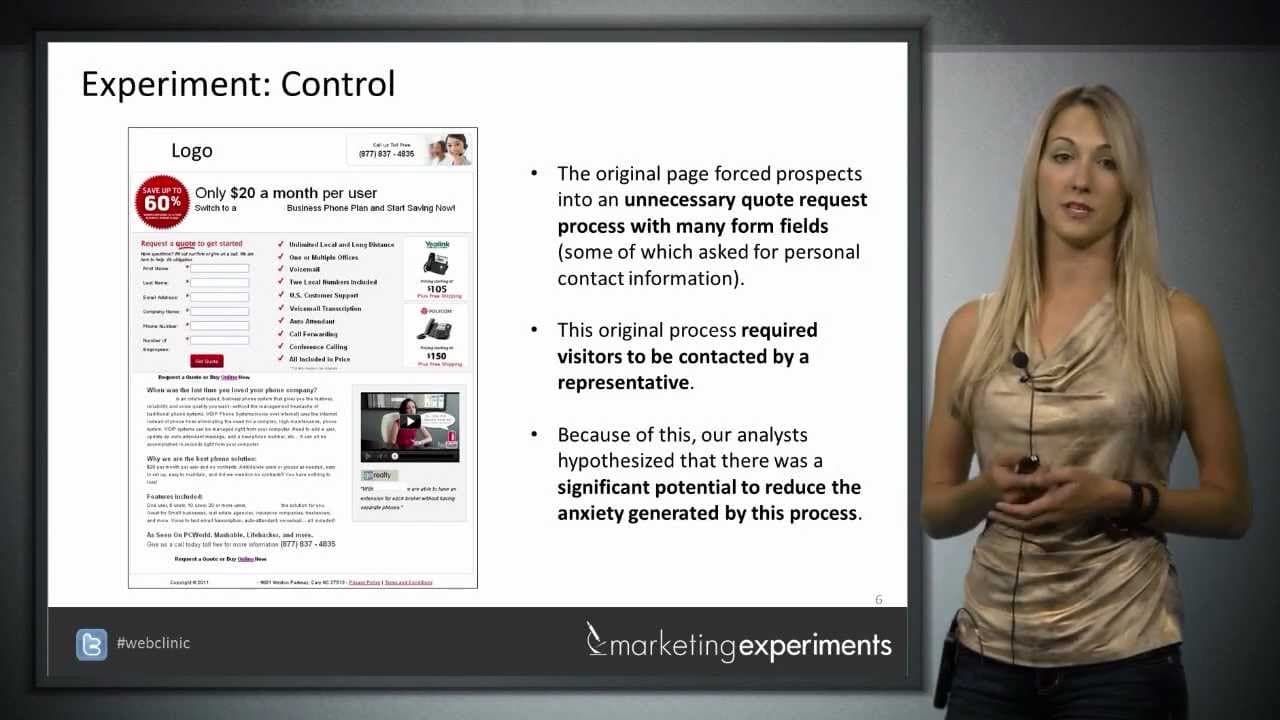
- The control page created anxiety by requesting personal information, including a phone number, and requiring follow-up from a representative. Many visitors were researching rather than preparing to speak with a salesperson, so the required contact conflicted with their stage in the buying process.
- The treatment reduced friction by decreasing both the number and difficulty of form fields. It also delivered an instant quote, removing the need to wait for a representative and allowing prospects to obtain the information they wanted immediately.
- Credibility indicators are most useful when placed close to calls to action. In the treatment, these indicators appeared near both calls to action, where they could address uncertainty at the moment visitors were deciding whether to continue.
- Value should be presented before asking prospects for information. The control displayed the quote form first, while the treatment explained value before making the request, creating a thought sequence that better prepared visitors to provide their details.
- Conversion optimization is the optimization of a visitor's thought sequence, not merely the visual page. Words and images act as cues in a mental dialogue, moving prospects through a series of micro yeses toward the macro yes of a lead or sale.
- The redesigned quote process increased the lead rate by 262% at a 99% confidence level. The experiment changed several elements through an A/B multifactorial split test, including the form, instant response, concern-focused copy, credibility indicators, comparison information, and content order.
Install to Summarize YouTube Videos and Get Transcripts
Explore YouTube Video Summarizer or Get YouTube Transcript Extractor
Questions & Answers
Q: How can a landing page reduce conversion anxiety?
A landing page can reduce conversion anxiety by addressing prospects' specific concerns before requesting information. The tested treatment discussed concerns about price and the product, added credibility indicators near both calls to action, included a comparison chart, and provided an instant quote. It also presented value before asking for personal details, making the requested action feel better supported.
Q: What is the difference between friction and anxiety in conversion optimization?
Friction is psychological resistance or annoyance caused by the conversion process, while anxiety is concern or fear about what may happen after taking action. The distinction matters because research based on patterns across more than 10,000 experiments found that they require different corrections. Easier form fields reduce friction, but concern-focused copy and credibility indicators address anxiety.
Q: Why did the original quote form discourage leads?
The original quote form contained many fields, including unnecessary requests and personal information such as a phone number. Submission also required prospects to be contacted by a representative. Many visitors were still seeking research and information rather than preparing for a sales conversation, so the form demanded more effort and commitment than those prospects were ready to provide.
Q: How did the instant quote tool improve the conversion process?
The instant quote tool reduced the number and difficulty of required form fields and supplied a quote immediately. Visitors no longer needed to wait for a representative to contact them. This aligned the experience with prospects who primarily wanted research and pricing information, reducing both process resistance and concern about entering an unwanted sales interaction.
Q: Why should value appear before a landing page form?
Presenting value before a form helps prepare visitors to make the requested commitment. The control page placed its quote form at the top, making the request one of the first things visitors encountered. The treatment supplied value first and requested information afterward, creating a more persuasive thought sequence before asking prospects to share their details.
Q: What are micro yeses in a landing page journey?
Micro yeses are the small commitments visitors make while moving through a landing page or channel. Reading a headline and continuing to the body copy is one example, while moving from body copy to a benefit statement is another. These smaller decisions can culminate in the macro yes, such as submitting a lead form or completing a sale.
Q: What results did the redesigned landing page achieve?
The redesigned quote process produced a 262% increase in lead rate at a 99% confidence level. The test was an A/B multifactorial split test for a business-to-business VoIP telephone services company. Its primary research question asked which quote process would generate more total leads, measured through quote requests submitted by prospective customers.
Q: How should marketers think about landing page optimization?
Marketers should optimize the prospect's thought sequence rather than treating the web page itself as the sole object of improvement. Page copy, images, forms, comparison information, and credibility indicators serve as cues in a mental dialogue. Their purpose is to sustain a sequence of micro yeses while increasing perceived value and reducing friction and anxiety.
Summary & Key Takeaways
-
A business-to-business provider of VoIP telephone services wanted more quote requests. Its original landing page presented a long form containing unnecessary and personal fields, including a phone number. Visitors also had to wait for a representative, even though many were still researching and were not ready for sales contact.
-
The treatment reduced the number and difficulty of form fields, converted the process into an instant quote tool, addressed concerns about price and the offered product, and placed credibility indicators near both calls to action. A comparison chart provided additional information aimed at resolving prospects' specific concerns before they submitted details.
-
The experiment treats conversion as a sequence of thoughts and micro yeses rather than a page-design problem. Value must outweigh the combined mental costs of friction and anxiety. The treatment increased the lead rate by 262% with 99% confidence, demonstrating the benefit of reducing concern while simplifying the quote process.
Read in Other Languages (beta)
Share This Summary 📚
Summarize YouTube Videos and Get Video Transcripts with 1-Click
Try YouTube Summary with ChatGPT & Claude or YouTube Transcript Generator
Explore More Summaries from Flint McGlaughlin 📚

Summarize YouTube Videos and Get Video Transcripts with 1-Click
Try YouTube Summary with ChatGPT & Claude or YouTube Transcript Generator