Canon R6 Mark III Review: A Strong Hybrid Camera
TL;DR
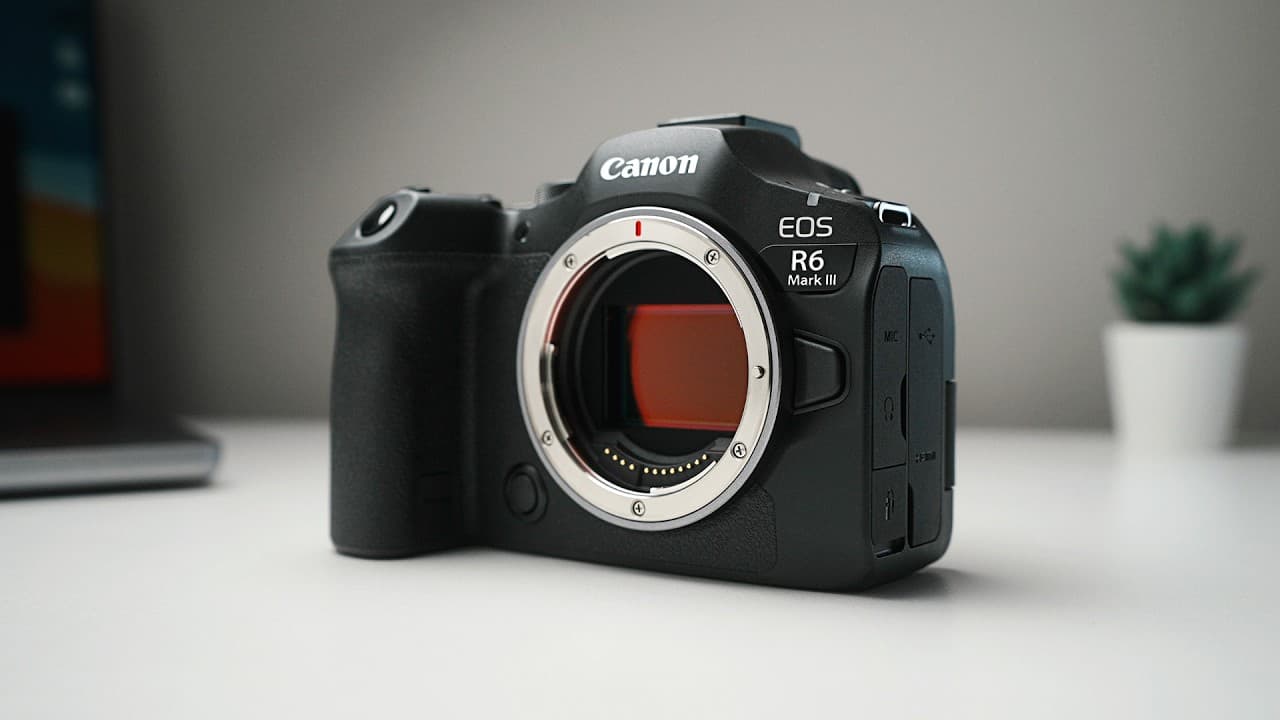
The Canon R6 Mark III is a capable $2,800 hybrid camera with 7K full-sensor recording, internal RAW, reliable autofocus, strong stabilization, and detailed 32.5-megapixel photos. Its main limitations are overheating during demanding recording, large RAW files, added CFexpress Type B costs, increased noise in RAW low-light footage, and wide-angle edge wobble from image stabilization.
Transcript
This video is sponsored by Storyblocks. This is the Canon R six Mark III and it has no business being this good. You get stunning 7K full sensor video, beautiful Canon colors, 15 plus stops of dynamic range, reliable autofocus, and internal raw video, all packed into a $2,800 body. If you want a camera that truly delivers for both photo and video, ... Read More
Key Insights
- The Canon R6 Mark III is a $2,800 hybrid body that records 7K full-sensor video, internal RAW, and oversampled 4K while also capturing 32.5-megapixel photos. Its combination of video tools, reliable autofocus, and manageable photo file sizes suits creators working across both formats.
- Open-gate recording uses the entire sensor to produce a taller image with more cropping flexibility. Creators can keep the camera rigged horizontally while extracting 16:9 footage, reframing shots, or creating vertical social content from the additional image area.
- Internal RAW provides more color information and greater grading flexibility than more processed recording formats. RAW footage also permits ISO and white-balance adjustments during editing, although RAW Light is preferable when conserving card space and RAW low-light footage may require careful exposure and denoising.
- The slow-motion capabilities include 7K recording at up to 60 frames per second and uncropped 4K at up to 120 frames per second. The separate Slow and Fast mode can create slow motion or time-lapses in-camera, but it does not record audio.
- The autofocus system provides full-frame coverage, automatic subject detection, and reliable tracking during movement. For photography, pre-capture can save 20 images from before the shutter is pressed, helping photographers retain moments that occur before their manual reaction.
- Low-light performance is cleanest at the native ISO of 800, with noise increasing until the image begins cleaning up around ISO 6400. The camera remains usable in darker conditions, but it does not match the reviewer’s Sony A7S III for low-light performance.
- Rolling-shutter skew is more visible in 4K Fine than in standard 4K. The sharper Fine mode remains suitable for relatively static subjects such as talking-head recordings, while standard 4K is the better available choice when rapid camera movement makes skew more important.
- Overheating depends on recording mode and environment because the body lacks active cooling. The camera had no overheating problem during a 4K 24 test, but it shut down after about 25 minutes of 4K 60 Fine recording in a warm studio.
- Related book: YouTube Secrets
Install to Summarize YouTube Videos and Get Transcripts
Explore YouTube Video Summarizer or Get YouTube Transcript Extractor
Questions & Answers
Q: Is the Canon R6 Mark III good for photo and video?
The Canon R6 Mark III is presented as a strong hybrid camera for creators who need both formats. It offers 7K full-sensor recording, internal RAW, open-gate capture, uncropped 4K slow motion, reliable autofocus, and stabilization for video. For photography, its 32.5-megapixel sensor, Canon color, full-frame autofocus coverage, subject detection, and 20-shot pre-capture mode provide a versatile tool for portraits, weddings, travel, and wildlife.
Q: What video formats can the Canon R6 Mark III record?
The Canon R6 Mark III can capture 7K video at up to 60 frames per second and uncropped 4K at up to 120 frames per second. It also offers open-gate recording, oversampled 4K Fine, standard 4K, internal RAW, and a space-saving RAW Light codec. C-Log 2 and C-Log 3 support color grading, while built-in LUT support can apply and bake a selected look directly into recorded footage.
Q: What are the benefits of open-gate recording on the Canon R6 Mark III?
Open-gate recording captures the full sensor instead of restricting the image to a horizontal 16:9 frame. The resulting taller image provides extra room for cropping, reframing, and correcting composition during editing. It is particularly useful when one recording must serve both horizontal videos and vertical social posts. A creator can also leave the camera rigged horizontally instead of physically rotating the entire setup for vertical delivery.
Q: Does the Canon R6 Mark III overheat during video recording?
Overheating varies with the selected recording mode and ambient temperature because the camera has no active cooling. In the studio test, 4K at 24 frames per second caused no overheating, and the battery and SD card ran out first. In a warmer environment, 4K at 60 frames per second using Fine mode caused the camera to shut down after about 25 minutes. Long, demanding takes therefore require more caution.
Q: How long does the Canon R6 Mark III battery last?
The Canon R6 Mark III lasted a little over two hours while continuously recording 4K at 24 frames per second in the reported test. The reviewer also completed most of a shooting day with one battery, including some RAW capture. RAW recording and higher frame rates consume power more quickly, so one or two additional batteries should provide useful coverage for most full-day creator shoots.
Q: What memory cards does the Canon R6 Mark III require?
The Canon R6 Mark III records to both CFexpress Type B and SD cards. SD cards are sufficient for ordinary 4K recording, but RAW video and demanding slow-motion work make CFexpress Type B cards effectively essential. RAW files are very large, so adequate capacity is important. CFexpress cards add cost for users who own only SD media, although they offer faster, more reliable recording and quicker footage transfers.
Q: How well does the Canon R6 Mark III perform in low light?
The camera’s native ISO of 800 produced its cleanest reported results. Noise increased as ISO rose, then the image began to clean up around ISO 6400, apparently because of internal processing. The result remained crisp and usable in darker environments, although the reviewer found it weaker than the Sony A7S III in low light. RAW capture shows more noise, making accurate exposure and post-production denoising especially important.
Q: What are the main drawbacks of the Canon R6 Mark III?
The main tradeoffs are heat, storage demands, mode-dependent image artifacts, and some interface behavior. The lack of active cooling can interrupt long recordings in demanding settings, as seen during the 4K 60 Fine test. RAW files require large CFexpress Type B cards, RAW low-light footage shows additional noise, 4K Fine has more rolling-shutter skew, and wide-angle stabilization can produce wobbly edge distortion.
Summary & Key Takeaways
-
The Canon R6 Mark III combines a weather-resistant magnesium alloy body with a fully articulating screen, sharp electronic viewfinder, audio connections, USB, full-size HDMI, and dual card formats. Its creator-friendly handling complements 7K full-sensor video, open-gate recording, oversampled 4K Fine, internal RAW, and built-in LUT support.
-
Video options include 7K at up to 60 frames per second and uncropped 4K at up to 120 frames per second. C-Log 2 and C-Log 3 provide strong grading flexibility, while RAW Light preserves extensive color information. Open-gate capture provides extra room for reframing horizontal and vertical social content.
-
The camera performs well as a hybrid, but demanding modes introduce tradeoffs. The test found no overheating at 4K 24, while 4K 60 Fine stopped after about 25 minutes in a warm studio. Battery life exceeded two hours at 4K 24, and RAW recording requires large CFexpress Type B cards.
Read in Other Languages (beta)
Share This Summary 📚
Summarize YouTube Videos and Get Video Transcripts with 1-Click
Try YouTube Summary with ChatGPT & Claude or YouTube Transcript Generator
Explore More Summaries from Think Media 📚





Summarize YouTube Videos and Get Video Transcripts with 1-Click
Try YouTube Summary with ChatGPT & Claude or YouTube Transcript Generator