How Was an Ancient Egyptian Vase Made With Such Precision?
TL;DR
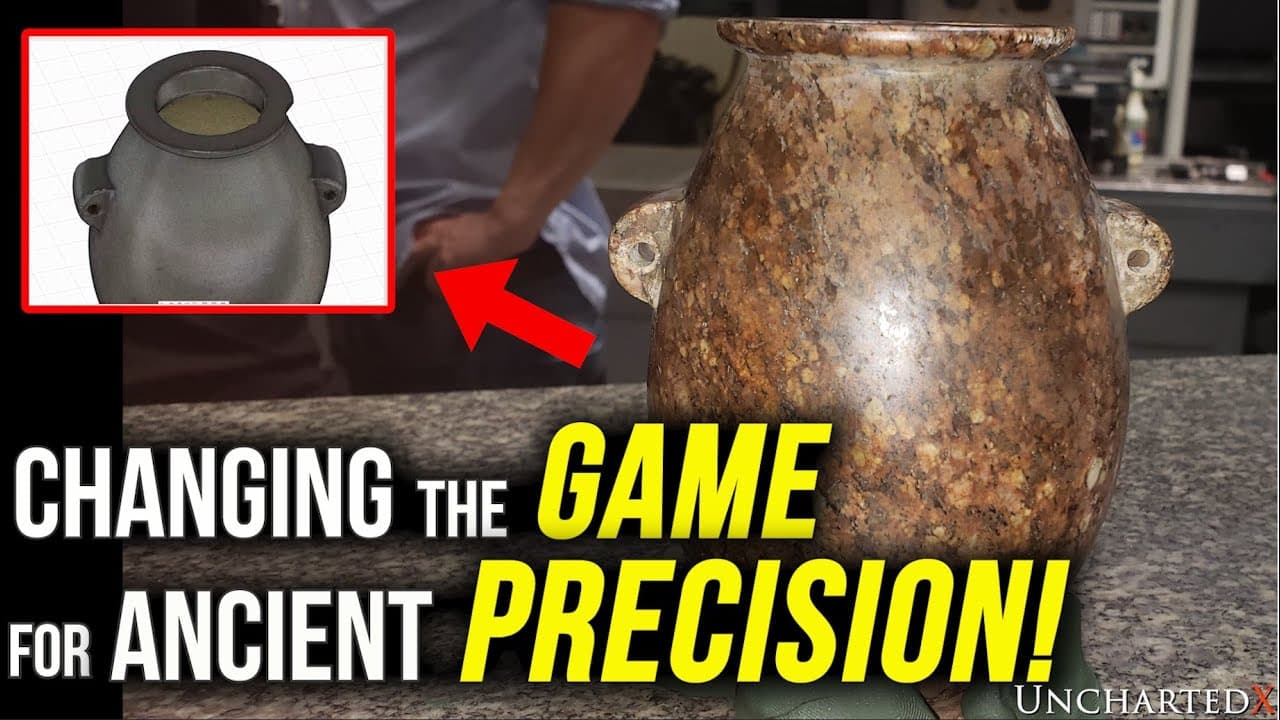
The ancient Egyptian granite vase showcases remarkable precision, measured to within a thousandth of an inch, suggesting the use of advanced technology rather than simple hand tools. This analysis challenges conventional beliefs about ancient manufacturing capabilities and highlights the need for a reevaluation of technological timelines in human history.
Transcript
foreign back to Uncharted X this is Ben and today this video is something that I'd hoped to make for quite some time a detailed defined and professional analysis of the Precision manufacturing that was used to create a truly ancient artifact our subject here is a stone vase from ancient Egypt carved from a single block of igneous Granite dated to p... Read More
Key Insights
- 🥌 The stone vase is an exceptional example of ancient precision manufacturing, challenging traditional beliefs about the technological capabilities of ancient civilizations.
- 😒 The use of advanced technology and tools is indicated by the high level of geometric precision and symmetry observed in the vase.
- 🪡 The analysis highlights the need for further exploration and examination of similar artifacts to gain a deeper understanding of ancient technology and ancient civilizations.
- 🤨 The measurement data obtained from the vase provides strong evidence against the assumption that it was handmade with simple tools, raising questions about the timeline and development of human civilization.
Install to Summarize YouTube Videos and Get Transcripts
Explore YouTube Video Summarizer or Get YouTube Transcript Extractor
Questions & Answers
Q: How old is the stone vase from ancient Egypt, and what does it imply about ancient technology?
The stone vase is at least 5,200 years old, potentially older. Its precision and craftsmanship indicate the use of advanced technology far beyond what was traditionally believed to be available during that time.
Q: How was the stone vase scanned and analyzed?
A structured light scanner was used to create a highly accurate model of the vase. Polyworks software was then used to inspect the features and perform measurements, capturing geometric precision and symmetry.
Q: How were the lug handles of the vase manufactured with such precision?
The lug handles, which cannot be turned by hand, display parallelism and perpendicularity to other reference surfaces with remarkable accuracy. This suggests the use of advanced machinery or tools to maintain such precise geometry.
Q: What implications does this analysis have on our understanding of ancient civilizations?
The analysis challenges traditional beliefs about ancient technology, suggesting the existence of advanced civilizations predating the accepted timeline. It calls for a reevaluation of our understanding of the capabilities of ancient civilizations and their potential use of advanced tools.
Summary & Key Takeaways
-
The video presents a detailed analysis of a stone vase from ancient Egypt, carved from a single block of igneous granite, showcasing extraordinary precision and craftsmanship.
-
The vase challenges traditional beliefs about the technological capabilities of ancient civilizations, suggesting advanced technology may have been used.
-
The scan results and measurements reveal the high precision achieved in the vase's construction, such as flatness, perpendicularity, and parallelism, pointing towards a level of craftsmanship that seems impossible with handheld tools.
Read in Other Languages (beta)
Share This Summary 📚
Summarize YouTube Videos and Get Video Transcripts with 1-Click
Try YouTube Summary with ChatGPT & Claude or YouTube Transcript Generator
Explore More Summaries from UnchartedX 📚





Summarize YouTube Videos and Get Video Transcripts with 1-Click
Try YouTube Summary with ChatGPT & Claude or YouTube Transcript Generator