Why Is Saving Money So Psychologically Difficult?
TL;DR
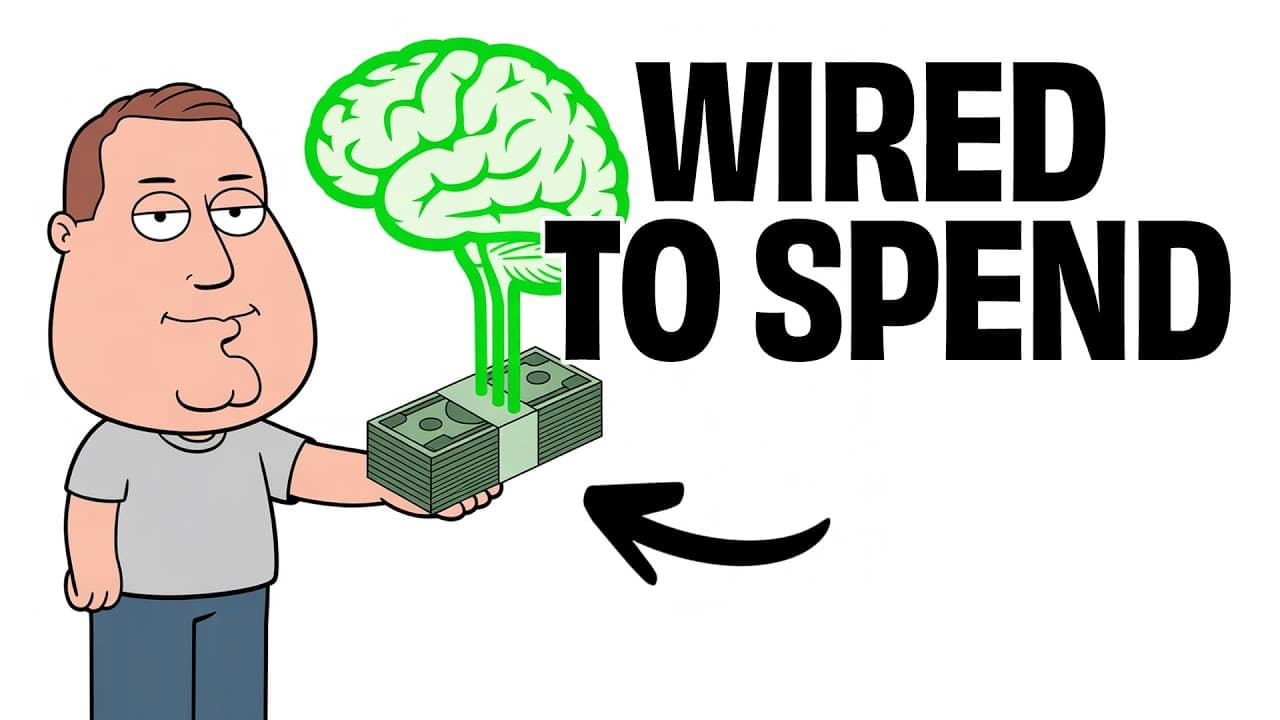
Saving money is psychologically difficult because present bias, loss aversion, mental accounting, and social comparison make spending now feel more compelling than building future security. For example, many people instinctively prefer $20 today over $25 in two weeks, despite the extra $5. Understanding how these forces distort everyday financial choices can help explain why good intentions repeatedly fail, so read on to recognize each psychological trap.
Transcript
Have you ever wondered why saving money feels like trying to hold water in your bare hands? You know, you should be putting money aside. You've read all the advice about emergency funds and retirement planning, but somehow your bank account balance keeps hovering around the same disappointing number month after month. Well, here's something that mi... Read More
Key Insights
- Present bias is the brain's tendency to favor an immediate reward over a larger delayed reward. The transcript illustrates this with a choice between $20 now and $25 in two weeks, noting that many people instinctively prefer the smaller amount available today.
- Immediate rewards are processed more emotionally than future savings. The reward centers associated with immediate pleasure become highly active when something desirable is available now, while the prefrontal cortex must provide planning and self-control to resist the impulse and pursue a distant goal.
- Retirement contributions are experienced differently from purchases because their benefits are distant, abstract, and uncertain. A new gadget provides immediate ownership and satisfaction, while money reserved for retirement may not produce a visible benefit for decades, making the purchase more emotionally compelling.
- Loss aversion is the tendency to experience the pain of losing money roughly twice as strongly as the pleasure of gaining the same amount. Because saving removes money from current spending, the brain can misclassify wealth building as a painful present-day loss.
- Loss aversion is also connected to harmful investment behavior. Fear of losses can discourage investing despite the transcript's claim that avoiding investment sacrifices purchasing power to inflation, and it can encourage holding losing investments while selling winning investments too quickly.
- Mental accounting is the unconscious practice of placing money into separate psychological categories with different spending rules. Earned income may be treated seriously, while found money, tax refunds, bonuses, and gifts may be labeled as free or fun money and spent more readily.
- Money retains the same financial value regardless of its source, but mental accounting creates artificial distinctions. This helps explain how someone can spend a $1,000 tax refund on a vacation while simultaneously worrying about meeting ordinary monthly expenses.
- Social comparison is the brain's tendency to evaluate personal circumstances against other people's visible possessions and experiences. Curated social media posts can make others appear better off, creating pressure to spend on cars, vacations, meals, clothing, or housing to close a perceived status gap.
Install to Summarize YouTube Videos and Get Transcripts
Explore YouTube Video Summarizer or Get YouTube Transcript Extractor
Questions & Answers
Q: Why is saving money psychologically difficult?
Saving is difficult because the brain favors immediate, vivid rewards over distant and uncertain benefits. Present bias encourages spending now, loss aversion makes saving feel like surrendering money, mental accounting loosens the rules for windfalls, and social comparison creates pressure to match other people's lifestyles.
Q: What is present bias in personal finance?
Present bias is the tendency to favor an immediate reward over a larger delayed reward. The transcript illustrates it with a choice between $20 now and $25 in two weeks, noting that many people instinctively want the $20 despite giving up an extra $5.
Q: How does the brain respond to immediate versus delayed rewards?
An immediate reward strongly engages the brain's emotional reward system associated with pleasure and satisfaction. A delayed goal requires the prefrontal cortex, which handles planning and self-control, to override that impulse, but the transcript compares this arrangement to a sports-car engine with bicycle brakes.
Q: Why can saving money feel like losing money?
Saving reduces the money available for immediate spending, so the brain may process it as a present loss rather than future wealth. Loss aversion intensifies that reaction because the pain of losing money is described as roughly twice as strong as the pleasure of gaining the same amount.
Q: Why does spending $500 feel better than putting $500 into retirement?
A $500 gadget provides immediate ownership, happiness, and what the transcript calls a 100% certain payoff. A $500 retirement contribution feels abstract, distant, and uncertain because its benefit may not appear for decades, even though both choices involve the same amount of money.
Q: What is mental accounting, and how does it affect saving?
Mental accounting is the unconscious practice of assigning different rules to money based on its source. People may treat wages seriously while regarding refunds, bonuses, gifts, or found cash as free or fun money, making those funds easier to spend even though their financial value is unchanged.
Q: Why are tax refunds and bonuses often easier to spend?
Tax refunds and bonuses may be placed in a psychological windfall category rather than treated like ordinary income. This can lead someone to spend a $1,000 tax refund on a vacation while still worrying about regular monthly expenses.
Q: How does social comparison interfere with saving money?
Social comparison encourages people to judge their circumstances against other people's visible possessions and experiences. Curated posts featuring cars, vacations, meals, clothing, or housing can create the impression of falling behind, producing pressure to spend instead of saving for future security.
Summary & Key Takeaways
-
The brain evolved to prioritize immediate resources and rewards in environments where waiting could mean losing an opportunity. Modern saving requires that ancient survival machinery to manage credit cards, investment accounts, and retirement plans. Consequently, immediate purchases feel vivid and certain, while the benefits of saving appear distant, abstract, and uncertain.
-
Present bias favors immediate rewards, while loss aversion makes saving feel like surrendering money available for current spending. The emotional reward system can overpower the prefrontal cortex responsible for planning and self-control. This imbalance helps explain why buying a gadget may feel rewarding while contributing the same amount to retirement feels painful.
-
Mental accounting assigns different spending rules to money based on its source, encouraging people to treat refunds, bonuses, gifts, and found cash less seriously than wages. Social comparison adds further pressure by presenting curated images of other people's purchases and experiences, which can create a perceived need to spend and maintain social status.
Read in Other Languages (beta)
Share This Summary 📚
Summarize YouTube Videos and Get Video Transcripts with 1-Click
Try YouTube Summary with ChatGPT & Claude or YouTube Transcript Generator
Explore More Summaries from Nick Invests 📚



Summarize YouTube Videos and Get Video Transcripts with 1-Click
Try YouTube Summary with ChatGPT & Claude or YouTube Transcript Generator