How to Build Better Product Roadmaps Without Dates
TL;DR
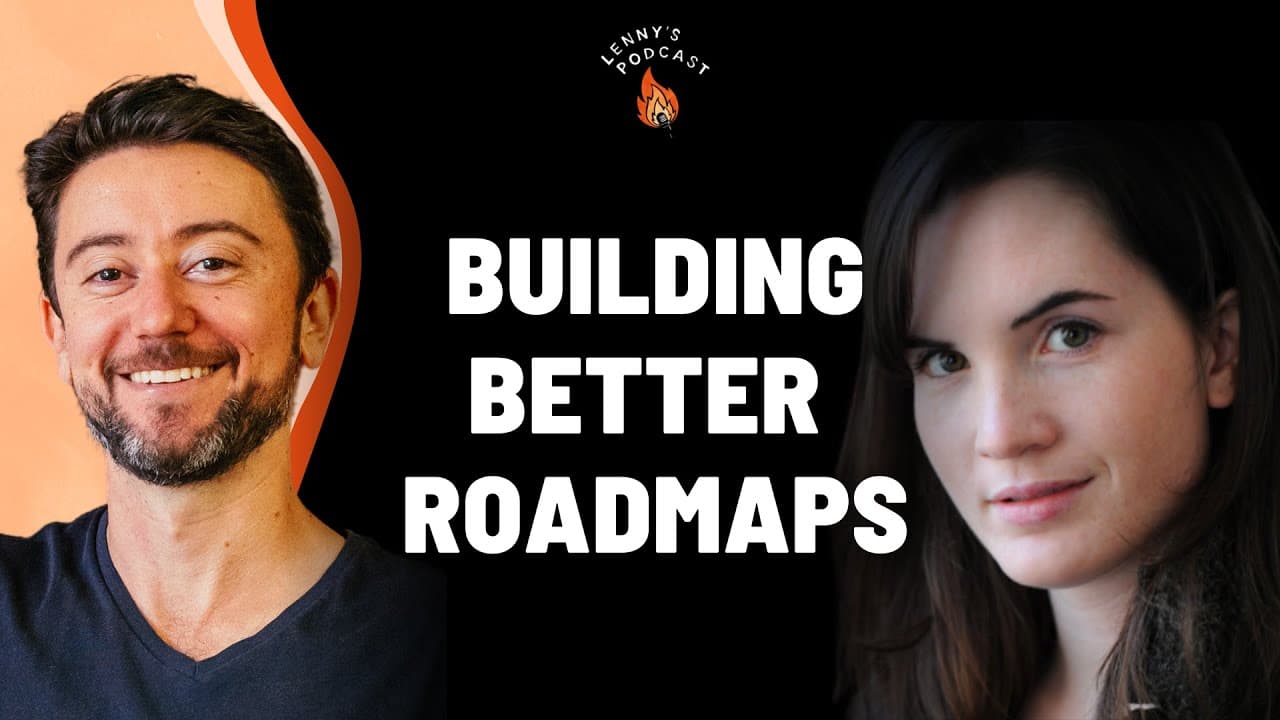
Treat a product roadmap as a prototype for strategy, not as a fixed delivery plan. Use the roadmapping process to expose assumptions about which problems should be solved and in what order, then share those assumptions with teammates and customers, gather feedback, and revise the roadmap as new information emerges.
Transcript
the whole point about a road map is that it's not designed to be your plan I think about it as being a prototype for your strategy what I mean by that is we talk about prototyping all the time in the lean world and a prototype is essentially a way of checking your assumptions generally we think about it in terms of a design or like a model but thin... Read More
Key Insights
- A roadmap is a prototype for product strategy rather than a fixed execution plan. It gives a team a testable representation of its current assumptions, allowing people to question the direction before those assumptions become expensive commitments.
- The value of a roadmap is in the roadmapping process, just as the value of a prototype is in prototyping. Creating, sharing, testing, and revising the artifact produces learning, while the original version can be discarded when it no longer reflects the evidence.
- Roadmapping works by laying out assumptions about the problems a product team intends to solve. Stating those assumptions explicitly helps colleagues and customers evaluate whether the team has identified meaningful problems and arranged them in a sensible order.
- Early roadmap assumptions should be shared with teammates, customers, and other useful participants. Their feedback can reveal weak reasoning, missing context, or incorrect priorities while the strategy remains flexible enough to change.
- Traditional timeline-based Gantt charts have limitations for product roadmapping. Bastow presents the Now, Next, Later framework as a simpler alternative that supports strategic discussion without treating the roadmap as an immutable delivery plan.
- Product prototypes and strategy prototypes follow the same learning principle. A feature mock-up tests assumptions about a proposed design, while a roadmap tests assumptions about product direction, problem selection, and the sequence in which problems may be addressed.
- Consistency is central to community building. Mind the Product grew from product people meeting to share, collaborate, and learn, supported by recurring ProductTank gatherings, annual events, and contributions from people beyond the founders' immediate networks.
- Conferences are difficult to operate iteratively because mistakes often cannot be corrected until the next event. Supplier failures, insufficient catering, and last-minute speaker cancellations can require immediate improvisation and create costs reaching thousands of pounds.
Install to Summarize YouTube Videos and Get Transcripts
Explore YouTube Video Summarizer or Get YouTube Transcript Extractor
Questions & Answers
Q: What is the purpose of a product roadmap?
A product roadmap should serve as a prototype for product strategy, not as a fixed plan. It makes the team's assumptions about important problems and their ordering visible so that other people can examine them. The roadmap supports conversation, feedback, and revision, helping the team test whether its proposed direction is reasonable before making deeper commitments.
Q: Why should a roadmap not be treated as a fixed plan?
A roadmap represents assumptions that may prove incomplete or incorrect when they are shared with teammates and customers. Treating it as fixed discourages learning and revision. Bastow argues that the useful part is the roadmapping process, where assumptions are expressed, challenged, and updated, rather than preserving an early artifact as though it were a guaranteed execution schedule.
Q: How is a product roadmap similar to a prototype?
A feature prototype makes a proposed design visible so users can react to it, identify problems, and suggest improvements. A roadmap performs the same function at the strategy level. It presents assumptions about product problems and direction, invites feedback, and can be replaced by a better version. In both cases, the learning process matters more than the original artifact.
Q: How should teams test the assumptions in a roadmap?
Teams should state the problems they believe need solving, show the proposed ordering, and share those early assumptions with other people. Useful reviewers include teammates, customers, and anyone who can provide relevant feedback. Their reactions help the team check whether it is following the right path and identify where the roadmap needs clarification, correction, or replacement.
Q: What is the Now, Next, Later roadmap framework?
Now, Next, Later is Janna Bastow's roadmapping framework and is presented as an alternative to timeline-based Gantt charts. The source characterizes it as a simpler way to approach roadmapping. Its role in the discussion is to support strategic thinking and adaptation while avoiding the idea that a roadmap must operate as a fixed, date-driven delivery plan.
Q: Why is the roadmapping process more valuable than the roadmap itself?
The roadmapping process forces a team to articulate its beliefs about which problems matter and what direction it should take. Sharing those beliefs creates opportunities for criticism, validation, and learning. A roadmap document can quickly become outdated, but the repeated practice of exposing assumptions and revising strategy helps the team remain aligned with the information it receives.
Q: How did Mind the Product build its product community?
Mind the Product began when product people gathered because they did not know everything and wanted to learn together. The community emphasized sharing, collaboration, grassroots participation, and consistency. Regular ProductTank meetings and annual events created continuity, while contributors outside the founders' immediate network helped find speakers, produce blog material, and bring more relevant people into the wider community.
Q: What makes running a conference difficult to manage iteratively?
A conference offers limited opportunities to correct mistakes because another full event may not occur until the following year. Bastow describes catering that delivered insufficient food, requiring volunteers to buy supplies from local sandwich shops and organizers to compensate attendees with cash cards. Speaker cancellations can also waste prepaid flights and require costly last-minute replacements.
Summary & Key Takeaways
-
A roadmap should function as a prototype for product strategy rather than a fixed plan. Its purpose is to make assumptions visible, especially assumptions about customer problems and their relative order. Like any prototype, it should be shared early, tested through feedback, revised, and replaced when evidence challenges the original thinking.
-
The value of roadmapping lies in the ongoing process, not in preserving a particular roadmap document. Teams can present their early beliefs about which problems matter, invite reactions from colleagues and customers, and check whether they are moving in a sensible direction before committing too deeply to a specific solution or schedule.
-
Janna Bastow connects her roadmapping ideas with experience as a product manager, ProdPad co-founder, and Mind the Product co-founder. The conversation also covers community building, conference operations, presentation skills, and performance anxiety, while the roadmap discussion contrasts timeline-based Gantt charts with the simpler Now, Next, Later framework.
Read in Other Languages (beta)
Share This Summary 📚
Summarize YouTube Videos and Get Video Transcripts with 1-Click
Try YouTube Summary with ChatGPT & Claude or YouTube Transcript Generator
Explore More Summaries from Lenny's Podcast 📚




Summarize YouTube Videos and Get Video Transcripts with 1-Click
Try YouTube Summary with ChatGPT & Claude or YouTube Transcript Generator