How to Tell Stories That Convert Viewers
TL;DR
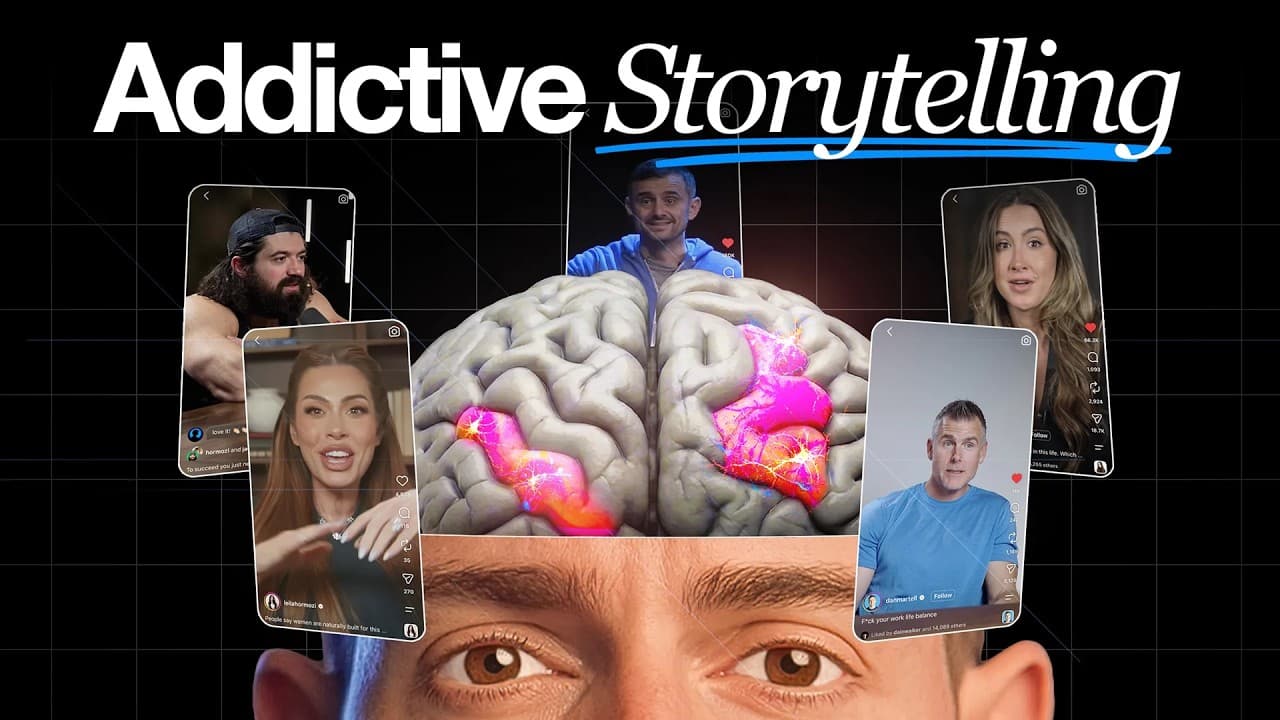
Conversion-focused stories work best when they target an ideal customer's specific pain, use language matched to that customer's competence, provide concrete proof, and create curiosity about what comes next. Structure each explanation from broad context and stakes toward strategy, tactics, examples, and principles, because clarity builds understanding, understanding strengthens trust, and trust supports conversion.
Transcript
Today we're talking about storytelling. If you want your videos to perform better and actually move the needle for your business, you need to learn how to tell better stories. So, in this video, I'm going to walk through my six favorite storytelling techniques specifically designed for conversion. Because there's a big difference between stories th... Read More
Key Insights
- Avatar framing is the practice of designing a story around a specific customer avatar so the message feels like a precise fit. It prioritizes the right potential buyers rather than attempting to attract the broadest possible audience.
- Conversion storytelling is driven by customer pain, aligned messaging, concrete proof, and a path toward more information. These elements distinguish content intended to generate leads or sales from sensational stories optimized primarily for reach and views.
- Audience language is a qualification signal that shows whether the storyteller understands the buyer. Advanced customers should hear appropriately advanced terminology, while beginners need accessible terms that reflect their current knowledge without creating unnecessary confusion.
- Concrete proof is strongest when it directly validates the proposed method and matches the claim being made. Results that are vague or misaligned weaken credibility, even when the underlying story successfully identifies a relevant customer frustration.
- A conversion-focused hook is most effective when it names the intended audience, surfaces a distinctive pain, presents an alternative approach, supplies relevant proof, and creates curiosity. Together, these elements encourage qualified viewers to continue rather than attracting everyone indiscriminately.
- Clarity purification is the repeated rewriting of content until the intended meaning and next action are unmistakable. Clear communication helps viewers understand the recommendation, increased understanding supports trust, and that trust can contribute to conversion.
- The broad-to-narrow framework is an information sequence consisting of context, stakes, strategy, tactics, examples, and principles. This top-down order gives viewers the orientation and motivation they need before introducing detailed instructions or conclusions.
- Weak explanations often omit context and stakes or fail to provide examples after presenting tactics. The first mistake leaves viewers unsure what the subject means or why it matters, while the second prevents them from seeing how the advice works in practice.
Install to Summarize YouTube Videos and Get Transcripts
Explore YouTube Video Summarizer or Get YouTube Transcript Extractor
Questions & Answers
Q: How can storytelling turn viewers into customers?
Storytelling can support conversion by focusing on a core frustration experienced by the ideal customer, using language appropriate to that customer's competence, providing specific proof that validates the proposed solution, and creating curiosity about additional information. The goal is not merely to entertain or maximize views. It is to make qualified viewers feel understood, build trust through clarity and evidence, and guide them toward a logical next step.
Q: What is avatar framing in conversion storytelling?
Avatar framing is the deliberate design of a story for a specific ideal customer rather than a broad audience. The storyteller selects a pain point that matters particularly to that buyer, uses terminology the buyer recognizes, adds concrete proof, and creates a reason to continue. This approach makes the content feel like a bull's-eye match for qualified viewers while naturally filtering out people who are not likely customers.
Q: How do you write a conversion-focused video hook?
A conversion-focused hook should identify the intended audience or desired business outcome, immediately address a specific frustration, and introduce a compelling alternative to the audience's usual assumption. It should then support that alternative with concrete, relevant results and leave an open question that encourages continued viewing. The example in the transcript targets business owners, challenges the pursuit of virality, names a conversion strategy, and presents growth and profit results as proof.
Q: Why is going viral not always the right business goal?
Broad virality typically favors sensational stories, maximum reach, and highly compressed delivery, but only a small portion of a large platform audience may fit a business's customer avatar. Conversion content therefore benefits from appealing strongly to the relevant slice instead of spilling into unrelated audiences. The transcript does not claim that growth is irrelevant. It argues that targeted messaging can pursue conversion without making raw view count the primary objective.
Q: What are common mistakes in avatar framing?
Avatar framing commonly fails when the pain point is too vague to match a concern the buyer actively feels, when proof is missing or does not validate the claim, when the storyteller uses language that suggests weak subject knowledge, or when the story creates insufficient curiosity. Correct execution requires specificity, credible and aligned evidence, competent use of audience terminology, and a compelling reason for the qualified viewer to keep watching.
Q: What is the broad-to-narrow storytelling framework?
The broad-to-narrow framework structures information as a top-down sequence: context, stakes, strategy, tactics, examples, and principles. Context establishes the subject, and stakes explain why it matters. Strategy presents the high-level approach, tactics show how to execute it, examples make those tactics concrete, and principles summarize the essential lessons. Following this order helps viewers understand each layer before they encounter more detailed or abstract information.
Q: Why should a story explain context and stakes first?
Context orients viewers by clarifying what the storyteller is discussing, while stakes explain why the subject matters to them. Starting directly with a strategy can make the audience struggle to follow because they lack both orientation and motivation. Stakes can also function as a renewed hook by connecting the topic to a desired result, such as more sales. Once viewers understand the subject and its importance, they can evaluate the strategy more clearly.
Q: How does clearer writing improve content conversion?
Clear writing gives viewers an exact understanding of the message and the action they should take next. The transcript describes repeated rewriting for clarity as clarity purification. The underlying sequence is that a clear explanation produces clearer audience understanding, clearer understanding increases trust, and greater trust supports conversion. Writers can improve clarity by following the broad-to-narrow structure and including examples that demonstrate what their tactics mean in practice.
Summary & Key Takeaways
-
Conversion storytelling differs from storytelling designed for broad virality. Instead of maximizing shock, reach, and compression, it focuses tightly on an ideal customer. The story should address a distinctive pain point, match the audience's competence through appropriate language, present concrete supporting proof, and open a path toward additional information or action.
-
Avatar framing makes content feel specifically designed for the intended buyer while filtering out people who are unlikely to become customers. A strong opening identifies the relevant audience and frustration, introduces a compelling or contrarian approach, supports it with aligned results, uses familiar terminology, and creates enough curiosity to sustain attention.
-
The broad-to-narrow framework organizes information in the order people need it: context, stakes, strategy, tactics, examples, and principles. Beginning midway through that sequence can leave viewers without orientation or motivation. Rewriting for clarity helps audiences understand the recommended action, trust the person delivering it, and become more likely to convert.
Read in Other Languages (beta)
Share This Summary 📚
Summarize YouTube Videos and Get Video Transcripts with 1-Click
Try YouTube Summary with ChatGPT & Claude or YouTube Transcript Generator
Explore More Summaries from Kallaway 📚


Summarize YouTube Videos and Get Video Transcripts with 1-Click
Try YouTube Summary with ChatGPT & Claude or YouTube Transcript Generator