How to Choose 3 Daily Tasks That Drive Your Goals
TL;DR
Choose one to three daily actions with the strongest causal link to your long-term goal, then schedule them before less important work. Build this clarity by reverse engineering goals across time horizons, selecting three to five priority actions each week, and using a daily power down ritual to define tomorrow's targets, close open loops, and disengage for recovery.
Transcript
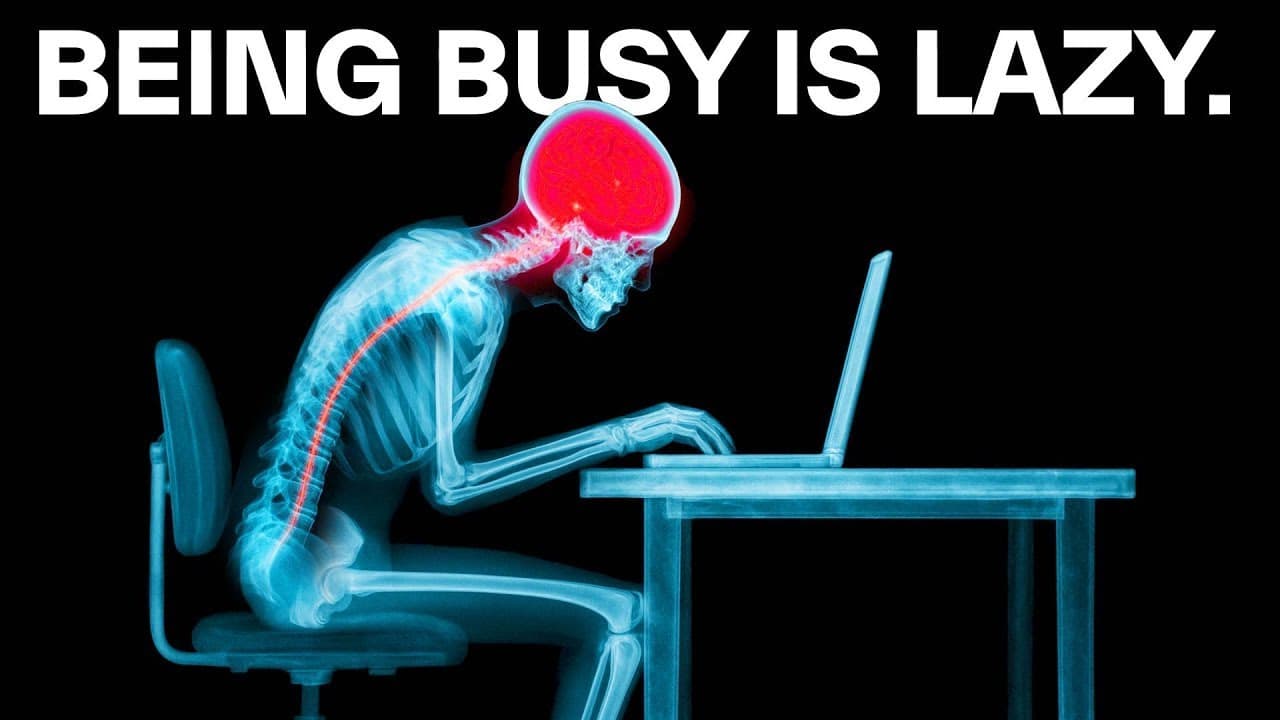
Top performers aren't busier than you. They're just clearer. They know exactly what's worth doing and everything that isn't. If you're constantly busy and still not making real progress while others around you are pulling ahead, this will explain exactly why and how to fix it. Now, I'm Ran Darus, founder and CEO of flowstate.com. We've trained ever... Read More
Key Insights
- Misallocated flow is deep concentration directed toward tasks that have no direct link to the intended goal. It can create an experience of high productivity while accelerating movement in the wrong direction, because focus amplifies effort without determining whether that effort matters.
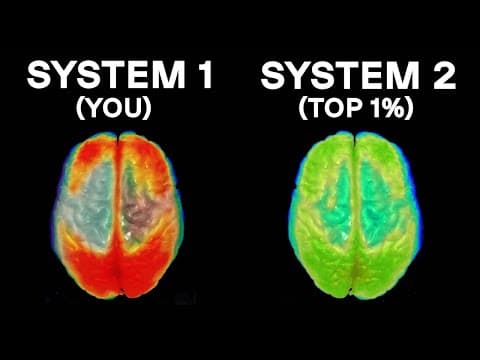
- The goal-directed spectrum measures how precisely moment-to-moment actions align with long-term goals. People higher on the spectrum repeatedly evaluate which available action will produce the desired result most directly, allowing their daily choices to serve outcomes that may take years to achieve.
- Goal-directed cognition works through action-outcome evaluation rather than automatic stimulus-response behavior. The transcript associates strategic planning with the prefrontal cortex, connections between past experience and future scenarios with the hippocampus, and outcome-based action selection with the basal ganglia.
- A causal chain converts an abstract goal into a sequence of measurable requirements. The example traces a $250,000 annual target to 25 clients paying $10,000, 50 sales calls, 100 qualified leads, and a targeted outbound sequence or referral campaign.
- Most tasks are good-enough tasks rather than optimization tasks. Once these tasks reach roughly 80 percent quality, further refinement adds little value, while a smaller set of activities deserves continued improvement because incremental gains can produce much larger results.
- A goal stack is a one-page hierarchy connecting a broad vision to five-year, one-year, quarterly, monthly, and weekly goals. It creates a visible alignment map that helps determine whether current work contributes to the outcomes a person says they want.
- A goal flywheel is a weekly planning process for identifying three to five actions that most directly advance monthly and quarterly goals. Scheduling those actions before other commitments protects them from goal drift, competing requests, and work that merely feels productive.
- A power down ritual is a 30-minute end-of-day reset with three phases. It identifies and schedules tomorrow's one to three most goal-directed actions, clears open loops through quick decisions, and supports recovery by creating a clear point of mental disengagement from work.
Install to Summarize YouTube Videos and Get Transcripts
Explore YouTube Video Summarizer or Get YouTube Transcript Extractor
Questions & Answers
Q: How do I choose the three most important tasks each day?
Choose one to three actions by asking which available tasks have the clearest and most direct causal relationship to your long-term goal. Confirm that each action advances a current weekly, monthly, or quarterly target, then schedule it with a specific micro goal. Activities that feel productive but do not move the required outcome should be postponed, simplified, or excluded from the priority list.
Q: What is misallocated flow, and why does it reduce progress?
Misallocated flow is a state of deep focus and full immersion aimed at work that does not directly support the desired result. It reduces meaningful progress because concentration increases the speed and intensity of execution without supplying direction. A person can therefore work with exceptional focus on website redesigns, content, routines, or other tasks while neglecting prospects and actions that could generate the required revenue.
Q: How can I identify the causal chain behind a goal?
Start with the final outcome and work backward through every result required to produce it. Identify the last condition before success, the preceding conditions, and the first action you can take now. The transcript illustrates this by connecting $250,000 in annual revenue to 25 clients paying $10,000, then to 50 sales calls, 100 qualified leads, and one targeted outbound or referral campaign.
Q: What is the goal-directed spectrum?
The goal-directed spectrum describes how accurately a person's moment-to-moment behavior aligns with long-term goals. Someone near the middle has goals but is frequently pulled away from them. Someone high on the spectrum lets desired outcomes guide almost every decision and continually asks which action will move the target forward faster and more directly than the available alternatives.
Q: What is the difference between optimization tasks and good-enough tasks?
Optimization tasks justify continued refinement because a small quality improvement can create a much larger result. The transcript gives thumbnails and important sales pitches as examples. Good-enough tasks provide little additional value after reaching an acceptable threshold, described as roughly 80 percent quality. Since most work belongs in the second category, perfection should be reserved for the limited areas where improvement compounds.
Q: How do I build and use a goal stack?
Create a one-page document that begins with your broader vision and works downward through your five-year, one-year, quarterly, monthly, and weekly goals. Use it as an alignment map between immediate actions and long-term outcomes. Reviewing the stack helps reveal whether a proposed task supports the next required result or merely consumes time without advancing the causal chain.
Q: How does the weekly goal flywheel prevent busy work?
Review the goal stack once each week, typically on Sunday evening, and identify three to five actions that would most directly advance the active monthly and quarterly goals. Record these as the week's goal-directed actions and place them in the calendar before other work. The resulting list provides a reference whenever competing demands make it difficult to distinguish true progress from activity that only feels productive.
Q: What should I do during a daily power down ritual?
Spend 30 minutes at the end of the workday completing three phases. First, select tomorrow's one to three most goal-directed actions and schedule them with clear micro goals that can guide attention. Second, clear open loops by making quick decisions about pending items. Third, disengage from work completely so the day has closure and recovery can support sustained performance.
Summary & Key Takeaways
-
Deep concentration does not guarantee meaningful progress. Misallocated flow occurs when intense focus is directed toward work with no clear causal relationship to the desired outcome. Effective performance requires both speed and direction, so each potential task should be evaluated by how directly and efficiently it advances a defined long-term goal.
-
Goal directedness can be improved by mapping the causal chain between current actions and desired results. The process begins with the final outcome, identifies the required intermediate results, and traces them back to the first actionable step. This prevents attractive forms of busy work from displacing activities that actually produce progress.
-
Three systems operationalize goal directedness. A goal stack connects weekly actions to monthly, quarterly, yearly, five-year, and visionary aims. A weekly goal flywheel selects and schedules three to five high-impact actions. A 30-minute power down ritual chooses tomorrow's priorities, resolves pending decisions, and creates mental separation for recovery.
Read in Other Languages (beta)
Share This Summary 📚
Summarize YouTube Videos and Get Video Transcripts with 1-Click
Try YouTube Summary with ChatGPT & Claude or YouTube Transcript Generator
Explore More Summaries from Rian Doris 📚

Summarize YouTube Videos and Get Video Transcripts with 1-Click
Try YouTube Summary with ChatGPT & Claude or YouTube Transcript Generator