How to Find Stillness Beyond Your Thoughts
TL;DR
Direct attention toward the silence between words, the breath, or the body’s inner aliveness to become less absorbed in thought. Meditation reveals that attention can be consciously directed rather than controlled by mental activity, external demands, or electronic alerts. Sustained awareness of awareness creates spaciousness around thought, strengthens trust in life, and connects you with a deeper sense of being.
Transcript
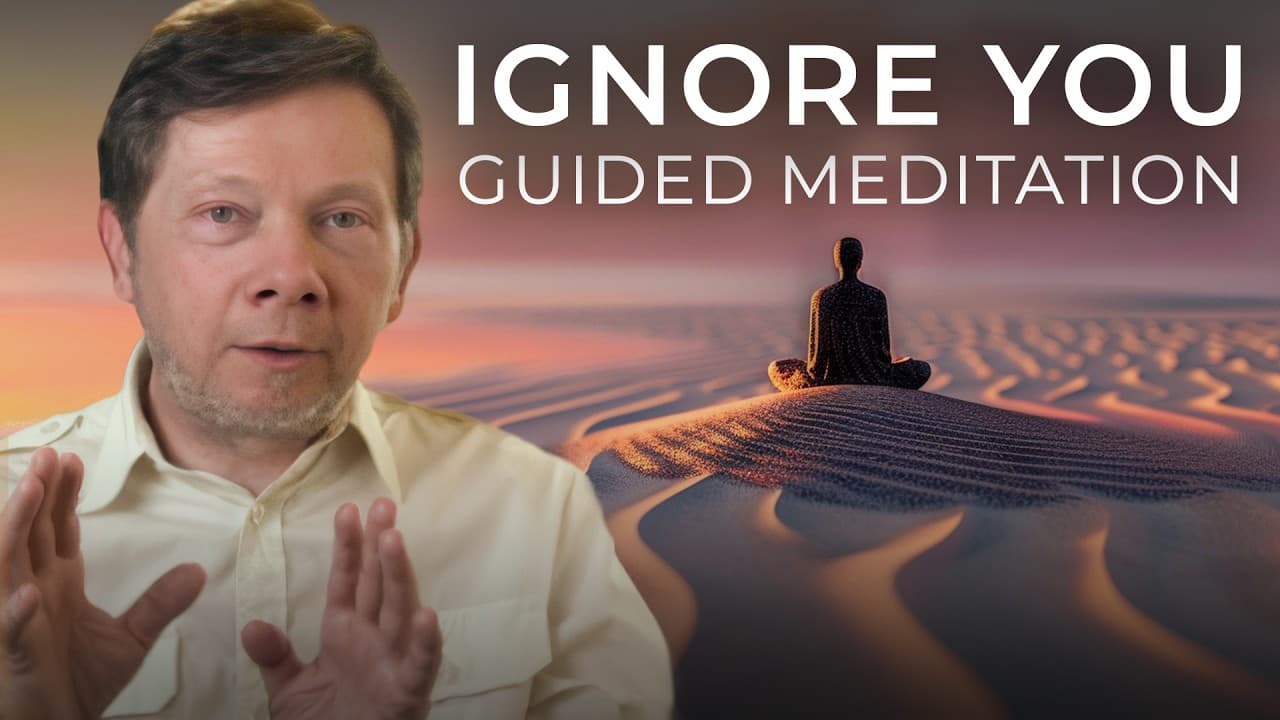
(hopeful music) - This is not a conventional meditation. I may be speaking most of the time, but there are also gaps in between the words, which, of course, are always more important than the words. And if you're aware of the gaps as much as you're aware of the words, then you're already entering the state of meditation without having to go through... Read More
Key Insights
- Meditation is the state of not being absorbed in or identified with the stream of thinking. Becoming aware of the silent spaces between words creates brief moments without thought and provides a direct entrance into meditation without requiring a preliminary technique.
- Stress is experienced when multiple situations, people, tasks, or objects simultaneously pull attention in different directions. When awareness is undeveloped, the surrounding world and incoming thoughts largely determine where attention goes, producing the feeling of losing oneself in competing demands.
- Attention can be consciously directed toward a chosen internal or external object. The breath, a mentally repeated mantra, or a candle flame can serve as an anchor, showing that a person does not have to follow every thought or stimulus that enters awareness.
- Breath awareness is a calming practice that can remain present alongside seeing and hearing. A person can listen, watch, and simultaneously notice that breathing is occurring, thereby keeping part of their attention grounded while other sensory experiences continue.
- The body’s inner aliveness is another anchor for attention. Sensations within the hands, feet, legs, and entire body can be experienced as a field of aliveness, giving awareness somewhere to rest instead of habitually following thoughts or external events.
- Personal identity is commonly built from mental objects such as history, conditioning, problems, circumstances, and the story of oneself. A deeper sense of being exists prior to these narratives and makes their appearance in awareness possible without being separate from lived experience.
- Awareness cannot be possessed or examined as a separate object because it is the essence of the one who is looking. Becoming aware of awareness points toward a formless and timeless dimension that cannot be adequately described through ordinary subject and object language.
- Rootedness in being creates trust, which is described as the absence of fear. Thoughts can still arise and be used effectively, but identification with them weakens because part of awareness remains spacious and detached beyond the activity of the thinking mind.
Install to Summarize YouTube Videos and Get Transcripts
Explore YouTube Video Summarizer or Get YouTube Transcript Extractor
Questions & Answers
Q: How can I find stillness between thoughts?
Direct attention toward the silent gaps between spoken words and notice the space that seems to exist underneath the words as well. Whenever that space is consciously noticed, thinking briefly stops. Repeated awareness of these gaps reduces absorption in the stream of thought. This is already meditation because the essential shift is not eliminating every thought, but no longer identifying completely with mental activity.
Q: Why does directing attention reduce stress?
Stress arises when several situations, people, tasks, devices, or thoughts pull attention in different directions at once. Directing attention toward a chosen object, such as breathing, interrupts this automatic movement. The practice reveals that awareness has a choice and does not need to obey every demand. As attention becomes steadier, external events and passing thoughts lose some of their power to control experience.
Q: How can breathing be used during meditation?
Place some attention on the fact that breathing is happening while continuing to listen, look, or remain aware of the surrounding environment. The breath does not need to replace auditory or visual perception. It can be noticed at the same time. This divided yet grounded awareness has a calming effect and demonstrates that attention can be intentionally placed instead of being captured entirely by thoughts or external stimuli.
Q: What is inner body awareness in meditation?
Inner body awareness is the recognition of aliveness within the body, beginning with areas such as the hands, feet, or legs and expanding to the entire body. Attention rests on this internal field of sensation rather than automatically following thoughts or events. Practicing it reveals a degree of choice over attention and helps establish contact with a dimension of experience that is deeper than conceptual thinking.
Q: What does it mean to become aware of awareness?
Becoming aware of awareness means turning attention away from particular mental objects and recognizing the consciousness in which they appear. Awareness cannot be located or possessed as a separate thing because it is the essence of the person who is looking. It has no form and cannot be defined through past or future. The recognition is therefore a direct sense of being rather than an intellectual description.
Q: How is deeper being different from personal identity?
Personal identity is usually assembled from history, conditioning, problems, circumstances, and the continuing story of oneself. Deeper being is the foundational presence that exists before and beneath those mental contents. It is the space or light in which the personal story appears. Contact with this level does not erase the story, but prevents it from serving as the only available basis for identity.
Q: Can thoughts continue during meditation?
Thoughts can continue to arise during meditation, and thinking can still be used for practical purposes. The change is that each thought no longer receives complete identification and attention. A spacious part of awareness remains beyond the thought, allowing mental activity to operate without drawing the person fully into a succession of reactions. This detachment can make thought more effective because it is no longer automatically controlling consciousness.
Q: How can meditation create trust and reduce fear?
Meditation creates contact with a sense of being that is deeper than personal history and changing mental events. Feeling rooted in this presence produces a sense of being carried by something greater than the limited personal self and connected with the power of life. Trust is described as the absence of fear, so the world is no longer perceived in the same fearful way when this deeper foundation remains consciously available.
Summary & Key Takeaways
-
Meditation begins by noticing not only spoken words but also the stillness between and beneath them. Awareness of these gaps briefly interrupts thinking, reducing absorption in the mental stream. The practice does not require a preliminary technique, although established methods can help people discover that their attention can be consciously directed.
-
Daily life continually presents situations, people, tasks, devices, and thoughts that compete for attention. Stress develops when several demands pull awareness in different directions. Focusing partly on breathing or the body’s inner aliveness provides a calming anchor and demonstrates that events and thoughts do not have to determine where attention goes.
-
Beneath personal history, conditioning, problems, and mental narratives is a foundational sense of being or presence. It cannot be observed as an object because it is awareness itself. Remaining connected with this formless, timeless dimension creates rootedness, trust, and space around thought, allowing the mind to operate without controlling one’s identity completely.
Read in Other Languages (beta)
Share This Summary 📚
Summarize YouTube Videos and Get Video Transcripts with 1-Click
Try YouTube Summary with ChatGPT & Claude or YouTube Transcript Generator
Explore More Summaries from Eckhart Tolle 📚


Summarize YouTube Videos and Get Video Transcripts with 1-Click
Try YouTube Summary with ChatGPT & Claude or YouTube Transcript Generator