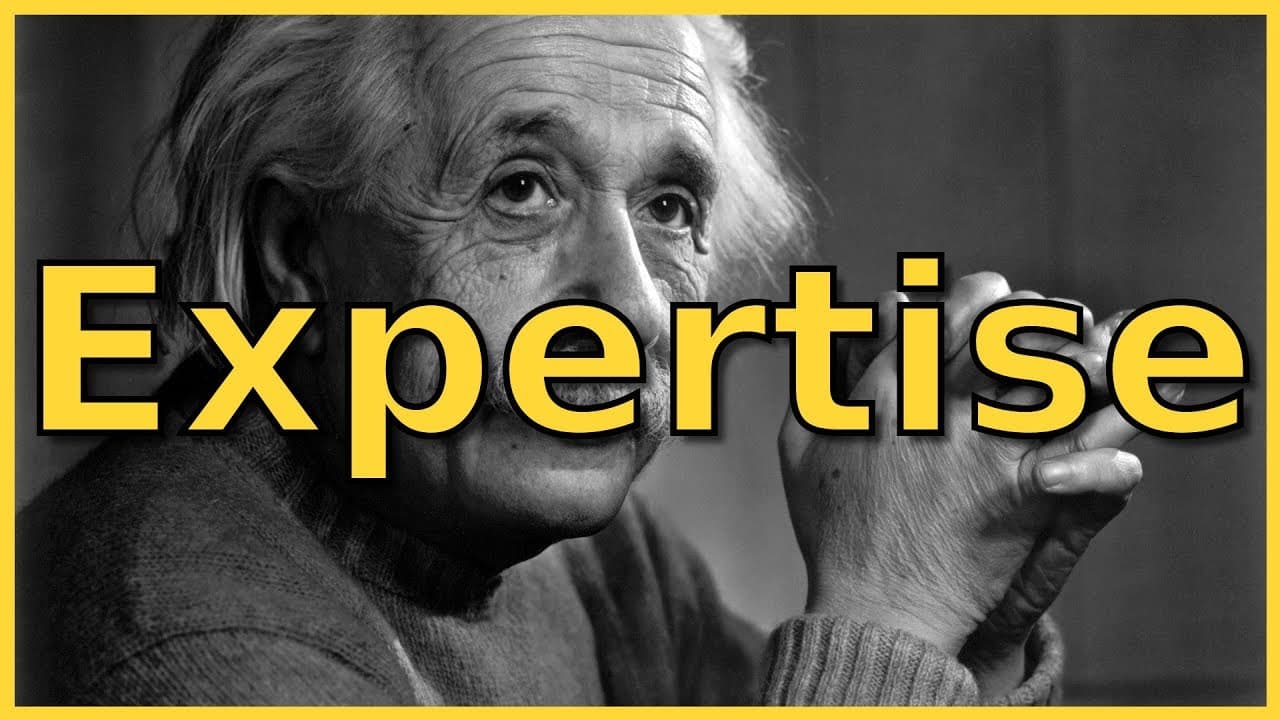
How to Become a Deep Learning Expert
TL;DR
Becoming a deep learning expert means steadily advancing through four levels, novice, technician, craftsman, and pioneer, while continually learning. Start by mastering programming syntax and deep learning fundamentals, then strengthen your mathematics, combine concepts into complex solutions, and progress toward reading and implementing research papers. Read on to understand what defines each stage and how to move beyond tutorial dependence.
Transcript
what's up everybody in today's video you are gonna learn how to go from novice to machine learning expert let's get started so this video is motivated by a series of questions I've gotten from viewers in recent weeks and the questions are to the effect of hey how is it that you do this and how more importantly how can I do this well I'm flattered b... Read More
Key Insights
- 🎰 Expertise in machine learning is not a fixed state, but rather a continuous process of learning and growth.
- 🏑 There are four levels of expertise: novice, technician, craftsman, and pioneer, with pioneers being the top experts in the field.
- 🫠 Progression from novice to expert requires a combination of programming skills, deep learning knowledge, mathematics proficiency, and the ability to read and implement research papers.
- 👋 Good coding practices, such as clear variable naming and commenting, are essential for becoming a skilled craftsman in machine learning.
- 🤩 Constant motivation, goal-setting, and staying up to date with the latest advancements are key factors in the learning journey.
- 😷 While academic backgrounds and asking quality questions are important for becoming a pioneer, it is not necessary for everyone to reach this level of expertise.
Install to Summarize YouTube Videos and Get Transcripts
Explore YouTube Video Summarizer or Get YouTube Transcript Extractor
Questions & Answers
Q: How do you become a deep learning expert?
Begin with programming and deep learning fundamentals, then study books and mathematics as your skills develop. Progress toward combining multiple concepts, reading research papers, and implementing their ideas in working code.
Q: What are the four levels of machine learning expertise?
The framework identifies four levels: novice, technician, craftsman, and pioneer. Most people fall somewhere between novice and craftsman, while only a handful become pioneers.
Q: What defines a novice in machine learning?
A novice cannot finish significant portions of a project without help from people, books, or the internet. Novices may struggle with syntax, depend too heavily on tutorials, and have difficulty combining complex ideas.
Q: How does a technician differ from a novice?
A technician has mastered essential syntax and fundamentals well enough to combine different skills into more complex solutions. The example given combines convolutional neural networks, Q-learning, image preprocessing, and knowledge of a framework.
Q: What is the defining characteristic of a machine learning craftsman?
A craftsman can read research papers and implement their ideas in functional code. Clear variable naming, commenting, and other good coding practices are also important at this stage.
Q: Do you need mathematics to become a machine learning expert?
Mathematics is part of the progression from novice toward expertise. The relevant foundations include linear algebra and calculus, which support understanding and implementing deep learning algorithms.
Q: Does expertise in one programming language eliminate the novice stage in another?
No. An expert in C or C++ may still be a novice when starting Python, although prior experience can make learning faster. Likewise, an expert programmer entering deep learning from systems control still begins as a deep learning novice.
Q: Why must machine learning experts keep learning?
Expertise is a sliding scale rather than a fixed state because learning is lifelong and the field continually evolves with better techniques. Staying capable requires continued learning, growth, goal-setting, and attention to new research.
Summary & Key Takeaways
-
Expertise in machine learning is not a fixed state, but rather a sliding scale that requires continuous learning and growth.
-
There are four levels of expertise: novice, technician, craftsman, and pioneer.
-
To progress from novice to expert, one must start with programming and deep learning, then move on to books and mathematics, and eventually be able to read and implement research papers.
Read in Other Languages (beta)
Share This Summary 📚
Summarize YouTube Videos and Get Video Transcripts with 1-Click
Try YouTube Summary with ChatGPT & Claude or YouTube Transcript Generator
Explore More Summaries from Machine Learning with Phil 📚



Summarize YouTube Videos and Get Video Transcripts with 1-Click
Try YouTube Summary with ChatGPT & Claude or YouTube Transcript Generator