How Do Corrosion Inhibitors Protect Metal from Rust?
TL;DR
Corrosion inhibitors protect metal by forming a thin, effective film that prevents rusting. This layer keeps moisture and oxygen from reacting with the metal, significantly reducing corrosion in various environments. Techniques such as synthesis with oleic acid and testing in corrosive solutions demonstrate their strong effectiveness.
Transcript
today on Applied Science we're going to talk about corrosion inhibitors these are really clever molecules that you've probably heard about before think of the last time that you saw an advertisement for engine oil this one even says clinging molecules protect from the start and has this ridiculous textured sticker to let you know why you need their... Read More
Key Insights
- 🥳 Corrosion inhibitors form a protective film on metal parts, preventing rusting.
- 💦 Iron rusts when exposed to water and oxygen, and salt accelerates the corrosion process.
- ♻️ Techniques like painting, sacrificial anodes, and chemical layers are used to prevent corrosion in different environments.
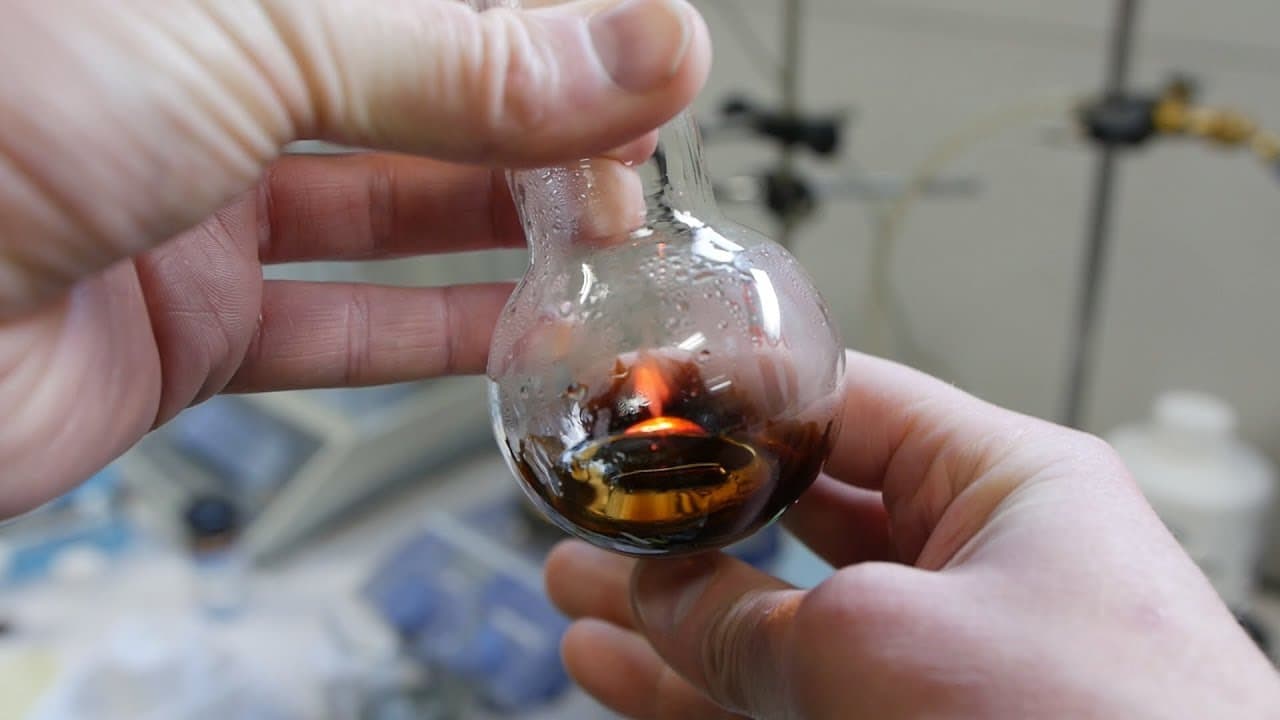
- 🪜 The synthesis of corrosion inhibitors involves adding oleic acid to a specific molecule through a heated reaction.
- 🧂 Testing corrosion inhibitors in various corrosive environments, such as salt fog or salt spray, can demonstrate their effectiveness.
- 🥳 Certain chemicals, like deoxy, have corrosion inhibitors to protect metal parts from their own corrosive additives.
- 🥶 Specialty corrosion inhibitors have been discovered in old patents, and their effectiveness can be comparable to commercial products like deoxy.
Install to Summarize YouTube Videos and Get Transcripts
Explore YouTube Video Summarizer or Get YouTube Transcript Extractor
Questions & Answers
Q: What is a corrosion inhibitor and how does it work?
A corrosion inhibitor is a molecule that forms a protective film on metal surfaces, preventing rusting. It functions by reacting with the metal surface, specifically with the sulfur reacting with the metal.
Q: How do iron rust and why does salt accelerate the process?
Iron rusts when it comes in contact with water and oxygen. Salt accelerates the process by increasing the general electrical conductivity of the water, allowing ions to move more freely and causing faster corrosion.
Q: What techniques are commonly used to prevent corrosion?
Techniques like painting the metal surface with a polymer barrier and using sacrificial anodes (e.g., zinc) can prevent corrosion. Chemical layers that create a protective film on the metal surface are also effective.
Q: How can corrosion inhibitors be synthesized in the lab?
Corrosion inhibitors can be synthesized by adding oleic acid to the molecule dimer capped o 1 3 4 thea daya's ol through a heated reaction at around 200 degrees C. The resulting molecule forms a protective film on metal surfaces.
Summary & Key Takeaways
-
Corrosion inhibitors protect metal parts by forming a protective film that prevents rusting.
-
The marketing claims about corrosion inhibitors are accurate, as they do provide dramatic results in preventing corrosion.
-
Techniques like painting the surface of the metal, sacrificial anodes, and chemical layers can be used to prevent corrosion in different environments.
Read in Other Languages (beta)
Share This Summary 📚
Summarize YouTube Videos and Get Video Transcripts with 1-Click
Try YouTube Summary with ChatGPT & Claude or YouTube Transcript Generator
Explore More Summaries from Applied Science 📚

Summarize YouTube Videos and Get Video Transcripts with 1-Click
Try YouTube Summary with ChatGPT & Claude or YouTube Transcript Generator