How to Quickly Master New Motor Skills
TL;DR
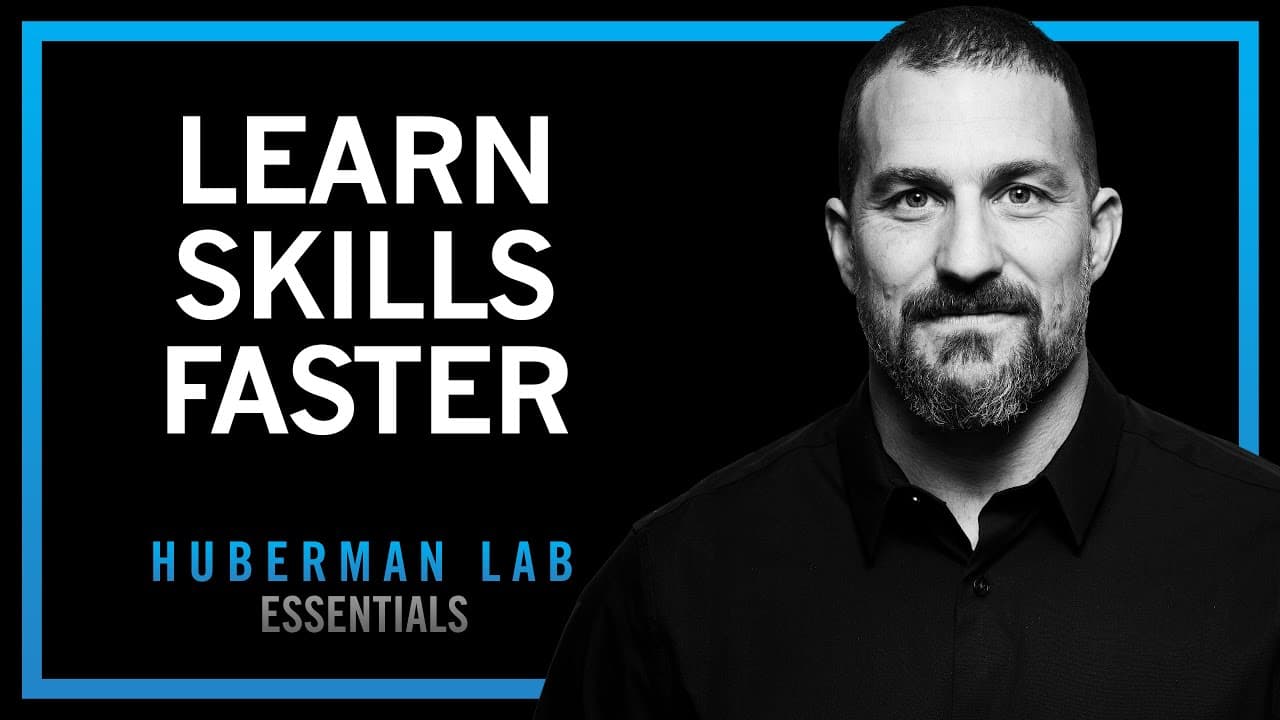
To learn motor skills faster, focus on performing many repetitions and learning from errors. Emphasize open and closed loop practice, utilize visualization, and allow idle time post-training for neural consolidation. Supplements like Alpha-GPC can enhance performance, and tools like metronomes can increase repetition rates, accelerating learning.
Transcript
welcome to hubman Labb Essentials where we revisit past episodes for the most potent and actionable science-based tools for mental health physical health and performance I'm Andrew huberman and I'm a professor of neurobiology and Opthalmology at Stanford school of medicine this podcast is separate from my teaching and research roles at Stanford it ... Read More
Key Insights
- Skill learning can be categorized into open loop and closed loop, depending on feedback type.
- Sensory perception, movement, and proprioception are key components of motor skills.
- Repetitions, not just time, are crucial for skill acquisition.
- Errors are essential as they trigger neuroplasticity and focus attention.
- Post-learning idle time aids in neural consolidation of skills.
- Ultra-slow movements benefit skill learning after some proficiency is gained.
- Visualization and mental rehearsal can supplement physical practice but are not replacements.
- Supplements like Alpha-GPC and caffeine can enhance performance and skill learning.
Install to Summarize YouTube Videos and Get Transcripts
Explore YouTube Video Summarizer or Get YouTube Transcript Extractor
Questions & Answers
Q: How do open and closed loop systems affect skill learning?
Open loop systems involve performing an action and receiving feedback after completion, like throwing darts. Closed loop systems provide continuous feedback during the action, such as adjusting stride while running. Understanding the type of feedback helps in focusing attention and improving skill acquisition.
Q: Why are repetitions important in skill learning?
Repetitions are crucial because they allow for consistent practice of a skill, which strengthens neural pathways and enhances muscle memory. More repetitions increase exposure to errors, which are necessary for neuroplasticity and learning adjustments. This approach accelerates mastery of the skill.
Q: What role do errors play in learning new skills?
Errors are vital as they signal the brain to activate neuroplasticity, allowing for adjustments and improvements in performance. They help focus attention on correcting mistakes, which is crucial for refining motor skills. Without errors, the brain lacks cues to modify and enhance learning.
Q: How does post-learning idle time benefit skill acquisition?
Post-learning idle time allows the brain to replay and consolidate motor sequences, reinforcing correct patterns and eliminating incorrect ones. This period of rest is crucial for embedding skills into long-term memory, enhancing retention and speeding up the learning process.
Q: Can visualization replace physical practice in skill learning?
Visualization can supplement physical practice by activating upper motor neurons, but it cannot replace actual movement. Physical practice provides proprioceptive feedback and engages the full neural and muscular systems necessary for skill acquisition, which visualization alone cannot achieve.
Q: When should ultra-slow movements be used in skill training?
Ultra-slow movements should be introduced after achieving some proficiency in a skill, typically when success rates are around 20-30%. At this stage, slow movements can help refine techniques and enhance proprioceptive feedback, contributing to deeper learning and skill refinement.
Q: How can metronomes aid in skill learning?
Metronomes can help increase the rate of repetitions by providing a consistent auditory cue, encouraging faster execution of movements. This external pressure generates more errors and successes, accelerating neuroplasticity and skill acquisition by focusing attention on timing and rhythm.
Q: What supplements can enhance skill learning and performance?
Alpha-GPC can enhance power output and cognitive function, especially when combined with caffeine. These supplements support physical performance by improving motivation and focus, allowing for more effective practice sessions and increased repetitions, which are essential for skill learning.
Summary & Key Takeaways
-
Skill acquisition involves understanding open and closed loop feedback systems and focusing attention on the right sensory inputs. Repetitions and errors are vital for learning, as they stimulate neuroplasticity. Post-session idle time allows the brain to consolidate learning effectively.
-
Visualization supports skill learning by activating upper motor neurons but doesn't replace physical practice. Ultra-slow movements can enhance learning once proficiency is reached, and metronomes can help increase repetition rates, improving skill acquisition.
-
Supplements like Alpha-GPC and caffeine can boost performance by enhancing power output and cognitive function. Creating optimal conditions for focused practice is key to maximizing repetitions and accelerating skill learning.
Read in Other Languages (beta)
Share This Summary 📚
Summarize YouTube Videos and Get Video Transcripts with 1-Click
Try YouTube Summary with ChatGPT & Claude or YouTube Transcript Generator
Explore More Summaries from Andrew Huberman 📚

Summarize YouTube Videos and Get Video Transcripts with 1-Click
Try YouTube Summary with ChatGPT & Claude or YouTube Transcript Generator