How to Refactor a Next.js Application for Clarity
TL;DR
To refactor a Next.js application for better clarity, prioritize simplifying code by removing unnecessary hooks and abstractions. Focus on clearer component structures and limit the use of complex state management practices, which can lead to confusion. Emphasizing readability and community engagement can also enhance collaboration and understanding in your codebase.
Transcript
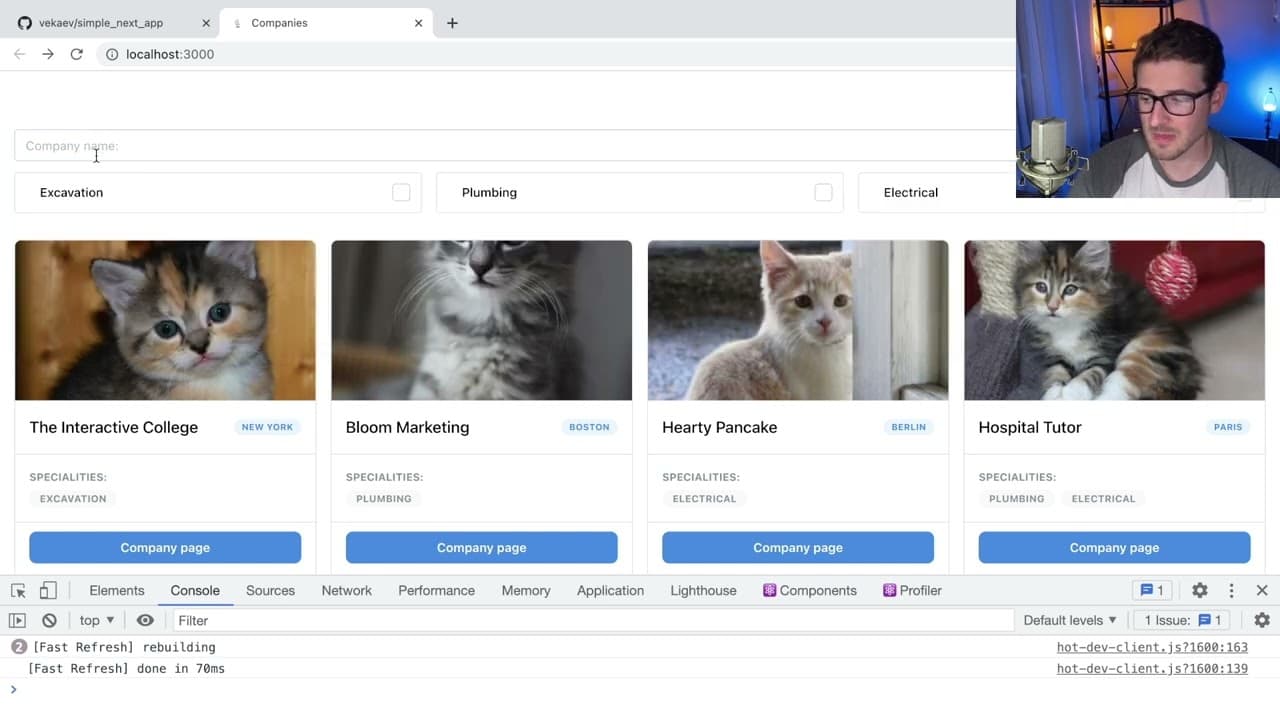
all right how's it going so in this video i'm just doing a kind of like a more of a code walkthrough some guy asked me on my discord if i can kind of like refactor his code and honestly i look through his code and his code seems like it's pretty good so i don't know if there's much to even refactor here so i want to kind of just walk you through hi... Read More
Key Insights
- 👏 The presenter praises the overall structure of the user’s code while identifying opportunities for refactor and clarity, asserting that many practices are valid but can be simplified.
- ❓ They emphasize the importance of understanding the rationale behind using state management patterns in React and advise on minimizing complexity by using React's capabilities more intuitively.
- 😄 The discussion about libraries underscores how preferences in project setup can differ among developers, impacting performance and ease of use.
- 👨💻 Simplification, readability, and maintaining performance should be prioritized in code reviews and refactoring processes.
- 🥺 The presenter recognizes that unnecessary complexity can lead to confusion, and therefore advocates for straightforward coding practices that enhance accessibility for other developers.
- 👨💻 Community engagement is highlighted as a valuable resource for coders, encouraging collaboration and shared learning.
- ⌛ Performance beyond initial load times should be considered, suggesting that refactoring for clarity can sometimes outweigh minor performance optimizations.
Install to Summarize YouTube Videos and Get Transcripts
Explore YouTube Video Summarizer or Get YouTube Transcript Extractor
Questions & Answers
Q: What is the primary purpose of the video?
The video's main purpose is to provide a code walkthrough and analysis of a user's Next.js application. The presenter explores the application's structure, functionality, and offers suggestions for potential refactoring and improvements to enhance readability and performance.
Q: What are some areas of the code that could be improved?
One area of improvement is the use of 'get static props', which may not be necessary as the application is treated as static by default. Additionally, the presenter discusses the overuse of 'useMemo' and 'useCallback', suggesting that simpler implementations could enhance code clarity without affecting performance.
Q: How does the presenter feel about using component libraries like Mantine?
The presenter expresses a personal preference against using component libraries like Mantine, citing issues like unnecessary re-renders and added complexity from multiple components required for layout. Instead, they prefer more straightforward styling solutions, such as CSS classes or Tailwind CSS.
Q: What is the presenter's stance on barrel exports and imports?
The presenter criticizes barrel exports and imports, finding them unnecessary and complicating code navigation. They argue that direct imports are clearer and more efficient, suggesting a preference for flat structures over multiple index files.
Q: What improvements does the presenter suggest regarding performance optimizations?
The presenter recommends avoiding premature optimizations like excessive use of 'memo' and 'callback' hooks until there is a clear need for them. They suggest that aiming for clearer, more understandable code often outweighs minor performance gains, encouraging a focus on simplicity.
Q: Why does the presenter advocate for cleaner state management in the application?
The presenter emphasizes that cleaner state management leads to more maintainable and understandable code. They suggest using hooks appropriately and reducing unnecessary complexity, such as avoiding refs in places where state can be used more directly.
Q: What feedback does the presenter provide on handling filters and data fetching?
The presenter mentions that the method of managing filters and data fetching could be simplified. They propose linking filter changes directly to fetching data, rather than introducing complexity with multiple state variables or unnecessary dependencies that obscure the logic.
Summary & Key Takeaways
-
In this video, the presenter conducts a walkthrough of a user's Next.js application, assessing its structure and proposing potential improvements.
-
The application consists of two main pages displaying companies' information, which lacks functionality in certain areas, such as dropdown menus, prompting the review.
-
The discussion revolves around best practices in React, usage of libraries, unnecessary complexity, and recommendations for simplifying the code.
Read in Other Languages (beta)
Share This Summary 📚
Summarize YouTube Videos and Get Video Transcripts with 1-Click
Try YouTube Summary with ChatGPT & Claude or YouTube Transcript Generator
Explore More Summaries from Web Dev Cody 📚


Summarize YouTube Videos and Get Video Transcripts with 1-Click
Try YouTube Summary with ChatGPT & Claude or YouTube Transcript Generator