How to Avoid Mistakes When Sampling Audio
TL;DR
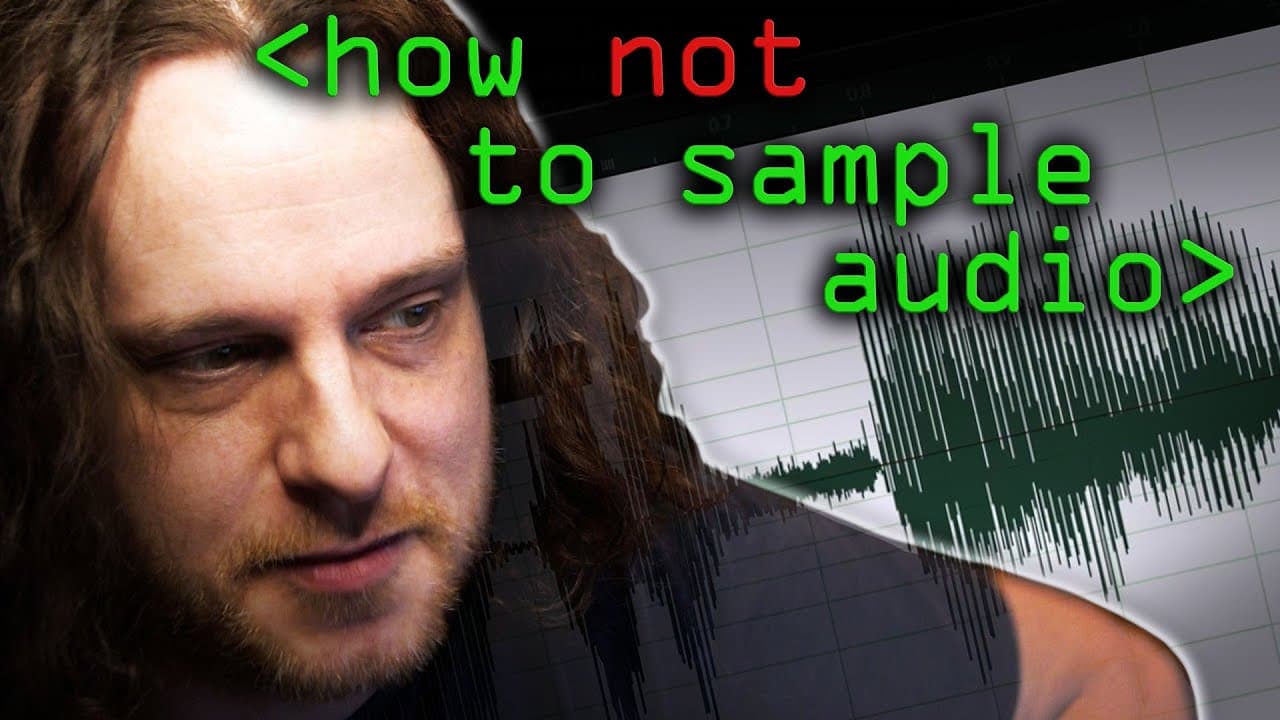
Extracting audio from a visual wave representation involves coding to identify the minimum and maximum values of the wave's vertical lines. Despite the challenges posed by detail loss during the sampling process, the generated audio echoes vintage video game sounds, raising intriguing questions about copyright and digital data manipulation.
Transcript
dave it's been a while welcome back to computer file hello thanks for joining us i thought it'd be worth telling the story of um a little mess around project that you and i did we were discussing a logo design or a design for something and we talked about the idea of a wave file or an audio file because audio is why i come to you and um ... Read More
Key Insights
- 👋 Extracting audio from a wave representation in a logo design can be achieved through coding techniques.
- 👂 The process involves extracting minimum and maximum values from each column of the image to create a list of audio samples.
- 👋 The quality of the recreated audio may be affected by the stretching and compression of the wave image.
- ©️ The implications of reverse engineering audio from copyrighted images raise questions about intellectual property rights and potential legal issues.
- ❓ The recreated audio, though distorted, still retains enough quality for audibility and recognition.
- 👋 The process highlights the trade-off between preserving wave details and computational efficiency.
- 👨💻 The code used in the project underwent iterative adjustments to achieve the desired outcome.
Install to Summarize YouTube Videos and Get Transcripts
Explore YouTube Video Summarizer or Get YouTube Transcript Extractor
Questions & Answers
Q: How did they extract the audio samples from the wave representation?
They analyzed the brightness of each pixel in the picture to determine if it belonged to the wave or background. For each column, they extracted the minimum and maximum values of the wave, resulting in a list of audio samples.
Q: How did they stretch the wave to match the original audio?
They experimented with a stretch value that elongated or squashed the wave. By incrementing the values between the minimum and maximum, they achieved a stretched wave that sounded like the original audio.
Q: Can this coding process be used to recreate audio from copyrighted images?
It raises an interesting question about intellectual property rights. If a person reverse engineers audio from an image they have the rights to, it may raise issues regarding derivative works and potential copyright infringement.
Q: How does the distorted sound of the recreated audio compare to the original audio?
The distorted sound resembles the sampling used in vintage video games. Although the quality is reduced due to the limitations of the process, the audio is still audible and recognizable.
Summary & Key Takeaways
-
The individuals decided to turn audio from a wave representation on a logo design into an actual audio file as a coding challenge.
-
They used a bitmap image of the wave and extracted the minimum and maximum values of each vertical line to create a list of audio samples.
-
The code was iteratively adjusted and a wav file was generated, producing a distorted sound similar to that of vintage video games.
Read in Other Languages (beta)
Share This Summary 📚
Summarize YouTube Videos and Get Video Transcripts with 1-Click
Try YouTube Summary with ChatGPT & Claude or YouTube Transcript Generator
Explore More Summaries from Computerphile 📚

Summarize YouTube Videos and Get Video Transcripts with 1-Click
Try YouTube Summary with ChatGPT & Claude or YouTube Transcript Generator