How to Leverage AGI and AI Trading in Today's Market
TL;DR
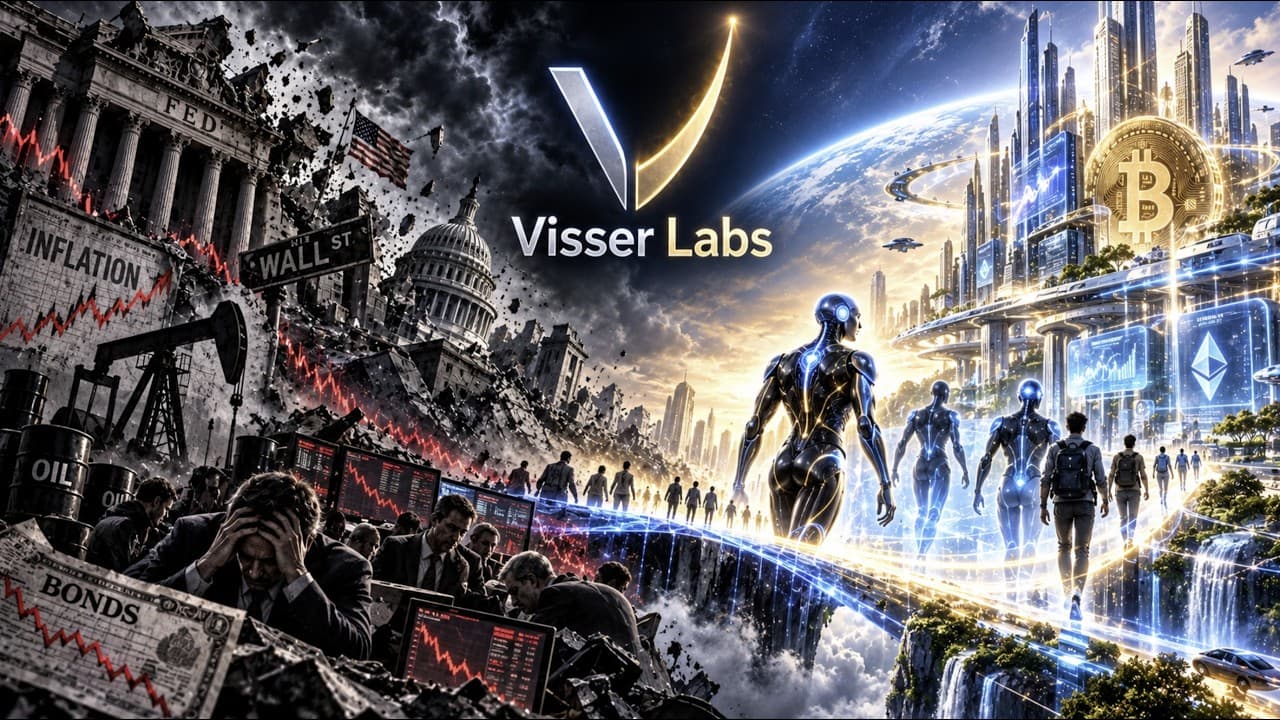
Artificial General Intelligence (AGI) has arrived, significantly impacting various sectors by enhancing productivity and economic growth. The focus should shift from traditional economic indicators like oil and bonds to AI-driven advancements. Utilizing AI agents can empower individuals to create trading systems and explore entrepreneurial opportunities, altering the landscape of finance and technology.
Transcript
Let's get to work. Um, it's Friday, September 11th, 25 years ago. Uh, I lost my best friend and the best man at my wedding. Uh, tonight I am going to go out with some other friends. So, I'm going to talk about that briefly, but I just wanted to uh say I'm thinking for everyone that lost someone in in there or remembers that day as something as trag... Read More
Key Insights
- AGI is transforming the economy by enabling digital labor, which enhances productivity and economic growth.
- Traditional economic indicators like oil, bonds, and Fed rates are becoming less relevant in an AI-driven economy.
- AI agents can perform three workdays' worth of tasks in a single human workday, revolutionizing industries like physics and medicine.
- The integration of AI in trading systems can empower individuals to build personalized trading strategies, enhancing entrepreneurial opportunities.
- The depreciation debate around technology is challenged as rental prices for GPUs like the H100 have remained stable or risen, indicating strong demand.
- Robinhood is positioning itself as a key player in the AI-crypto-macro nexus, with its chain fees surpassing Solana and tokenization gaining traction.
- Valuing Ethereum and other cryptocurrencies requires new frameworks, similar to the early internet's evolution from eyeballs to revenue metrics.
- AI agents could be the key to realizing the full potential of blockchain technologies, as they enhance efficiency and trust in digital transactions.
Install to Summarize YouTube Videos and Get Transcripts
Explore YouTube Video Summarizer or Get YouTube Transcript Extractor
Questions & Answers
Q: How is AGI impacting the economy?
AGI is transforming the economy by enabling digital labor, which significantly enhances productivity and economic growth. By performing tasks equivalent to multiple human workdays, AI agents are revolutionizing industries such as physics, medicine, and manufacturing. This shift calls for a reevaluation of traditional economic indicators and emphasizes the importance of AI-driven advancements in shaping the future economy.
Q: Why are traditional economic indicators becoming less relevant?
Traditional economic indicators like oil, bonds, and Fed rates are becoming less relevant as AI-driven advancements take center stage. AI capex now drives the economy, with technological innovation and digital labor enhancing productivity and economic growth. This shift necessitates a focus on AI's role in expanding the total addressable market and shortening corporate durations, altering the landscape of economic analysis.
Q: What role do AI agents play in trading systems?
AI agents play a crucial role in trading systems by empowering individuals to create personalized trading strategies. They enhance decision-making by filtering and analyzing vast amounts of data, enabling traders to identify opportunities and manage risks effectively. This integration fosters entrepreneurial opportunities and represents a new paradigm in financial markets, where AI-driven strategies are increasingly essential for success.
Q: How does the depreciation debate affect technology investments?
The traditional depreciation debate is challenged as GPU rental prices, such as those for the H100, have remained stable or risen, indicating strong demand. This stability suggests that technology investments may hold their value better than previously assumed, impacting cash flow estimates and credit needs for hyperscalers. As a result, investors and analysts must reconsider the depreciation models used for technology assets in light of persistent demand and evolving market dynamics.
Q: What is Robinhood's role in the AI-crypto-macro nexus?
Robinhood is positioning itself as a key player in the AI-crypto-macro nexus by integrating AI-driven trading capabilities and leading in tokenization efforts. Its chain fees have surpassed Solana, highlighting its growing influence in the crypto space. Robinhood's focus on AI agents and tokenized financial platforms underscores its strategic role in merging traditional finance with emerging technologies, offering innovative solutions for investors and traders.
Q: How should cryptocurrencies like Ethereum be valued?
Valuing cryptocurrencies like Ethereum requires new frameworks that account for their unique characteristics, such as network effects, ecosystem value, and programmability. Similar to the early internet's evolution from eyeballs to revenue metrics, these digital assets demand innovative valuation methods that reflect their potential for growth and impact. AI agents could play a crucial role in realizing the full potential of blockchain technologies, enhancing efficiency and trust in digital transactions.
Q: What are the implications of AI agents for blockchain technologies?
AI agents could be the key to realizing the full potential of blockchain technologies by enhancing efficiency and trust in digital transactions. They facilitate the integration of AI and blockchain, enabling more secure and efficient operations. This convergence could lead to the development of new applications and services, transforming industries and creating new opportunities for innovation and growth in the digital economy.
Q: Why is the Amazon 1997 to 2013 lesson relevant to crypto valuation?
The Amazon 1997 to 2013 lesson is relevant to crypto valuation as it illustrates the potential for significant growth before traditional valuation metrics, like PE ratios, make sense. Similar to Amazon's early days, cryptocurrencies may experience substantial appreciation before conventional financial metrics can fully capture their value. This underscores the importance of adopting innovative valuation frameworks for digital assets to recognize their long-term potential and impact.
Summary & Key Takeaways
-
AGI's arrival is a game-changer, shifting the focus from traditional economic indicators to AI-driven advancements. AI agents enhance productivity by completing multiple workdays' worth of tasks in a single day, impacting industries like physics and medicine. This shift necessitates new valuation frameworks for cryptocurrencies, akin to the early internet's evolution.
-
AI is empowering individuals to create personalized trading systems, fostering entrepreneurial opportunities. Robinhood is emerging as a pivotal player in the AI-crypto-macro nexus, with its chain fees surpassing Solana and tokenization gaining momentum. This convergence highlights the need for innovative financial strategies.
-
The traditional depreciation debate is challenged as GPU rental prices remain stable or rise, underscoring strong demand. The integration of AI in trading systems offers a new paradigm for financial markets, empowering individuals to leverage AI agents for strategic decision-making and economic growth.
Read in Other Languages (beta)
Share This Summary 📚
Summarize YouTube Videos and Get Video Transcripts with 1-Click
Try YouTube Summary with ChatGPT & Claude or YouTube Transcript Generator
Explore More Summaries from Jordi Visser 📚






Summarize YouTube Videos and Get Video Transcripts with 1-Click
Try YouTube Summary with ChatGPT & Claude or YouTube Transcript Generator