[Eng Sub] Wafer Bumping Process: Solder bump, Cu pillar bump, UBM
TL;DR
Wafer bumping enhances electrical connections in semiconductor packaging.
Transcript
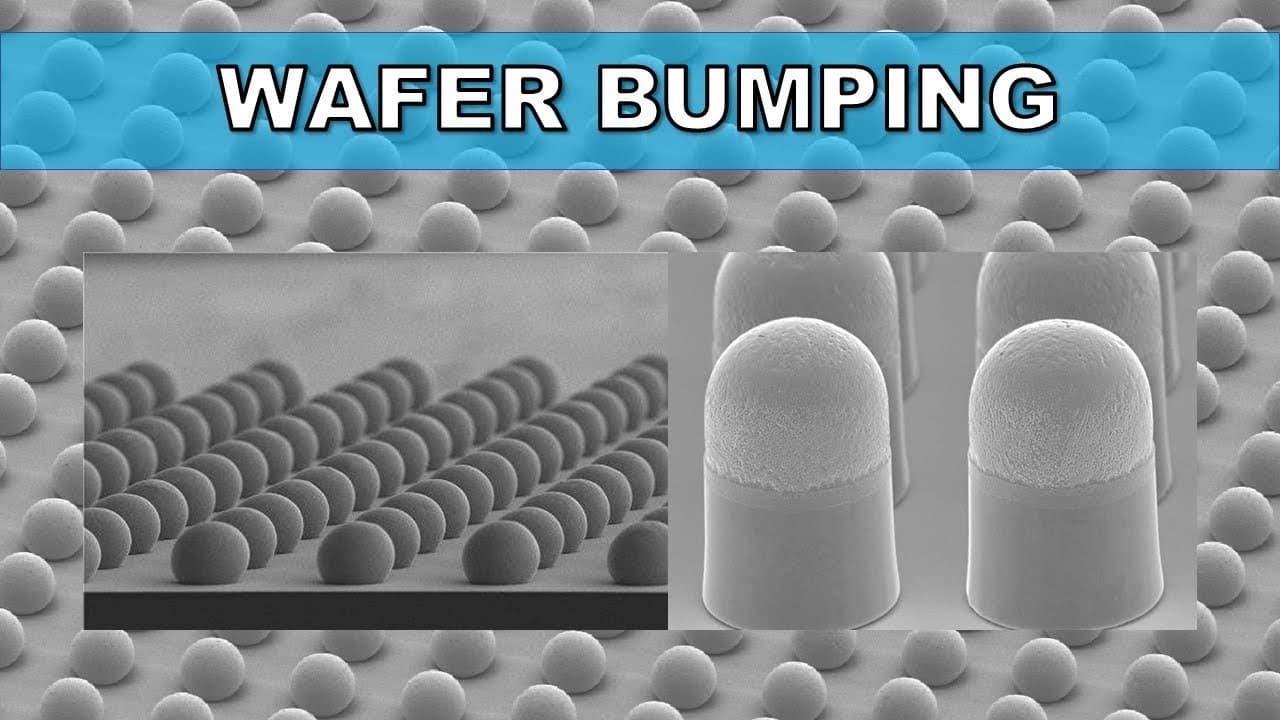
Today, let’s talk about wafer bumping. Wafer bumping process is to make small bump on die surface for electrical interconnection instead of wire bonding. This bump technology has some advantage over wire bonding. It can make much shorter electrical connection than wire then achieve better electrical performance. It also can make array with much mor... Read More
Key Insights
- Wafer bumping replaces wire bonding for electrical interconnection, providing shorter electrical paths and improved performance.
- Bumping allows for higher I/O counts, enabling more data processing compared to traditional wire bonding methods.
- The batch process of wafer bumping is faster and more cost-effective than wire bonding, especially for wafer-level chip scale packaging.
- Two primary bumping types are solder bumps for coarse pitches and Cu pillar bumps for fine pitches, though these are guidelines rather than strict rules.
- Under Bump Metallization (UBM) is crucial for good mechanical and electrical connections between die pads and bumps.
- Solder bumping involves three main processes: printing, plating, and ball drop, with plating being the most popular.
- Cu pillar bumps consist of a copper post with a solder cap, ideal for fine pitch applications due to the non-melting Cu post during reflow.
- Gold bumps are specialized for display driver ICs, allowing for extremely fine pitch bumps down to 30 micrometers.
Install to Summarize YouTube Videos and Get Transcripts
Explore YouTube Video Summarizer or Get YouTube Transcript Extractor
Questions & Answers
Q: What is wafer bumping and why is it used instead of wire bonding?
Wafer bumping is a semiconductor packaging process that creates small bumps on the die surface for electrical interconnection, replacing traditional wire bonding. It is used because it provides shorter electrical connections, improving performance, and allows for higher I/O counts, facilitating greater data processing capabilities.
Q: What are the benefits of using wafer bumping over wire bonding?
Wafer bumping offers several benefits over wire bonding, including shorter electrical paths for better performance, the ability to handle more I/O counts for increased data processing, faster batch processing, and lower costs for wafer-level chip scale packaging due to its efficiency.
Q: What are the two main types of wafer bumping?
The two main types of wafer bumping are solder bumps and Cu pillar bumps. Solder bumps are typically used for coarse pitches over 150 micrometers, while Cu pillar bumps are used for fine pitches under 150 micrometers. These types are guidelines based on experience, not strict rules.
Q: Why is Under Bump Metallization (UBM) important in wafer bumping?
Under Bump Metallization (UBM) is crucial in wafer bumping as it provides a good mechanical and electrical connection between the die pad and the bump. It typically consists of three layers: an adhesion layer, current carrying layer, and wetting layer, ensuring reliability and performance.
Q: What are the different process flows for creating solder bumps?
The different process flows for creating solder bumps include printing, plating, and ball drop. Each process involves steps like photoresist coating, exposure, developing, etching, and reflow. Plating is the most popular method due to its efficiency and reliability in creating solder bumps.
Q: How does the Cu pillar bump process differ from solder bumping?
The Cu pillar bump process differs from solder bumping in that it involves creating a copper post with a solder cap. The copper post does not melt during the reflow process, making it suitable for fine pitch applications. This process often includes additional Ni plating for improved reliability.
Q: What is a special type of bump used in display driver ICs?
A special type of bump used in display driver ICs is the gold bump. It is particularly suitable for creating extremely fine pitch bumps, down to 30 micrometers, making it ideal for applications requiring high precision and reliability in compact spaces, such as in display technologies.
Q: What is the significance of pitch size in choosing bumping types?
Pitch size is significant in choosing bumping types because it influences the choice between solder bumps and Cu pillar bumps. Solder bumps are recommended for coarse pitches over 150 micrometers, while Cu pillar bumps are preferred for fine pitches under 150 micrometers, although these are guidelines rather than fixed rules.
Summary & Key Takeaways
-
Wafer bumping is an advanced semiconductor packaging process that replaces wire bonding, offering better electrical performance and higher data processing capabilities. It is faster and more cost-effective, making it suitable for wafer-level chip scale packaging.
-
There are two major types of wafer bumping: solder bumps for coarse pitches and Cu pillar bumps for fine pitches. The choice depends on application requirements, and these types are not strictly bound by pitch size.
-
Under Bump Metallization (UBM) is critical for forming strong mechanical and electrical connections. Various processes such as printing, plating, and ball drop are used for solder bumping, while Cu pillar bumps involve copper posts with solder caps.
Read in Other Languages (beta)
Share This Summary 📚
Summarize YouTube Videos and Get Video Transcripts with 1-Click
Try YouTube Summary with ChatGPT & Claude or YouTube Transcript Generator
Explore More Summaries from Semicon Talk 📚


Summarize YouTube Videos and Get Video Transcripts with 1-Click
Try YouTube Summary with ChatGPT & Claude or YouTube Transcript Generator