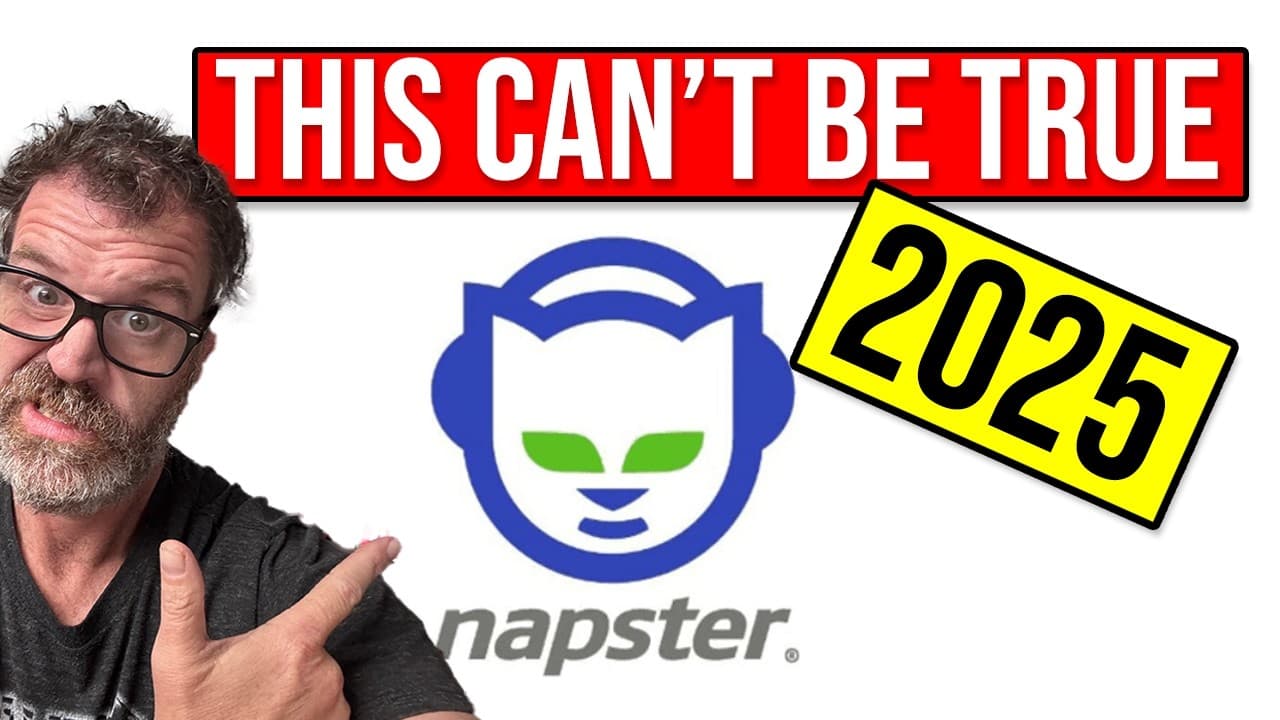
How Did Napster Rise, Fail, and Return Again?
TL;DR
Napster transformed music distribution by making compressed MP3 files freely shareable among millions of users, but lawsuits forced the original service offline in 2001. Its famous name then passed through Roxio, Best Buy, Rhapsody, MelodyVR, and a Web3 investor consortium, repeatedly supporting subscription, virtual reality, and blockchain strategies despite limited commercial success.
Transcript
Ah, Napster. What if I told you that Napster basically upended the music industry, destroyed physical media, had Lars Olri suing single moms and high school freshmen, and gave us what we have today, which is renting our music into perpetuity? You would totally believe me, right? But what if I told you that was just the beginning and that Napster ha... Read More
Key Insights
- Napster was a peer-to-peer music-sharing program that let people make files stored on their computers available to other users. Its use of compressed MP3 files made downloads faster than larger audio files, with slow modems serving as the primary practical limitation.
- Napster launched publicly in June 1999 after Shawn Fanning began coding the service in late 1998 and tested it with friends in early 1999. The combination of free music and convenient downloading quickly attracted between 60 million and 80 million regular users at its peak.
- The original Napster had no established revenue model despite its enormous audience and server expenses. It charged no fees and carried no advertising, while serious discussions about subscriptions, advertisements, and label partnerships emerged largely after lawsuits threatened the service.
- Napster's legal collapse followed challenges from Metallica, Dr. Dre, and the RIAA. Metallica acted after discovering a demo of "I Disappear" on the service, while the RIAA filed on behalf of major labels, contributing to Napster's shutdown in July 2001.
- Roxio bought the Napster name for $5 million in 2002 and built a legal subscription service using Pressplay's foundation. The service charged $9.99 per month and applied digital rights management, meaning downloaded music became unavailable when a customer stopped paying.
- Best Buy purchased Napster Inc. for $121 million in cash in 2008. Its strategy paired the service with products such as laptops and MP3 players, but customers more readily understood buying individual tracks through iTunes than paying continuously to retain access to music.
- Rhapsody acquired Napster through an arrangement that gave Best Buy an equity stake, with the precise transaction value remaining undisclosed. Rhapsody later adopted the Napster name in 2016, although the acquired service had roughly 500,000 users rather than the original platform's tens of millions.
- Napster repeatedly became a vehicle for new technology strategies after its early streaming reinventions failed. MelodyVR purchased it for $70 million in 2020 to connect music with virtual concerts, while a consortium involving Hivemind Capital and Algorand acquired it in 2022 for a Web3 music ecosystem.
Install to Summarize YouTube Videos and Get Transcripts
Explore YouTube Video Summarizer or Get YouTube Transcript Extractor
Questions & Answers
Q: How did the original Napster music service work?
The original Napster worked as a peer-to-peer sharing program. Users made music stored on their computers available to other people, who could find and download those files through the service. Most tracks were MP3s, a compressed format that transferred faster than larger audio files. Downloads were free, so speed depended mainly on the user's modem and available network capacity.
Q: Why did Napster become popular so quickly?
Napster became popular because it offered free access to large amounts of music and made downloading relatively fast through compressed MP3 files. Listeners no longer needed to visit a record store and purchase an entire CD. The service reached between 60 million and 80 million regular users at its peak, and its traffic became heavy enough for internet service providers to throttle college campuses.
Q: Why was the original Napster shut down?
Napster was shut down after extensive legal challenges over copyrighted music sharing. Metallica sued after finding a demo of "I Disappear" on the platform and also pursued individual users. Dr. Dre took legal action, and the RIAA filed a lawsuit for the major labels. Napster was forced offline in July 2001, although it did not file for bankruptcy until 2002.
Q: How did the original Napster plan to make money?
The original Napster initially had no working business model. It collected no subscription fees, displayed no advertising, and generated no revenue despite supporting tens of millions of regular users and maintaining servers. After legal pressure intensified, the company considered subscriptions, experimented with advertisements, approached record labels about partnerships, and tried to establish a legitimate service, but those efforts came too late.
Q: What did Roxio do after buying Napster?
Roxio bought the Napster name for $5 million in 2002 and relaunched it as a legal music service based on Pressplay, a streaming service created by Sony and Universal Music Group. Its early subscription cost was $9.99 per month. Downloaded tracks used digital rights management, so access disappeared after cancellation. Roxio later renamed itself Napster Inc. and sold the Roxio business.
Q: Why did Best Buy acquire Napster?
Best Buy acquired Napster Inc. for $121 million in cash in 2008 and attempted to bundle the service with products such as laptops and MP3 players. The strategy failed because consumers were more comfortable either obtaining music free or purchasing tracks individually. Renting continued access to music was harder to understand when iTunes offered a straightforward 99-cent purchase model.
Q: How did Rhapsody turn into Napster?
Rhapsody acquired Napster from Best Buy in 2011 through an arrangement that gave Best Buy an equity stake in Rhapsody. The exact value was not made public, although industry estimates described in the transcript placed it at about $12 million in cash. Rhapsody sought Napster's existing customer base and eventually abandoned its own name, becoming Napster in 2016.
Q: How was Napster connected to virtual reality and Web3?
MelodyVR bought the Rhapsody-derived Napster for $70 million in 2020, intending to combine virtual concerts with its virtual reality streaming platform. MelodyVR later rebranded itself as Napster. In 2022, it sold Napster to a Web3 investor consortium led by Hivemind Capital and involving the Algorand blockchain, which planned to develop a Web3 music ecosystem under the Napster name.
Summary & Key Takeaways
-
Napster launched publicly in June 1999 after Shawn Fanning began developing and testing the service. Its peer-to-peer system let users share MP3 files directly, making enormous music collections freely accessible. Rapid adoption changed listening habits, overloaded college networks, and alarmed a music industry whose artists and labels received no payment.
-
Metallica, Dr. Dre, and the RIAA pursued legal action against Napster and its users. The original company shut down in July 2001 while attempting to negotiate with labels and establish advertising or subscription revenue. Those efforts came too late, and the company filed for bankruptcy during the following year.
-
Napster's name survived through repeated acquisitions and reinventions. Roxio bought it for $5 million, Best Buy later paid $121 million, Rhapsody absorbed and adopted it, and MelodyVR paid $70 million. A Web3 consortium acquired it in 2022, continuing a pattern of investors attaching new technology strategies to its recognition.
Read in Other Languages (beta)
Share This Summary 📚
Summarize YouTube Videos and Get Video Transcripts with 1-Click
Try YouTube Summary with ChatGPT & Claude or YouTube Transcript Generator
Explore More Summaries from cheapaudioman 📚


Summarize YouTube Videos and Get Video Transcripts with 1-Click
Try YouTube Summary with ChatGPT & Claude or YouTube Transcript Generator