How Does the Schiit Wotan Power Amplifier Sound?
TL;DR
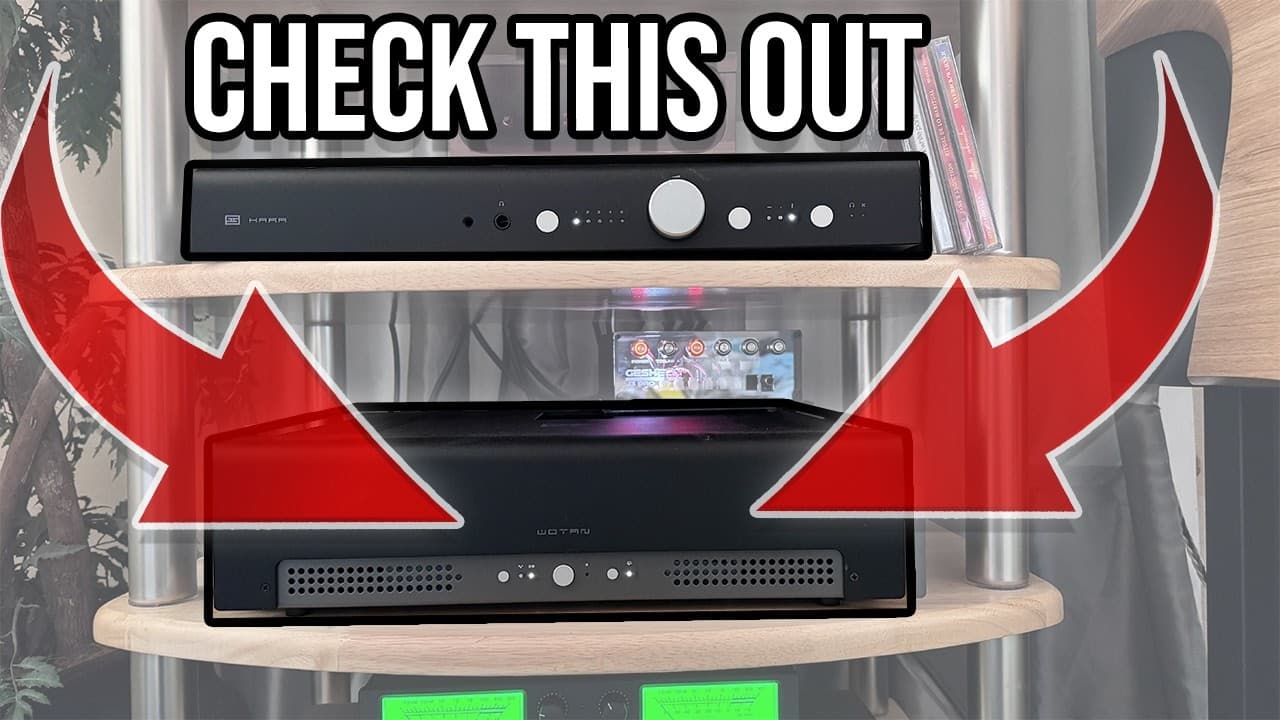
The Schiit Wotan delivers a detailed, midrange-forward sound with strong separation, nuanced staging, and more low-end dynamics than the reviewer remembered from the Vidar. Its switchable feedback changes the presentation, while the free Forkbeard app provides anonymous, account-free control of compatible Schiit components from a phone.
Transcript
M we have a bunch of SK to cover today we're going to talk about the new sket woan it's a power amplifier we're going to talk about the new forkbeard which is an app we're going to talk about how the woan sounds compared to the A1 monoblocks from emotiva we're going to talk about how to use the forkbeard app we're obviously going to talk about how ... Read More
Key Insights
- The Schiit Wotan is a $1,999 two-channel power amplifier rated at 200 watts into 8 ohms and 400 watts into 4 ohms. Its dual-mono design gives each channel a separate power supply and transformer within one 54-pound chassis.
- Forkbeard is a free control app that organizes compatible Schiit products into stacks and operates them from a phone. Available controls include input selection, preamplifier gain, volume, supported feature settings, temperature monitoring, power metering, and speaker-clipping indications.
- Forkbeard requires no account or email address to operate. The reviewer describes it as an anonymous app that detects compatible products after it is connected and turned on, offering basic remote functions without requesting personal registration information.
- The Wotan's switchable feedback changes both output level and sound presentation. With feedback enabled, the reviewer heard cleaner definition, clearer separation, and greater intensity. With feedback disabled, the presentation became more laid-back and could help smooth harsh edges from certain speakers.
- The Wotan's core sound is midrange-forward, detailed, dynamic, and spatially nuanced. In the reviewed system, it produced strong front-to-back staging, clear separation, and a large presentation without collapsing instruments and voices into a flat wall of sound.
- The Emotiva A1 monoblocks sounded punchier in the bass and fuller through the lower midrange than the Wotan. The Wotan countered with cleaner mids, less smearing, more forward vocals, and more audible texture in drum attacks during the comparison.
- The affordable Monolith two-channel amplifier sounded more similar to the Wotan than the reviewer expected. It provided a neutral, detailed presentation for roughly $400 at retail, but it had less bottom end and sounded less dynamic than the Emotiva comparison system.
- The Kara F is a $799 preamplifier with balanced and single-ended connections, passive, low, and high gain settings, Forkbeard support, and a discrete headphone amplifier. It can provide separate single-ended outputs for a power amplifier and a subwoofer.
Install to Summarize YouTube Videos and Get Transcripts
Explore YouTube Video Summarizer or Get YouTube Transcript Extractor
Questions & Answers
Q: What are the Schiit Wotan's power output and price?
The Schiit Wotan costs $1,999 and delivers 200 watts per channel into 8-ohm speakers and 400 watts per channel into 4-ohm speakers. It is a two-channel amplifier built like two monoblocks inside one chassis, with a separate power supply and transformer for each channel. The amplifier also weighs 54 pounds and carries a five-year warranty.
Q: How does the Schiit Wotan power amplifier sound?
The Schiit Wotan sounds detailed, midrange-forward, dynamic, and spatially nuanced according to the review. It creates strong front-to-back staging, clear separation, and a large presentation without producing a flat wall of sound. The reviewer also heard more low-end dynamics than remembered from the Vidar and ultimately called the Wotan a favorite among the Schiit amplifiers previously heard.
Q: What does switchable feedback change on the Wotan?
Switchable feedback changes the Wotan's output level and its overall presentation. With feedback enabled, the reviewer heard cleaner definition, clearer separation, and a more intense, exacting sound. Turning feedback off made the presentation more laid-back and potentially useful for smoothing harsh speaker characteristics. Because the level changes between settings, direct comparisons are difficult without compensating for volume.
Q: What can the Schiit Forkbeard app control?
The Forkbeard app works as a unified phone remote for compatible Schiit products arranged into separate stacks. Depending on the connected equipment, it can switch inputs, adjust volume, change preamplifier gain, toggle supported amplifier features, monitor temperature, display a power meter, and indicate when a connected speaker may be clipping. Future versions are expected to offer additional options.
Q: Does the Forkbeard app require an account or payment?
The Forkbeard app is free and does not require users to create an account or provide an email address. The reviewer describes it as an anonymous application that detects compatible products after being connected and turned on. Its current functions focus mainly on volume, input selection, and switching supported features on or off, although more capabilities may be added later.
Q: How does the Wotan compare with Emotiva A1 monoblocks?
The Wotan produced a more forward central image, cleaner midrange definition, stronger separation, and less smearing than the Emotiva A1 monoblocks. The Emotiva amplifiers sounded punchier in the bass, fuller through the lower midrange, and more dynamic during drum-heavy material. The Wotan revealed finer textures, including the initial leathery attack of drums, but occasionally showed a hint of sibilance.
Q: How does the Wotan compare with the Monolith amplifier?
The Monolith two-channel amplifier sounded surprisingly similar to the Wotan because both favored a relatively neutral or midrange-focused presentation. The Wotan still placed central performers farther forward, while the Monolith had less bottom end and sounded less dynamic than the Emotiva amplifiers. Even so, its detail reproduction impressed the reviewer, especially given its roughly $400 retail price and frequent discounts.
Q: What features does the Schiit Kara F preamplifier offer?
The $799 Kara F provides two balanced inputs, three single-ended inputs, one balanced XLR output, and two sets of single-ended outputs. Those outputs can support a power amplifier and a subwoofer. It offers passive, low, and high gain settings, includes Forkbeard control, and has a front headphone amplifier using the same discrete gain stage employed for its main outputs.
Summary & Key Takeaways
-
The $1,999 Schiit Wotan is a two-channel, dual-mono power amplifier rated at 200 watts into 8 ohms and 400 watts into 4 ohms. Its features include separate channel power supplies, Nexus differential topology, switchable feedback, RCA and XLR inputs, two cooling fans, a five-year warranty, and a 15-day return policy.
-
The Forkbeard app acts as a unified phone remote for compatible Schiit components organized into separate stacks. It supports functions such as input selection, volume and gain control, feature switching, temperature monitoring, power metering, and speaker-clipping indications. The app is free, requires no account or email address, and is expected to gain additional options.
-
The Wotan and Kara F stack sounded detailed, dynamic, midrange-forward, spacious, and cleanly separated. The Emotiva A1 monoblocks delivered greater bass punch and lower-midrange fullness, while the Wotan revealed finer attack details. The inexpensive Monolith amplifier sounded surprisingly neutral and detailed, although it lacked the Wotan's forward central image and the Emotiva's dynamics.
Read in Other Languages (beta)
Share This Summary 📚
Summarize YouTube Videos and Get Video Transcripts with 1-Click
Try YouTube Summary with ChatGPT & Claude or YouTube Transcript Generator
Explore More Summaries from cheapaudioman 📚



Summarize YouTube Videos and Get Video Transcripts with 1-Click
Try YouTube Summary with ChatGPT & Claude or YouTube Transcript Generator