How Did Stephen King Overcome Rejection?
TL;DR
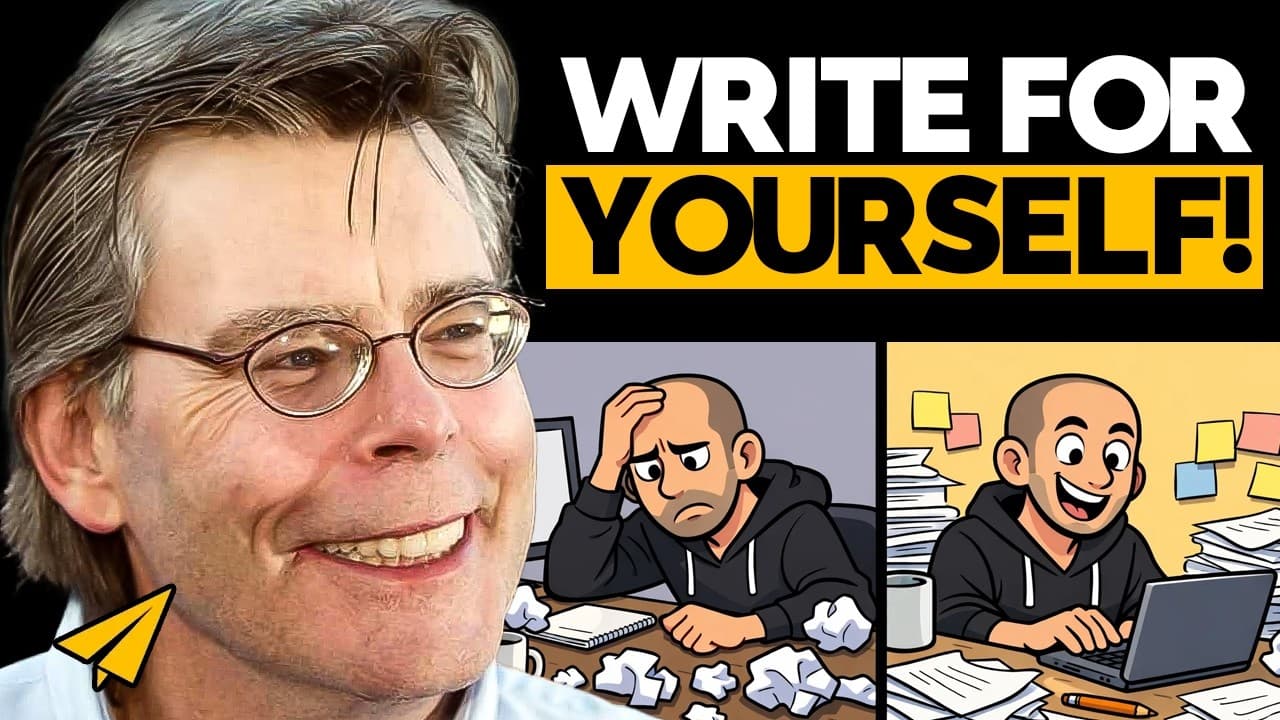
Stephen King became a bestselling author by continuing to write through poverty, repeated rejection, addiction, and severe injury. His breakthrough came after Tabitha King rescued the discarded Carrie manuscript and encouraged him to finish it, while his later recovery shows that persistence also requires accepting support, confronting personal problems, and returning consistently to meaningful work.
Transcript
Stephen King, the author of Carrie and The Shining, was rejected 30 times before his first book was published. He was living in a trailer, broke and ready to quit. But instead of giving up, he kept writing. And today, he's one of the bestselling authors [music] in the world. Stephen King was living in a small trailer with his wife, Tabitha, barely ... Read More
Key Insights
- Stephen King's success was built on sustained effort through rejection, financial hardship, addiction, and physical injury. His career demonstrates that talent alone did not produce his results because he repeatedly returned to writing when discouragement or pain gave him strong reasons to stop.
- Rejection was a recurring part of King's development long before Carrie. By age 14, he had collected enough rejection slips to overwhelm the nail holding them, so he replaced it with a spike and continued writing instead of treating rejection as a final judgment.
- King maintained his writing practice while supporting his family through jobs that included pumping gas, janitorial work, industrial laundry labor, and high school teaching. He returned home exhausted and still wrote in the evenings, using limited time rather than waiting for ideal circumstances.
- Tabitha King's support was decisive when Stephen King abandoned Carrie. She recovered the discarded pages, recognized the story's potential, and encouraged him to expand the work into a novel, giving him confidence at a moment when his own belief had failed.
- Carrie's commercial breakthrough developed in stages rather than arriving immediately. Doubleday offered a $2,500 advance, the hardcover sold 13,000 copies, and the paperback rights later sold for $200,000 before the paperback edition surpassed one million copies in its first year.
- Professional achievement did not protect King from serious personal problems. Alcoholism and drug addiction threatened his health, family, and work during the 1980s until Tabitha, relatives, and friends staged an intervention that led him to accept treatment and pursue sobriety.
- Recovery required King to accept help instead of relying on persistence alone. His family confronted him with evidence of his addiction and an ultimatum, after which he entered rehabilitation and became clean and sober, showing that resilience can include acknowledging a problem and seeking treatment.
- Writing became part of King's physical recovery after the June 1999 accident. Despite multiple fractures, a collapsed lung, five surgeries, and severe pain, he returned to his desk about a month later and worked in 40-minute increments while completing his memoir on writing.
Install to Summarize YouTube Videos and Get Transcripts
Explore YouTube Video Summarizer or Get YouTube Transcript Extractor
Questions & Answers
Q: How did Stephen King overcome repeated rejection?
Stephen King treated rejection as a reason to continue practicing and submitting his work rather than as proof that he should quit. He accumulated rejection slips from childhood, wrote while holding demanding jobs, and completed several novels that publishers would not buy. Even after Carrie received 30 rejections, he persisted until Doubleday accepted it, showing that one eventual yes can follow many refusals.
Q: Why did Stephen King almost abandon Carrie?
Stephen King lost confidence in Carrie after writing only a few pages about a bullied teenage girl with telekinetic powers. Frustrated and doubtful about the idea, he threw the draft into a trash bin. Tabitha King recovered the crumpled pages, read them, recognized their potential, and persuaded him to resume writing and develop the fragment into a complete novel.
Q: How did Tabitha King influence Stephen King's career?
Tabitha King provided crucial support at several turning points. She rescued the discarded Carrie manuscript and encouraged Stephen to finish it when he no longer believed in the story. Years later, she joined family and friends in confronting his addiction and demanding that he seek help. Her actions helped preserve both his early writing career and his later health and family life.
Q: How did Carrie become Stephen King's breakthrough novel?
Carrie became King's breakthrough only after a difficult submission process and an initially modest release. Following 30 rejections, Doubleday offered him a $2,500 advance. The hardcover sold 13,000 copies, but the paperback rights were later purchased for $200,000. The paperback then sold more than one million copies in its first year, and the 1976 film adaptation expanded King's public recognition.
Q: What jobs did Stephen King hold before becoming successful?
Stephen King supported his family through several jobs while continuing to write. The transcript identifies work pumping gas, doing janitorial tasks, laboring at an industrial laundry, and teaching high school English. Money remained tight even after he found a teaching position, so he also sold short stories to magazines for small payments and wrote during evenings after exhausting workdays.
Q: How did Stephen King recover from addiction?
King's alcoholism and drug addiction became severe during the 1980s, when he was producing multiple books and coping with fame. In 1987, Tabitha, relatives, and friends staged an intervention by confronting him with physical evidence of his substance use. Faced with the risk of losing his family and career, he accepted treatment, entered rehabilitation, and remained clean and sober afterward.
Q: How did the 1999 accident affect Stephen King's writing?
In June 1999, a minivan struck King while he was walking along a rural Maine road. His leg was shattered in multiple places, his hip was fractured, and his lung collapsed. After five surgeries and intensive treatment, he returned to writing about a month later. Because pain limited him, he worked for roughly 40 minutes at a time while completing his memoir on writing.
Q: Why is persistence central to Stephen King's success?
Persistence connects every major stage of King's story. He continued writing through childhood rejection, poverty, exhausting employment, unpublished novels, and 30 refusals for Carrie. After achieving fame, he confronted addiction with family support and later resumed writing after a life-threatening accident. His experience presents success as repeated recommitment to the work, including accepting help when individual determination is insufficient.
Summary & Key Takeaways
-
Stephen King developed a love of stories in childhood and continued writing despite accumulating rejection slips from an early age. As an adult, he supported his family through teaching and demanding manual jobs while writing during his limited spare time. His persistence established the habits that eventually sustained his professional career.
-
King discarded the early Carrie draft after losing confidence, but Tabitha retrieved it and persuaded him to continue. The completed novel faced 30 rejections before Doubleday offered a $2,500 advance. Hardcover sales were modest, but the $200,000 paperback-rights sale and subsequent popularity transformed his circumstances and career.
-
Success did not end King's challenges. Family intervention helped him confront alcoholism and drug addiction, and he remained sober after seeking treatment. Following a catastrophic 1999 road accident, he resumed writing in painful 40-minute sessions. Both experiences reinforced the role of support, discipline, and purposeful work in recovery.
Read in Other Languages (beta)
Share This Summary 📚
Summarize YouTube Videos and Get Video Transcripts with 1-Click
Try YouTube Summary with ChatGPT & Claude or YouTube Transcript Generator
Explore More Summaries from Evan Carmichael 📚





Summarize YouTube Videos and Get Video Transcripts with 1-Click
Try YouTube Summary with ChatGPT & Claude or YouTube Transcript Generator