Why China-US Rare Earth Talks Drive Markets
TL;DR
China-US negotiations over rare earths may matter more for risk assets than rate cuts because access to critical materials supports EVs, humanoid robots, data centers, and AI infrastructure. The speaker expects a trade deal and argues that easing tariffs or restoring trade could release substantial market upside, although liquidity stress, concentrated leadership, credit fears, and negotiation volatility create near-term risks.
Transcript
Another back and forth week as the rare earth battle continues. A lot of uh public statements made. Uh some news on dark factories in China worth keeping uh in the back of your mind as we get close to humanoid and autonomous vehicle season. Uh go through what happened for the week. We did see the credit fears turn into bank fears as some of them re... Read More
Key Insights
- Rare earth access is a strategic constraint on EVs, humanoid robots, data centers, and AI infrastructure. China established these materials as a central industrial priority in the early 1990s, illustrated by Deng Xiaoping’s comparison between Middle Eastern oil and Chinese rare earths.
- China-US trade has diverged sharply from China’s broader export performance. China’s total exports rose 8.3% year over year, while exports to the US fell 27%, creating an unusually wide gap and demonstrating how bilateral tensions are disrupting established commercial flows.
- A trade agreement could become a major catalyst for risk assets. The speaker argues that lower tariffs, tariff removal, or Chinese investment concessions would release pressure currently suppressing markets, economic surveys, earnings expectations, and broader confidence.
- China’s rare earth leverage has practical limits, according to the speaker. Restricting supply could accelerate stockpiling and alternative sourcing, while China’s export-dependent economy lacks enough domestic demand to absorb everything, making a negotiated agreement more plausible than prolonged confrontation.
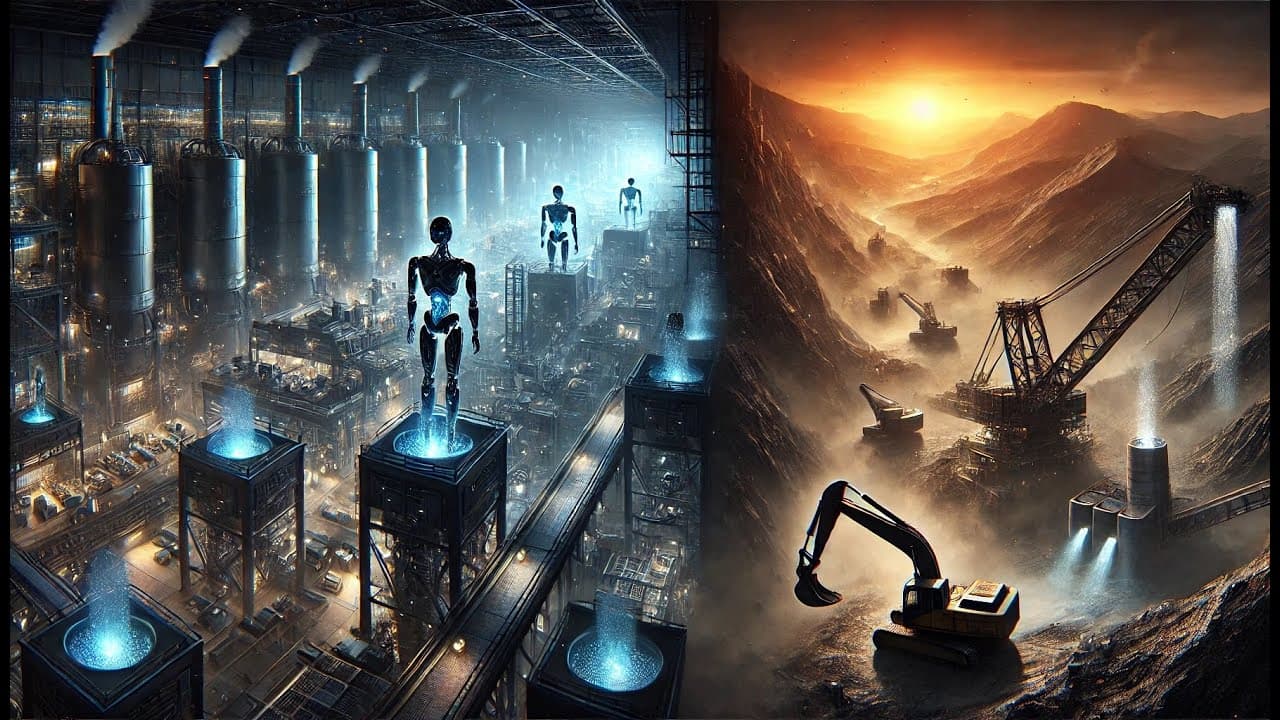
- Dark factories show how robotics is changing industrial competition. Western executives described Chinese facilities where robots perform much of the work and few or no operators are present, strengthening concerns that China is gaining an advantage in the physical, manufacturing side of AI.
- Humanoid robots could reshape the investment environment beyond autonomous vehicles. The speaker highlights speculation that Optimus 3 might appear at Elon Musk’s November 6 shareholder meeting and compares a future humanoid demonstration with the market impact created by the smartphone’s introduction.
- Semiconductor performance is presented as a stronger AI indicator than bubble commentary. Semiconductor shares rose 5.4% during the week, their biggest rally since the end of June, while the speaker argues that compute demand remains far ahead of available supply.
- Market concentration creates recurring vulnerability even when earnings remain strong. The VIX jumped from 16 to 29, credit concerns spread toward banks, and buyback blackouts reduced support, leading the speaker to expect episodic volatility and additional negotiation-driven swings.
Install to Summarize YouTube Videos and Get Transcripts
Explore YouTube Video Summarizer or Get YouTube Transcript Extractor
Questions & Answers
Q: Why do China-US rare earth talks matter for markets?
China-US rare earth talks matter because these materials are described as chokepoints for EVs, humanoid robots, data centers, and AI infrastructure. The speaker believes trade conflict is holding risk assets down despite strong earnings and accelerating AI investment. An agreement involving lower tariffs, restored trade, or investment concessions could improve economic expectations and trigger a substantial market response.
Q: How is China-US trade diverging from China’s total exports?
China’s total exports reportedly increased 8.3% year over year, roughly consistent with growth seen during the previous few years. Exports to the US, however, fell 27%. The speaker emphasizes that these measures historically moved together, so the large gap signals a significant bilateral trade disruption even as China offsets lost US demand through exports to other markets.
Q: Why does the speaker expect China and the US to reach a deal?
The speaker expects an agreement because China cannot indefinitely restrict rare earth access without encouraging the rest of the world to develop alternatives, while its export-dependent economy still needs external demand. Talks were continuing, Trump said threatened tariffs were not sustainable, and the planned Trump-Xi summit remained on track. These signals support the speaker’s expectation of negotiated de-escalation.
Q: What are dark factories, and why do they matter?
Dark factories are highly automated manufacturing facilities where robots perform much of the work and few or no human operators are present, allowing operations without normal lighting. Western executives returning from China described such facilities as a serious competitive warning. The speaker treats them as evidence that China is advancing rapidly in robotics and the physical manufacturing side of AI.
Q: How could humanoid robots affect the investment environment?
The speaker argues that a convincing humanoid robot demonstration could change investment expectations for much longer than a single trading session. Speculation centered on a possible Optimus 3 presentation at Elon Musk’s November 6 shareholder meeting. The comparison with the smartphone suggests that humanoids could create new business categories, productivity opportunities, and sustained demand for AI compute and manufacturing capacity.
Q: Why does the speaker reject the AI bubble argument?
The speaker focuses on the scale of compute demand, strong earnings, expanding AI capital expenditure, and semiconductor performance rather than market charts or bubble fears. Semiconductor shares rose another 5.4%, their largest rally since the end of June. In this interpretation, supply remains far behind demand, so current investment reflects an industrial transformation rather than merely unsupported speculation.
Q: What signs of liquidity and market stress are discussed?
The description identifies strain in SOFR and repo markets, while the transcript highlights credit fears turning into bank fears, buyback blackouts, concentrated market leadership, and a VIX increase from 16 to 29. The speaker calls the market’s condition fragile and expects episodic declines, especially during China-US negotiation swings and the major technology earnings period.
Q: How did major US market indexes perform during the week?
Despite repeated shifts in China-US trade rhetoric, the S&P 500 gained 1.7%, the Qs rose 2.5%, and the IWM advanced 2.4%. These were described as their strongest weekly performances since August. Semiconductors outperformed with a 5.4% gain, supporting the speaker’s argument that AI compute demand and earnings strength remain important positive forces.
Summary & Key Takeaways
-
Rare earth controls have become a central negotiating tool in China-US trade relations. China’s exports reportedly rose 8.3% year over year while exports to the US fell 27%, showing both a sharp bilateral disruption and China’s ability to redirect trade toward other markets, including 14% growth to the EU.
-
The speaker views a China-US agreement as the main catalyst holding back risk assets. Trump acknowledged that threatened tariffs were not sustainable, talks were scheduled to continue, and a Trump-Xi summit remained on track. Lower tariffs, restored exports, or investment concessions could therefore improve economic expectations and market sentiment.
-
Market stress is appearing alongside strong earnings and accelerating AI investment. The VIX rose from 16 to 29, credit fears became bank fears, and buyback blackouts increased fragility. Yet major indexes advanced, semiconductors gained 5.4%, and demand for compute remained far ahead of available capacity, according to the speaker.
Read in Other Languages (beta)
Share This Summary 📚
Summarize YouTube Videos and Get Video Transcripts with 1-Click
Try YouTube Summary with ChatGPT & Claude or YouTube Transcript Generator
Explore More Summaries from Jordi Visser 📚


Summarize YouTube Videos and Get Video Transcripts with 1-Click
Try YouTube Summary with ChatGPT & Claude or YouTube Transcript Generator