Why Is Indonesia Facing a Triple Asset Sell-Off?
TL;DR
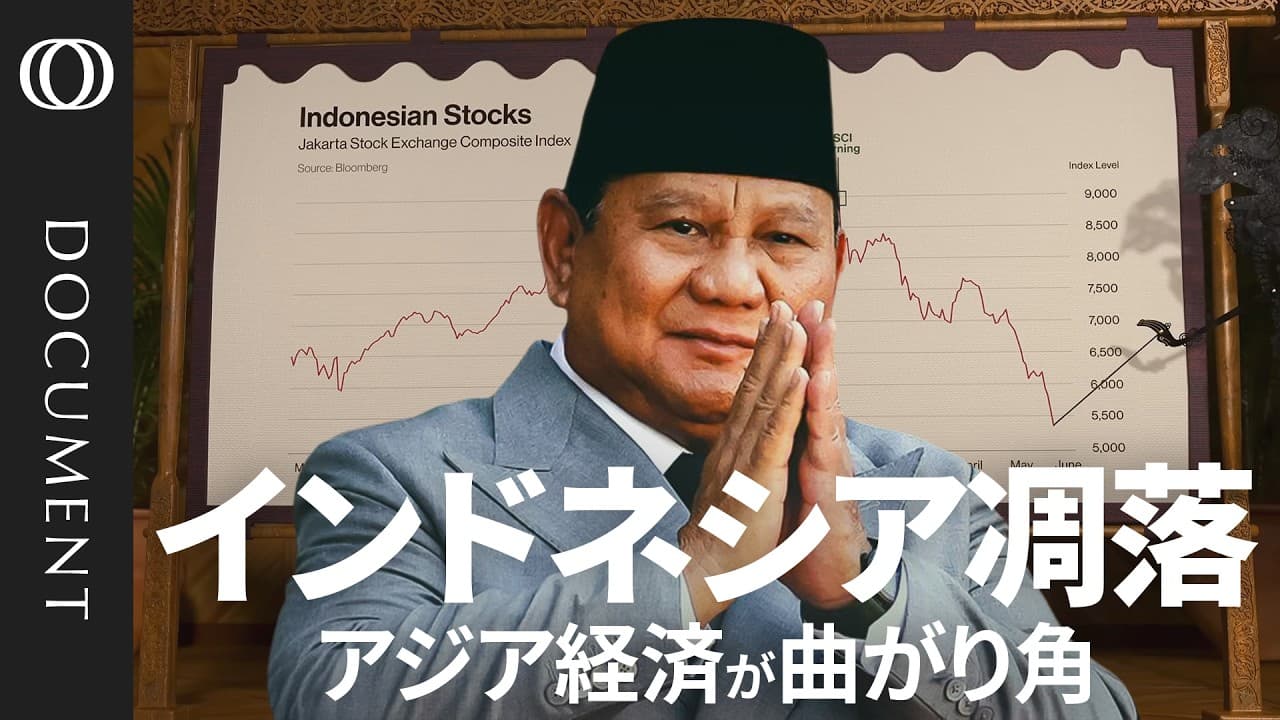
Indonesia is losing investor confidence as the rupiah reaches record lows against the dollar, stocks suffer a prolonged sell-off, and government bond yields rank among Asia’s highest. Concerns center on weakening fiscal discipline, costly social programs, opaque state-led policies, and a stock market vulnerable to manipulation because many companies have limited publicly traded shares.
Transcript
Fried food. What's not to love? It's delicious, but also generally bad for you. And curiously, the same could be said of some stocks in Indonesia. In fact, they're often called deep fried stocks. While they may look tasty on the outside, [music] inside they're really not that healthy. Unhealthy stocks are just one of the reasons investors have beco... Read More
Key Insights
- Indonesia is Southeast Asia’s largest economy, with GDP of $1.5 trillion, a population exceeding 280 million, and extensive palm oil, nickel, coal, and manufacturing industries. These advantages previously made the country one of the region’s most attractive investment and consumer-market stories.
- Indonesia’s economy has maintained growth of roughly 5% annually for two decades, excluding the Asian financial crisis and COVID. Foreign investment accelerated during the 2010s as fiscal controls, infrastructure development, and market-friendly commodity policies strengthened the country’s reputation for stability and growth.
- The 3% legal cap on budget deficits became a key symbol of Indonesia’s post-1998 financial discipline. Costly welfare initiatives have brought the government close to that ceiling, while the 2025 deficit, excluding pandemic years, was the highest recorded in two decades.
- Danantara is a sovereign wealth fund created to manage hundreds of state-owned enterprises, improve efficiency, and attract foreign investment. Investor concerns focus on its governance and the possibility that it could function as a funding vehicle for the president’s expensive social and economic priorities.
- Indonesia’s proposed commodity controls are intended to combat under-invoicing, which shifts profits offshore and reduces domestic tax revenue. A new state-appointed company would manage exports of palm oil, coal, and selected nickel products, but tighter controls could also unsettle international investors.
- Deep-fried stocks are Indonesian shares considered heavily manipulated because ownership is concentrated, free float is limited, and beneficial ownership is not always transparent. With relatively few shares available for public trading, modest transaction volumes can produce rapid price increases followed by equally sharp collapses.
- MSCI’s warning creates a risk that Indonesia could receive a smaller weight in its emerging-markets index or be reclassified as a frontier market. The announcement contributed to a stock sell-off described as the most severe since the 1998 financial crisis.
- Indonesia’s triple asset sell-off is visible in a rupiah at record lows against the dollar, one of the world’s weaker stock markets, and government bond yields among Asia’s highest. Continued selling could signal declining confidence in growth opportunities across emerging Asian markets.
Install to Summarize YouTube Videos and Get Transcripts
Explore YouTube Video Summarizer or Get YouTube Transcript Extractor
Questions & Answers
Q: Why is Indonesia facing a triple asset sell-off?
Indonesia’s currency, government bonds, and stocks are simultaneously under pressure because investors are questioning fiscal discipline, policy predictability, and market integrity. The rupiah reached record lows against the US dollar in 2026, bond yields became among Asia’s highest, and equities remained weak following a severe sell-off. Costly social programs, state-led commodity controls, governance concerns surrounding Danantara, and manipulated stocks have reinforced the loss of confidence.
Q: What are deep-fried stocks in Indonesia?
Deep-fried stocks are shares regarded as unhealthy or heavily manipulated despite appearing attractive from the outside. In Indonesia, wealthy tycoons can hold concentrated stakes while only a small proportion of shares remains available for public trading. This limited free float means relatively modest trading activity can move prices dramatically. Weak ownership transparency further enables prices to rise quickly and then collapse just as rapidly.
Q: Why did MSCI warn Indonesia’s stock market?
MSCI raised concerns because Indonesia’s market contains irregularities associated with low free float, concentrated ownership, and insufficient transparency about who controls listed shares. It warned that Indonesia’s weight in its emerging-markets index could be reduced and raised the possibility of reclassification as a frontier market. Such a change would lower Indonesia’s standing within the investment universe and could weaken demand from international investors.
Q: What is Danantara and why are investors concerned?
Danantara is a sovereign wealth fund established under President Prabowo Subianto to oversee hundreds of state-owned enterprises considered inefficient and to attract foreign investment. Investors are concerned primarily about governance and unclear boundaries around its role. Critics fear it could become a government funding vehicle for costly social policies instead of operating transparently and commercially, creating uncertainty about capital allocation, accountability, and state influence.
Q: How are Indonesia’s social programs affecting its budget?
President Prabowo’s costly flagship initiatives include a multibillion-dollar free meals program for schoolchildren and pregnant women. Although the program is popular with some voters, its broader positive economic effects had not yet materialized in the account presented. The spending has strained public finances, brought Indonesia close to its legal 3% deficit ceiling, and contributed to the highest non-pandemic budget deficit in two decades during 2025.
Q: Why is Indonesia’s rupiah under pressure?
The rupiah fell to all-time lows against the US dollar in 2026 and became one of Asia’s worst-performing currencies against it. The decline reflects investor anxiety about deteriorating fiscal conditions, uncertain state-led policies, stock-market weaknesses, and broader pressure on emerging-market currencies. Continued selling of the rupiah alongside Indonesian bonds and equities would indicate fading international confidence in the country’s growth prospects.
Q: How is Indonesia trying to reform its stock market?
Indonesia’s financial regulators approved a measure in March to double the minimum free-float requirement, addressing a structural weakness that had left the country with the region’s lowest requirement until recently. A larger publicly traded share base could improve liquidity and reduce extreme price movements. However, success depends on implementation speed, clearer ownership disclosure, and credible enforcement against powerful market participants suspected of manipulating stocks.
Q: Could Indonesia’s economic problems affect the rest of Asia?
Indonesia’s assets are often treated as a barometer of investor appetite for risk in Asia, so sustained selling could influence perceptions of other regional growth markets. Indonesia is Southeast Asia’s largest economy and was previously viewed as a leading investment destination. If confidence continues to weaken across its currency, bonds, and equities, investors may become more cautious about growth stories elsewhere in emerging Asia.
Summary & Key Takeaways
-
Indonesia grew by about 5% annually for two decades outside the Asian financial crisis and COVID, supported by natural resources, a young population, foreign investment, and market-friendly reforms. However, persistent inequality, a shrinking middle class, rising living costs, and political demands for greater state intervention have weakened its formerly compelling growth narrative.
-
President Prabowo Subianto has embraced state capitalism through Danantara, a sovereign wealth fund intended to manage hundreds of inefficient state-owned enterprises and attract foreign capital. Investors fear weak governance, unclear oversight, and possible use of the fund to finance costly social policies, including free meals for schoolchildren and pregnant women.
-
Indonesia’s rupiah, bonds, and stocks have come under simultaneous pressure. Low free-float requirements and concentrated ownership make some shares vulnerable to manipulation, prompting an MSCI warning about reduced index weight or frontier-market status. Regulators doubled the minimum free-float requirement, but transparency, enforcement, fiscal pressure, and external shocks remain unresolved.
Read in Other Languages (beta)
Share This Summary 📚
Summarize YouTube Videos and Get Video Transcripts with 1-Click
Try YouTube Summary with ChatGPT & Claude or YouTube Transcript Generator
Explore More Summaries from TBS CROSS DIG with Bloomberg 📚






Summarize YouTube Videos and Get Video Transcripts with 1-Click
Try YouTube Summary with ChatGPT & Claude or YouTube Transcript Generator