Why Is Your Nervous System Always on High Alert?
TL;DR
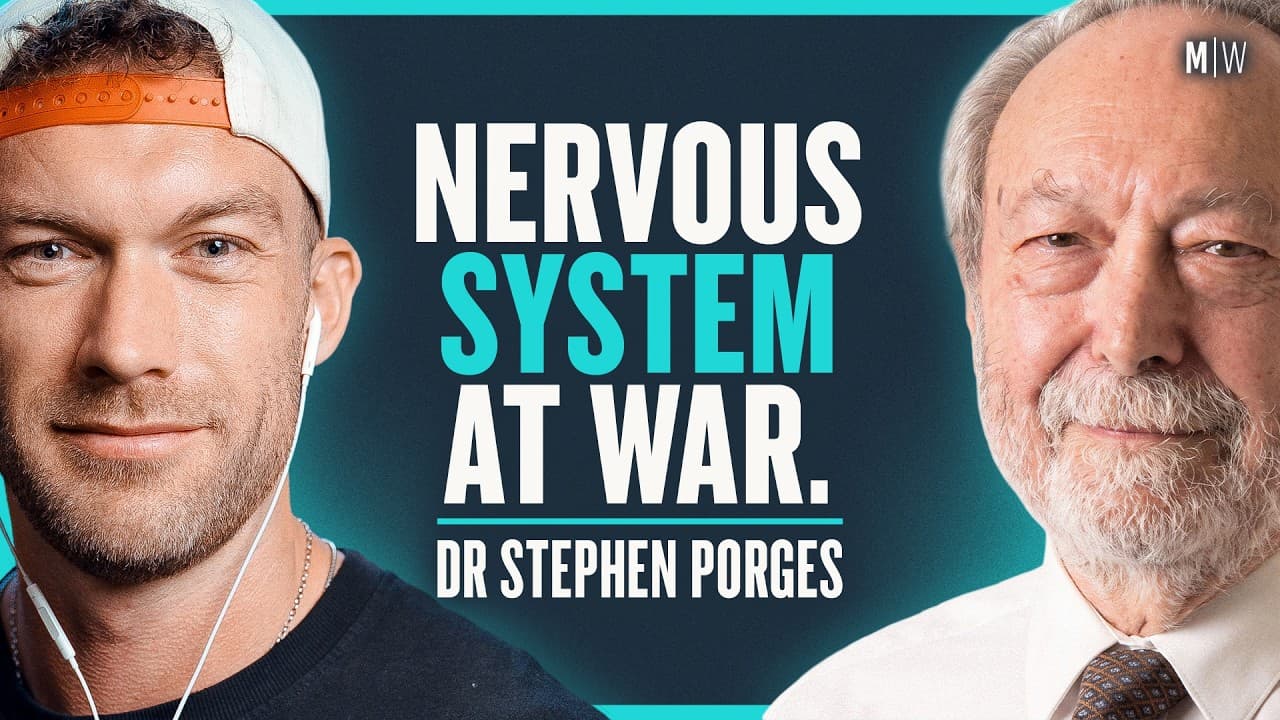
The nervous system often remains in a state of fight or flight due to past traumas and environmental factors. Polyvagal Theory explains how physiological states affect perceptions and interactions. Understanding and addressing these states can lead to a calmer state of mind, improved safety signals, and better nervous system regulation.
Transcript
You've authored more than 400 peer-reviewed scientific papers and literally created poly vagal theory. It's sort of rare that you get to ask Mike Tyson about how to throw a jab uh or the founder of a really impactful theory about what it means. So I guess how do you describe polyagal theory to someone who isn't familiar with it? >> It's really quit... Read More
Key Insights
- Polyvagal Theory suggests that our physiological state influences how we perceive and interact with the world.
- The nervous system can become stuck in survival mode, perceiving constant threats.
- Feeling safe is not merely the absence of threat; it requires positive safety signals.
- Metabolic support and gut health play crucial roles in nervous system regulation.
- Social engagement and co-regulation are key to calming the nervous system.
- Resonance breathing and vagus nerve stimulation can help improve autonomic function.
- Trauma can retune the nervous system, affecting its response to safety signals.
- Chronic stress and inflammation are linked to nervous system dysregulation.
Install to Summarize YouTube Videos and Get Transcripts
Explore YouTube Video Summarizer or Get YouTube Transcript Extractor
Questions & Answers
Q: How does Polyvagal Theory explain anxiety?
Polyvagal Theory posits that anxiety is the body's response to being in a defensive state. It suggests that our physiological state influences our perception of safety and threat. Anxiety occurs when the nervous system is stuck in survival mode, constantly perceiving threats. Understanding and addressing these physiological states can help reduce anxiety.
Q: What role does the vagus nerve play in the nervous system?
The vagus nerve is crucial for regulating the autonomic nervous system. It helps control heart rate, digestion, and immune response. Polyvagal Theory highlights its role in social engagement and calming the nervous system. Stimulating the vagus nerve can enhance its function, promoting relaxation and reducing stress.
Q: Why is metabolic support important for nervous system health?
Metabolic support is vital because it provides the energy needed for optimal nervous system function. Mitochondrial health, for instance, is crucial for energy production. Without adequate metabolic support, the nervous system may struggle to maintain resilience, leading to symptoms like fatigue and dysregulation.
Q: How can resonance breathing benefit the nervous system?
Resonance breathing involves slow, rhythmic breathing that aligns with the body's natural oscillations. This practice can enhance vagal tone, improve heart rate variability, and promote relaxation. By focusing on breath, individuals can engage feedback loops that help calm the nervous system and reduce stress.
Q: What is the connection between the gut and the nervous system?
The gut and nervous system are closely linked through the vagus nerve. The gut microbiome produces signals that influence brain function and mood. A healthy gut can improve nervous system regulation, while gut dysbiosis can lead to inflammation and stress, affecting overall well-being.
Q: Can a person's nervous system be 'too safe'?
While a well-regulated nervous system can detect threats, being 'too safe' generally refers to a system that is overly relaxed to the point of being unresponsive to actual threats. However, a healthy nervous system balances safety and threat detection, ensuring appropriate responses to environmental cues.
Q: How does trauma affect the nervous system?
Trauma can retune the nervous system, making it hypersensitive to perceived threats. This can lead to a state of chronic defense, where the body is always on high alert. Healing involves recalibrating the nervous system to recognize safety signals and reduce hypervigilance.
Q: What interventions can help regulate the nervous system?
Interventions like resonance breathing, vagus nerve stimulation, and safe and sound protocols can help regulate the nervous system. These practices promote relaxation and enhance vagal tone, improving the body's ability to transition from a state of defense to one of safety and social engagement.
Summary & Key Takeaways
-
Polyvagal Theory explains how our physiological state affects perception and interaction. The nervous system often remains in a heightened state of alertness due to trauma or environmental factors, requiring positive safety signals to calm it.
-
Understanding the role of metabolic support, gut health, and social engagement can improve nervous system regulation. Techniques like resonance breathing and vagus nerve stimulation offer pathways to enhance autonomic function.
-
Chronic stress and inflammation contribute to nervous system dysregulation. Addressing these through lifestyle changes and therapeutic interventions can help restore a sense of safety and improve overall well-being.
Read in Other Languages (beta)
Share This Summary 📚
Summarize YouTube Videos and Get Video Transcripts with 1-Click
Try YouTube Summary with ChatGPT & Claude or YouTube Transcript Generator
Explore More Summaries from Chris Williamson 📚






Summarize YouTube Videos and Get Video Transcripts with 1-Click
Try YouTube Summary with ChatGPT & Claude or YouTube Transcript Generator