How to Extract Cadaverine Safely and Efficiently
TL;DR
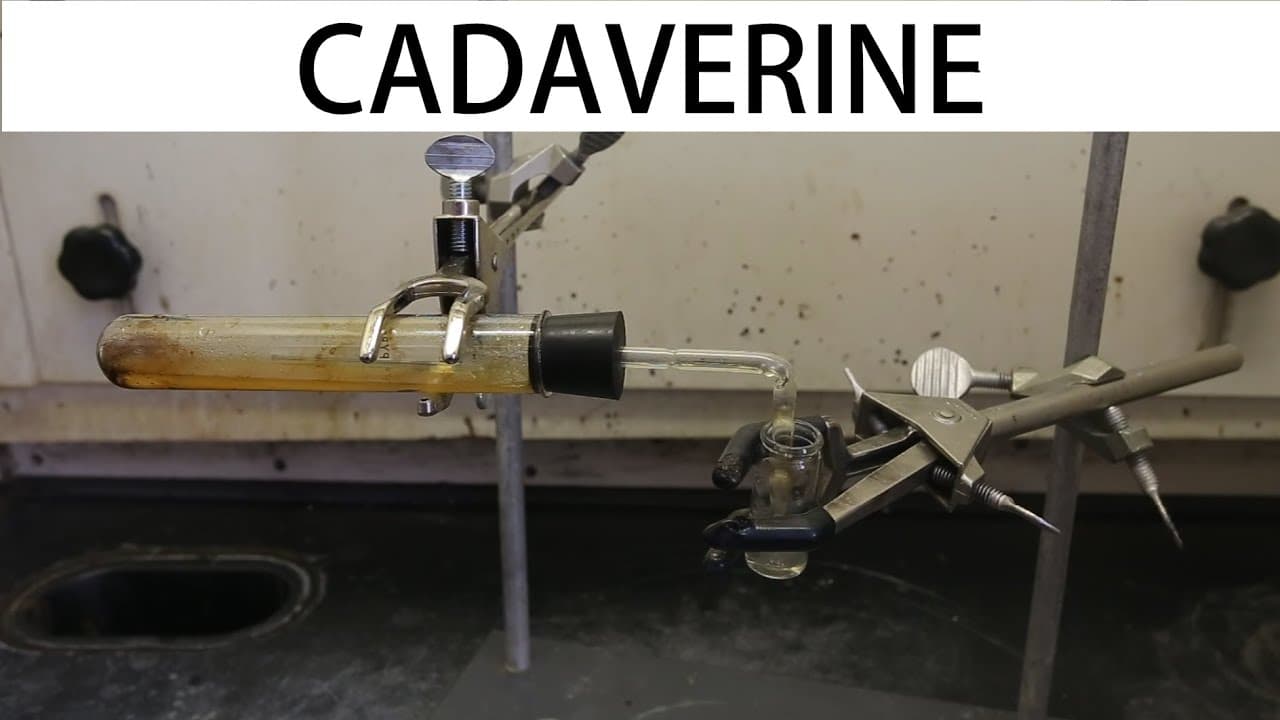
To extract cadaverine, combine lysine hydrochloride and sodium bicarbonate, then heat the mixture to trigger a decarboxylation reaction. Cadaverine has a strong, pungent odor and must be handled with gloves in a well-ventilated area. Destructive distillation is recommended for higher yields, and ethanol or water can be used to isolate the cadaverine after extraction.
Transcript
kadavan has an extremely pungent odor and it is very difficult to wash off even contact with just the vapors will cause materials to stink working with gloves and proper safety gear is an absolute must and this must be only carried out in a well ventilated area Kadin gets its name from the root word kadaver and it is naturally produced in the decom... Read More
Key Insights
- 👃 Kadavan is a compound found in rotting meat and human semen, contributing to their distinctive smells.
- 💦 Safety precautions such as gloves and proper ventilation are essential when working with kadavan due to its pungent odor.
- 🛢️ The extraction of kadavan can be done by heating lizine hydrochloride and sodium bicarbonate and collecting the resulting kadavan oil.
- 💦 Ethanol or water can be used to extract and concentrate kadavan from the mixture.
- ✋ Destructive distillation is a more efficient method to obtain kadavan, using high temperatures to vaporize and condense the compound.
- 🫢 Suckback, which occurs when gases cool and create negative pressure, can be dangerous and should be avoided during the distillation process.
- 🤲 The yield of kadavan obtained in the distillation process can vary, and concentration can be further achieved using diethyl ether extraction.
Install to Summarize YouTube Videos and Get Transcripts
Explore YouTube Video Summarizer or Get YouTube Transcript Extractor
Questions & Answers
Q: What is kadavan and where does it come from?
Kadavan is a compound produced during the decomposition of animal tissue and is responsible for the pungent smell of rotting meat. It can also be found in small amounts in human semen.
Q: Why is it important to use gloves and safety gear when working with kadavan?
Kadavan has an extremely strong odor that is difficult to wash off. It is crucial to protect yourself with gloves and safety gear to prevent the odor from sticking to your skin or clothes.
Q: How is kadavan extracted from lizine hydrochloride and sodium bicarbonate?
The extraction process involves heating lizine hydrochloride and sodium bicarbonate together, causing a decarboxylation reaction. This reaction leads to the formation of kadavan oil.
Q: What is the purpose of using ethanol or water in the extraction process?
Ethanol or water can be used to dissolve the kadavan and extract it from the other starting products and byproducts. Ethanol is a good choice for extraction and concentration, while water can simply dissolve everything.
Summary & Key Takeaways
-
Kadavan is a compound with a strong odor that is difficult to remove and is naturally produced during the decomposition of animal tissue.
-
Lizine hydrochloride and sodium bicarbonate are used in the extraction and distillation process to create kadavan.
-
Extracting kadavan can be done using ethanol or water, and distillation is a more efficient method to obtain the compound.
Read in Other Languages (beta)
Share This Summary 📚
Summarize YouTube Videos and Get Video Transcripts with 1-Click
Try YouTube Summary with ChatGPT & Claude or YouTube Transcript Generator
Explore More Summaries from NileRed 📚

Summarize YouTube Videos and Get Video Transcripts with 1-Click
Try YouTube Summary with ChatGPT & Claude or YouTube Transcript Generator