Why Are Big Banks Warning of a Market Selloff?
TL;DR
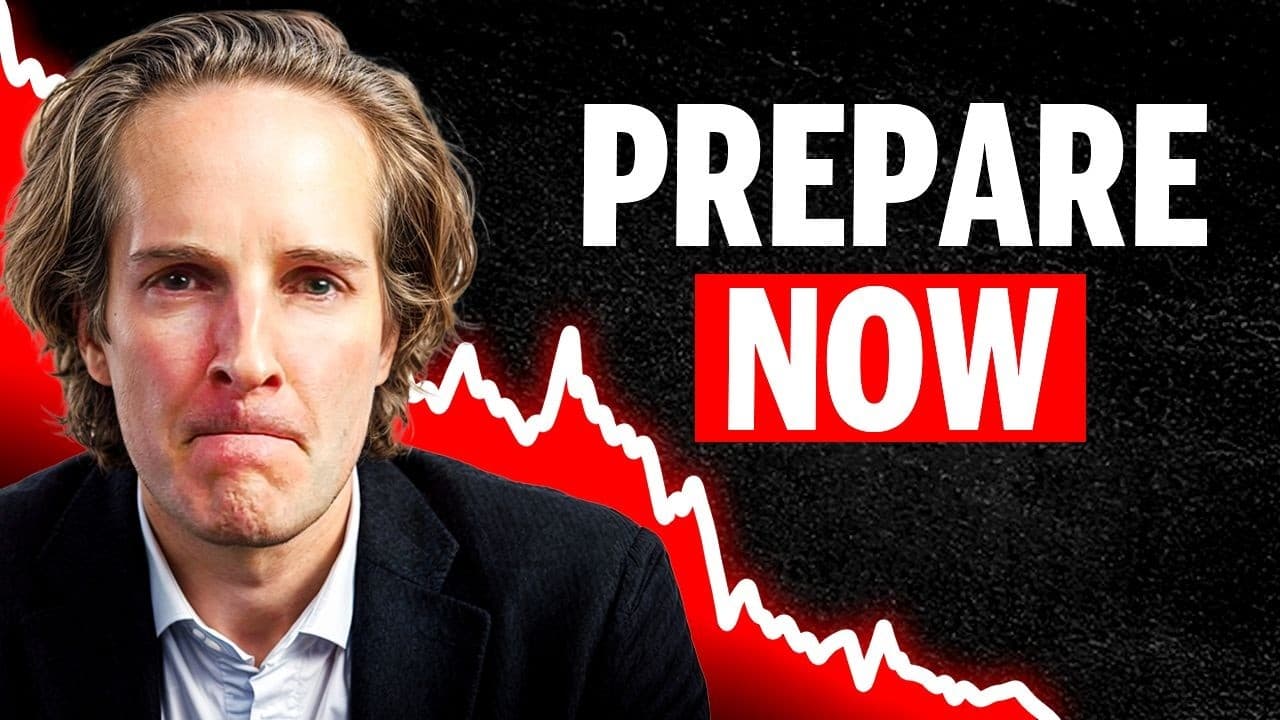
Fund managers hold just 3.9% cash, suggesting they are heavily invested and have limited capacity to buy more stocks. Combined with widespread overvaluation concerns, seasonal weakness, and insider selling, this may signal elevated market risk, but Berkshire Hathaway’s 25% underperformance over five years could offer a contrarian opportunity for investors who apply careful risk management.
Transcript
The biggest bank in America just warned that there is a shortage of kittens around here unlikely. No, but in all seriousness, they're warning that one sell signal just got flagged, which has actually been insanely accurate over the years. So, let me share my screen with you so you can see it. And it is how much cash fund managers hold. So, when the... Read More
Key Insights
- Fund-manager cash holdings are 3.9%, which the presenter interprets as evidence that professional investors are nearly fully invested. When managers retain little cash, they have limited capacity to make additional purchases, potentially making the market more vulnerable near elevated price levels.
- Low fund-manager cash has previously appeared around periods including 2007, 2012, 2013, and 2021. The presenter treats those historical observations as a concerning market-timing signal, while also emphasizing that the indicator cannot determine whether a market top must occur immediately.
- Stocks are considered overvalued by 91% of the fund managers included in the cited Bank of America survey. The presenter notes that this could indicate expensive markets, although investors could alternatively interpret widespread pessimism among professional managers as a contrarian reason to continue buying.
- Post-election-year seasonality suggests stocks often peak around the current portion of the year, experience greater volatility, and bottom by late October. August and September are described as typically unfavorable months because reduced Wall Street participation can allow a relatively small event to disrupt markets.
- Berkshire Hathaway has underperformed the broader market by 25% over five years, according to the Bloomberg data cited in the transcript. The presenter argues that severe relative underperformance can create interest in a high-quality value-oriented company when more speculative stocks are attracting greater attention.
- Berkshire Hathaway shares have fallen 14% since Warren Buffett announced that he would step down at year-end, while the S&P including dividends rose 11%. The resulting 25% performance gap is described as larger than Berkshire’s relative underperformance during 2008 and 2000.
- Insurance businesses work by collecting premiums, investing that money, and paying claims when covered losses occur. The presenter describes this structure as a steady, tax-efficient investment vehicle when properly established and identifies it as an important reason Berkshire Hathaway owns substantial insurance operations.
- Inflation results are evaluated against cited monthly expectations of about 0.25 for headline inflation and 0.3 for core inflation. The presenter’s framework is direct: readings above those expectations are considered negative for markets, while readings below them are considered positive.
Install to Summarize YouTube Videos and Get Transcripts
Explore YouTube Video Summarizer or Get YouTube Transcript Extractor
Questions & Answers
Q: Why can low fund-manager cash signal a market selloff?
Low cash means fund managers have already committed most of their available capital to investments. At the reported 3.9% cash level, they have relatively little money left to deploy into additional stocks. The presenter argues that such heavily invested positioning can appear near market highs because buying capacity is limited, although the signal cannot identify precisely when a selloff will begin.
Q: What does the 3.9% fund-manager cash level mean?
The 3.9% figure represents the portion of assets that fund managers reportedly hold in cash. The presenter interprets it as an unusually low reserve, meaning managers are close to fully invested. Comparable low levels are associated in the transcript with periods such as 2007, 2012, 2013, and 2021, making the current reading a warning rather than a precise prediction.
Q: Why do fund managers believe stocks are overvalued?
The transcript reports that 91% of surveyed fund managers described stocks as overvalued, but it does not provide their individual valuation methods or detailed reasoning. The presenter treats the result as evidence that professional investors broadly view prices as expensive. He also acknowledges a competing interpretation: such overwhelming agreement could become a contrarian signal for investors who distrust prevailing fund-manager sentiment.
Q: When does post-election-year market weakness usually occur?
The seasonal pattern presented suggests that stocks commonly peak around the current part of a post-election year, encounter increased volatility, and reach a bottom by late October. August and September are described as generally weak months. The presenter attributes some vulnerability to reduced Wall Street participation during holidays, when a relatively small negative development may have an outsized market impact.
Q: Why might Berkshire Hathaway be a contrarian investment opportunity?
Berkshire Hathaway reportedly underperformed the market by 25% over five years, creating the type of neglected situation the presenter considers potentially attractive. Its shares also fell 14% after Warren Buffett announced his year-end departure, while the S&P including dividends gained 11%. The presenter argues that this unusually large relative decline justifies further research, not an automatic purchase.
Q: What is the difference between BRK.A and BRK.B shares?
BRK.A is identified as the extremely expensive Berkshire Hathaway share class, with a cited price of $698,000 per share. BRK.B is presented as the more accessible alternative at $465 per share. The presenter also notes that some brokers may offer fractional shares, allowing investors to obtain exposure without purchasing an entire share of either class.
Q: How do Berkshire Hathaway’s insurance businesses generate value?
Insurance companies collect premiums from customers and invest that money while remaining responsible for paying valid claims when covered losses occur. The presenter characterizes this arrangement as a tax-efficient investment vehicle and says it can become a steady, stable business when properly structured. Berkshire Hathaway’s substantial insurance ownership reflects Warren Buffett’s preference for this premium-funded investment model.
Q: How should investors interpret the cited inflation numbers?
The presenter cites expected monthly figures of about 0.25 for headline inflation and 0.3 for core inflation. His interpretation is that readings above those expectations would be bad for the market, while readings below them would be good. Investors should therefore compare the released figures with those stated expectations rather than judging the numbers without a reference point.
Summary & Key Takeaways
-
Fund managers reportedly hold only 3.9% of their portfolios in cash, a level associated in the transcript with heavily invested positioning and previous market highs. The presenter treats this as a warning because managers have less available capital to buy additional stocks, although the signal does not establish exactly when a decline might occur.
-
Additional warnings include 91% of surveyed fund managers describing stocks as overvalued, historically weak conditions during August and September in post-election years, and a large insider sale at HIMS. Inflation data also matters, with results above the cited expectations characterized as negative and lower readings characterized as positive for the market.
-
Berkshire Hathaway is presented as a possible contrarian opportunity after underperforming the market by 25% over five years and falling 14% following Warren Buffett’s retirement announcement. The presenter highlights its insurance-centered business model, BRK.B’s lower share price, and the importance of education and risk management before considering an investment.
Read in Other Languages (beta)
Share This Summary 📚
Summarize YouTube Videos and Get Video Transcripts with 1-Click
Try YouTube Summary with ChatGPT & Claude or YouTube Transcript Generator
Explore More Summaries from Felix & Friends (Goat Academy) 📚

![⚠️[WATCH NOW] IF You Own Tesla, Palantir, Nvidia, Amd, SoFi, HIMS thumbnail](/_next/image?url=https%3A%2F%2Fi.ytimg.com%2Fvi%2F9TY1aEkEGC8%2Fhqdefault.jpg&w=750&q=75)

Summarize YouTube Videos and Get Video Transcripts with 1-Click
Try YouTube Summary with ChatGPT & Claude or YouTube Transcript Generator