Why Do Most Stock Investors Lose Money?
TL;DR
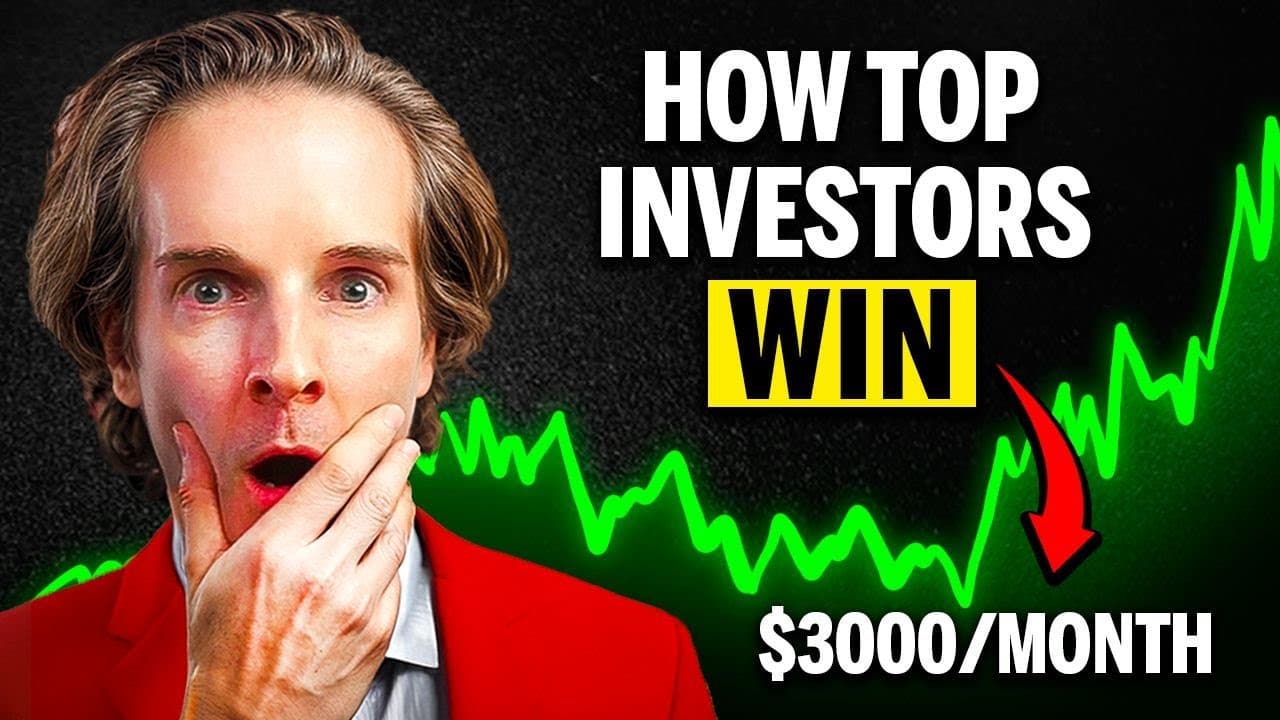
Most retail investors lose money due to psychological traps and hidden fees. They compete against hedge funds with advanced technology and data access. Successful investors follow systematic rules, especially for selling, to manage risk and avoid emotional decisions. Index funds offer a safer, long-term investment strategy compared to individual stocks.
Transcript
If you're an active stock investor or even a trader, what I'm about to reveal could save you from joining the 90% of retail traders and active investors who underperform the market or just lose money outright. That's what Winston just taught me back there. What's actually happening is that you are competing against hedge funds with billions of doll... Read More
Key Insights
- Retail investors often lose money due to psychological traps like loss aversion.
- Hedge funds use advanced technology and data, giving them an edge over individual investors.
- Hidden fees, even with commission-free brokers, can erode investment returns.
- Successful investors have a systematic approach, especially for selling and managing risk.
- Index funds provide a safer, long-term investment strategy compared to individual stocks.
- Day trading and frequent activity often benefit brokers more than investors.
- Position sizing and stop-loss rules are crucial for risk management.
- Emotional trading and herd mentality can lead to significant financial losses.
Install to Summarize YouTube Videos and Get Transcripts
Explore YouTube Video Summarizer or Get YouTube Transcript Extractor
Questions & Answers
Q: Why do most retail investors lose money in the stock market?
Most retail investors lose money due to psychological traps such as loss aversion, where they hold onto losing stocks longer than winners. They also face hidden fees even with commission-free brokers. Additionally, they compete against hedge funds that have superior technology and data access, making it difficult to outperform the market.
Q: How do hedge funds have an advantage over individual investors?
Hedge funds have an advantage over individual investors because they use advanced technology and data to execute trades faster and more efficiently. They employ teams of analysts and have access to alternative data sources, allowing them to make informed decisions. This technological and informational edge makes it challenging for retail investors to compete.
Q: What are hidden fees in commission-free brokerage accounts?
Hidden fees in commission-free brokerage accounts often come from the bid-ask spread. When buying, investors may pay slightly more than the market price, and when selling, they may receive slightly less. This difference, though small, accumulates over time and can significantly impact returns, especially with larger trades.
Q: What is loss aversion and how does it affect investors?
Loss aversion is a psychological trap where investors are more sensitive to losses than gains. It leads them to hold onto losing stocks longer than they should, hoping for a rebound, while quickly selling winners to lock in gains. This behavior often results in larger losses and smaller gains, negatively affecting overall portfolio performance.
Q: Why are index funds considered a safer investment option?
Index funds are considered a safer investment option because they diversify across many stocks, reducing the risk associated with individual company failures. They track a market index, such as the S&P 500, which historically trends upwards over time. This makes index funds a reliable, long-term investment strategy compared to picking individual stocks.
Q: How can investors manage risk effectively in the stock market?
Investors can manage risk effectively by using position sizing, setting stop-loss orders, and following a disciplined trading strategy. Limiting the amount of capital risked on a single trade and having predefined exit strategies help mitigate losses. Avoiding emotional trading and adhering to a systematic approach are also crucial for risk management.
Q: What is the importance of having a systematic approach to investing?
A systematic approach to investing is important because it removes emotional decision-making and provides a structured framework for making trades. It involves having clear rules for entry, exit, and risk management, which helps investors remain disciplined and consistent. This approach increases the likelihood of achieving profitable outcomes over time.
Q: Why is it important to define your edge before every trade?
Defining your edge before every trade is important because it clarifies why you expect to make a profit. An edge could be better analysis, superior information, or a disciplined system. Without a clear edge, trading becomes speculative and akin to gambling. Successful investors can articulate their edge, which guides their decision-making and enhances profitability.
Summary & Key Takeaways
-
Retail investors often underperform due to psychological traps and hidden fees. Competing against hedge funds with advanced technology, they face significant disadvantages. Successful investors follow systematic rules, especially for selling, to manage risk and avoid emotional decisions. Index funds offer a safer, long-term investment strategy compared to individual stocks.
-
Hedge funds have an edge over retail investors through advanced technology and data access. Retail investors face hidden fees even with commission-free brokers, which can erode returns. Successful investors use systematic approaches to manage risk and avoid emotional decisions, while index funds provide a safer, long-term strategy.
-
Day trading and frequent activity benefit brokers more than investors, often leading to losses. Position sizing and stop-loss rules are crucial for managing risk. Emotional trading and herd mentality can result in significant financial losses. Index funds are a safer, long-term investment choice compared to individual stocks.
Read in Other Languages (beta)
Share This Summary 📚
Summarize YouTube Videos and Get Video Transcripts with 1-Click
Try YouTube Summary with ChatGPT & Claude or YouTube Transcript Generator
Explore More Summaries from Felix & Friends (Goat Academy) 📚


![⚠️[WATCH NOW] IF You Own Tesla, Palantir, Nvidia, Amd, SoFi, HIMS thumbnail](/_next/image?url=https%3A%2F%2Fi.ytimg.com%2Fvi%2F9TY1aEkEGC8%2Fhqdefault.jpg&w=750&q=75)


Summarize YouTube Videos and Get Video Transcripts with 1-Click
Try YouTube Summary with ChatGPT & Claude or YouTube Transcript Generator