How to Structure Next.js Applications for Maintainability
TL;DR
To structure your Next.js applications for better maintainability, follow clean architecture principles by separating presentation, business logic, and data access layers. This layered approach enhances code organization, allowing for easier updates and collaboration while minimizing dependencies that could complicate maintenance.
Transcript
so I think it's been like a week since I've published a video on my channel and I figured I should probably get something published out there before the YouTube algorithm thinks I'm no longer relevant so I want to talk about the structure of my code and how I kind of architect the code for my nextjs starter kit um you can kind of take what you want... Read More
Key Insights
- 👨💼 Following clean architecture principles ensures a maintainable and scalable codebase that separates business logic from presentational concerns.
- 👨💻 Layered architecture helps define clear responsibilities within code, making it easier to manage code changes and enhance collaboration among developers.
- ☠️ Authentication middleware, like Zod, provides effective management of user sessions and rate limits, securing application functionalities.
- 🥶 Co-locating components increases project readability, making it straightforward for developers to modify related components together.
- 💼 Encapsulation of business logic within isolated use cases simplifies testing and prevents code duplication, improving overall application quality.
- 💱 Keeping Next.js specific implementations distinct helps future-proof the application against potential framework changes and simplifies alterations.
- 💁 Implementing data transfer objects minimizes the risk of exposing sensitive information, enhancing overall application security.
Install to Summarize YouTube Videos and Get Transcripts
Explore YouTube Video Summarizer or Get YouTube Transcript Extractor
Questions & Answers
Q: What is clean architecture, and why is it important in Next.js?
Clean architecture is a design pattern aimed at separating concerns within code to enhance its maintainability and testability. It is essential in Next.js to prevent direct dependencies between components, making it easier to manage changes and scaling the application over time without complicating the codebase.
Q: Can you explain the significance of the layered architecture approach?
Layered architecture involves organizing code into distinct layers such as presentation, business, persistence, and database layers. This structure helps manage dependencies, maintain separation of concerns, and allows developers to understand the flow of data and the interactions between different code components, ultimately leading to cleaner and more maintainable code.
Q: How does the presenter handle user authentication in the application?
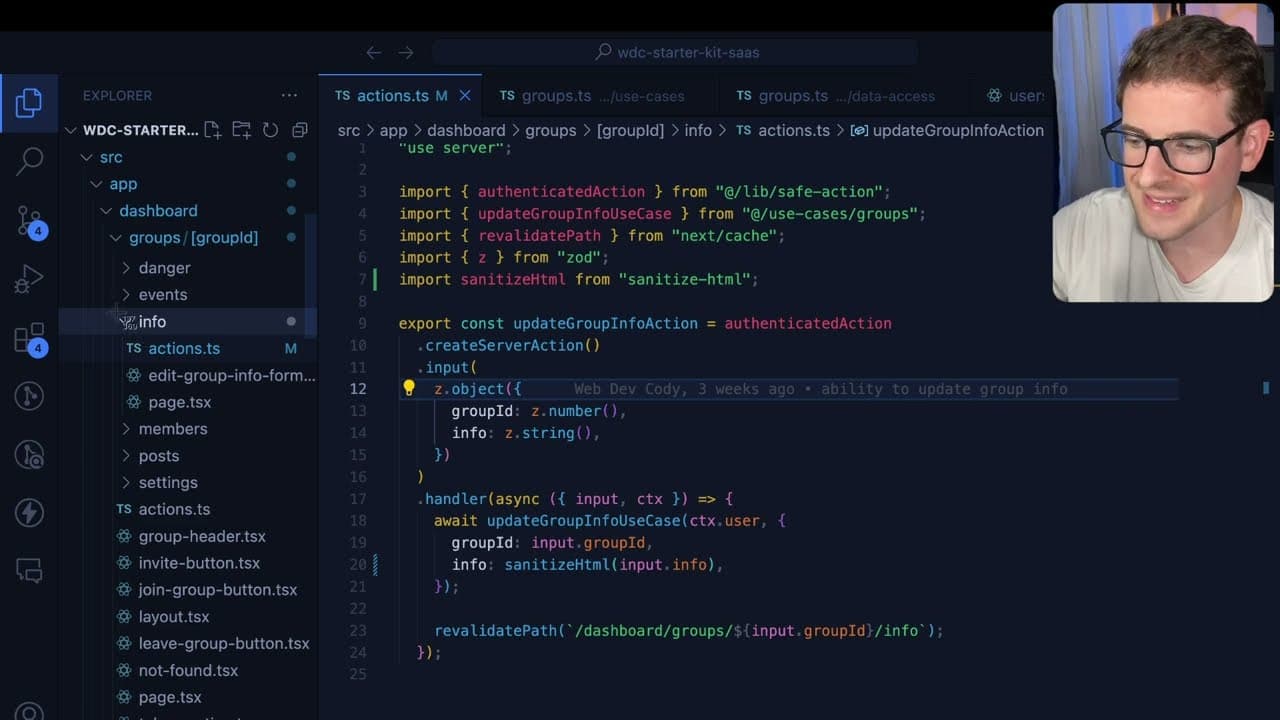
The presenter uses a library called Zod that allows defining middleware to manage authentication. The library verifies user sessions and implements rate limiting for protected routes, ensuring that only authorized users can access certain functionalities, like updating group information.
Q: What are the benefits of co-locating components in a Next.js project?
Co-locating components streamlines project structure by keeping related files together, which enhances readability and maintainability. This organizational approach makes it easier for developers to find and modify components specific to certain pages, especially in larger applications where sprawling folder structures can become confusing.
Q: What strategies does the video suggest for managing business logic?
The video suggests encapsulating business logic within dedicated use cases that remain independent of the specific frameworks used (like Next.js). This design keeps business rules consistent and reusable across different parts of the application, avoiding duplication and potential inconsistencies.
Q: Why is it advised to keep Next.js specific code separate from business logic?
Keeping Next.js specific code separate from business logic allows for easier refactoring if the technology stack changes or if the application needs to modify how data is managed. It leads to a more modular codebase, reducing the risk of introducing bugs when changes are made.
Q: How does the presenter recommend handling potential data exposure risks?
The presenter advocates for using data transfer objects (DTOs) to ensure that sensitive data does not leak across different application layers. By specifying exactly what data should be shared between layers, developers can prevent unauthorized access to inner workings and enhance security.
Q: What final thoughts does the presenter offer on structuring applications?
The presenter emphasizes maintaining a consistent architectural approach to aid collaboration and future development. A coherent structure facilitates better understanding among team members and simplifies onboarding, allowing developers to navigate the codebase with confidence.
Summary & Key Takeaways
-
The video highlights the importance of following clean architecture and layered architecture principles when structuring code in a Next.js project, promoting maintainability.
-
Key concepts include separating presentation, business logic, and data access layers to avoid dependencies that could make the project difficult to manage.
-
A practical example is presented, showing how to handle updates in a group info page using server actions while keeping Next.js specifics separate from business logic.
Read in Other Languages (beta)
Share This Summary 📚
Summarize YouTube Videos and Get Video Transcripts with 1-Click
Try YouTube Summary with ChatGPT & Claude or YouTube Transcript Generator
Explore More Summaries from Web Dev Cody 📚




Summarize YouTube Videos and Get Video Transcripts with 1-Click
Try YouTube Summary with ChatGPT & Claude or YouTube Transcript Generator