How to automate a digital services business
TL;DR
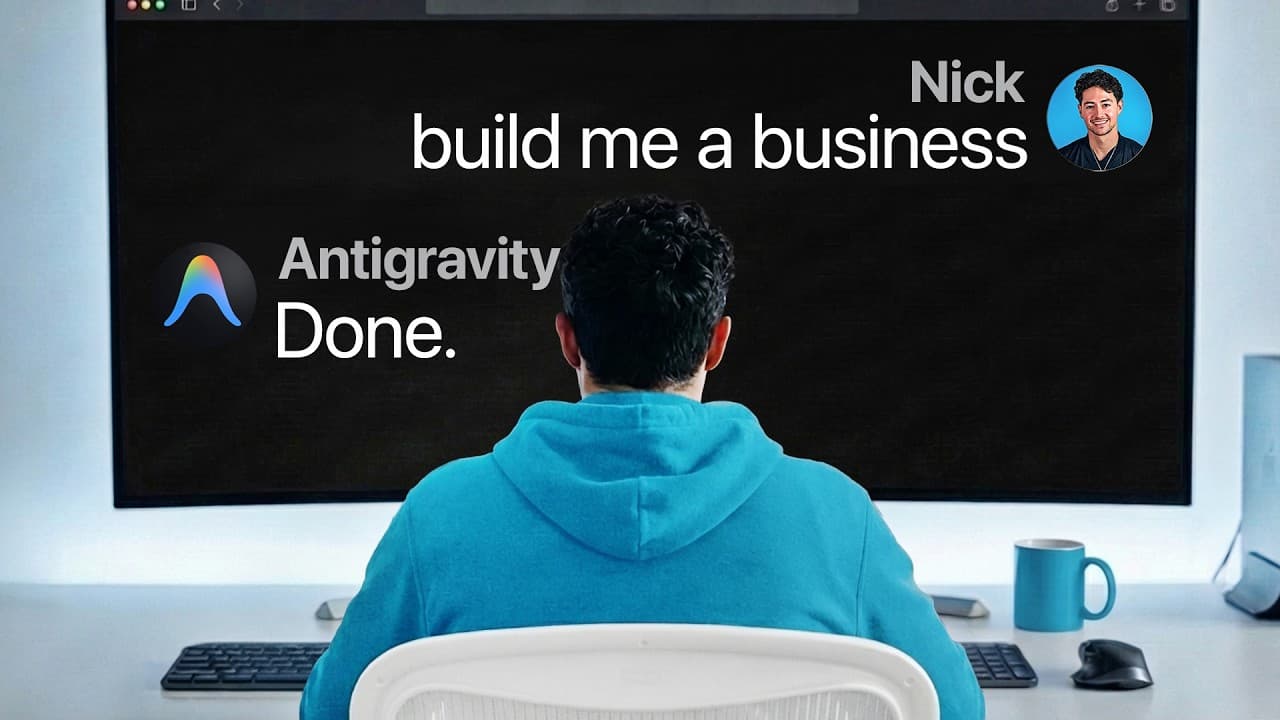
Agentic Workflows decouples functions from logic and lets AI orchestrate fulfillment. The framework DO (Directive, Orchestration, Execution) guides setup so you can automate lead gen, proposals, onboarding, and delivery for a digital services agency. The approach works across industries that rely on internet based work and digital data.
Transcript
Hey, today I'm going to show you how you can automate the fulfillment of more or less any digital services company using Agentic Workflows. I'm going to be doing this on my own business as a demo. We're leftclick. We do primarily B2B outbound marketing and cold email. But I want you guys to know you guys can do this for any business or any industry... Read More
Key Insights
- Agentic Workflows separate functions from the surrounding logic so the AI handles tool usage and task execution.
- The DO framework stands for Directive, Orchestration, Execution and provides a practical blueprint to constrain AI mistakes.
- The video uses Leftclick as a case study, showing how a B2B outbound marketing firm can automate most of its operations.
- Lead generation and lead enrichment are automated by sourcing data from databases and then enriching with emails and personalized details.
- Campaigns are generated from high performing templates and split-tested offers to maximize response rates.
- Proposals and welcome emails are automated steps that formalize onboarding and set client expectations.
- The process includes converting prospects to customers through proposals, signed agreements, and onboarding communications.
- Automation aims to reduce manual labor and scale service delivery by leveraging AI to run the workflow end to end.
- More videos from this channel:
- More from this channel: Nick Saraev
Install to Summarize YouTube Videos and Get Transcripts
Explore YouTube Video Summarizer or Get YouTube Transcript Extractor
Questions & Answers
Q: How do Agentic Workflows differ from traditional drag and drop platforms
Agentic Workflows separate the functions from the logic and allow AI to orchestrate how those functions are used. Instead of hard coding the flow, you provide the available tools and let AI decide the routing and execution. This can reduce manual setup time and enable more flexible automation that adapts to different scenarios.
Q: What does the DO framework stand for and how is it used
DO stands for Directive, Orchestration, and Execution. Directive is what to do, and you store instructions. Orchestration tells the agent how to fulfill the task with the given tools. Execution is the actual carrying out of tasks, often via scripts or integrations. Together, they constrain AI behavior while enabling complex automation.
Q: What is the role of lead generation in the automated system
Lead generation is the starting point for the automation pipeline. It involves scraping or sourcing leads from databases, enriching them with emails and company details, and then personalizing content. This creates a pipeline of potential clients ready for automated outreach and proposal generation.
Q: How are proposals generated in the automated process
Proposals are generated by processing transcripts from sales calls and translating the discussion into a structured proposal. The system highlights client problems, presents a solution, outlines scope steps, and states the investment. This formalizes the sales outcome and accelerates onboarding.
Q: How does onboarding get automated in this system
Onboarding is automated through a sequence that includes welcome emails and kickoff calls, where project details are captured and documented. Transcripts are used to extract essential information, and subsequent steps ensure the client is guided through the setup and initial work without heavy manual intervention.
Q: What is a key advantage of using AI for coding in this setup
AI coding tools are leveraged to write or adapt necessary scripts and integrate tools, reducing the need for deep programming knowledge. The AI handles the technical implementation while the human focuses on defining goals and constraints, allowing faster deployment and easier maintenance.
Q: What kind of business is used as the demo example in the video
The demo uses Leftclick, described as a B2B outbound marketing and cold email agency. The video walks through how this type of digital services firm can automate the core cycles of lead generation, proposals, onboarding, and fulfillment using Agentic Workflows.
Q: Why is automation particularly valuable for digital services companies
Automation is valuable because digital services firms often juggle multiple clients, data sources, and communications. Automating lead generation, proposals, client onboarding, and fulfillment reduces manual labor, increases consistency, speeds up delivery, and makes scaling feasible while maintaining service quality.
Summary & Key Takeaways
-
Automation enables a digital services business to run with minimal manual involvement by outlining a clear flow from lead generation to onboarding.
-
The DO framework provides a simple structure: Directives define tasks, Orchestration assigns data flow, and Execution carries out tasks with tools and AI.
-
The method demonstrated shows how to automate the core cycles of a service agency, including sales, proposals, client onboarding, and fulfillment, making the business largely autonomous.
Read in Other Languages (beta)
Share This Summary 📚
Summarize YouTube Videos and Get Video Transcripts with 1-Click
Try YouTube Summary with ChatGPT & Claude or YouTube Transcript Generator
Explore More Summaries from Nick Saraev 📚






Summarize YouTube Videos and Get Video Transcripts with 1-Click
Try YouTube Summary with ChatGPT & Claude or YouTube Transcript Generator