How to Change Your Life in One Year With a System
TL;DR
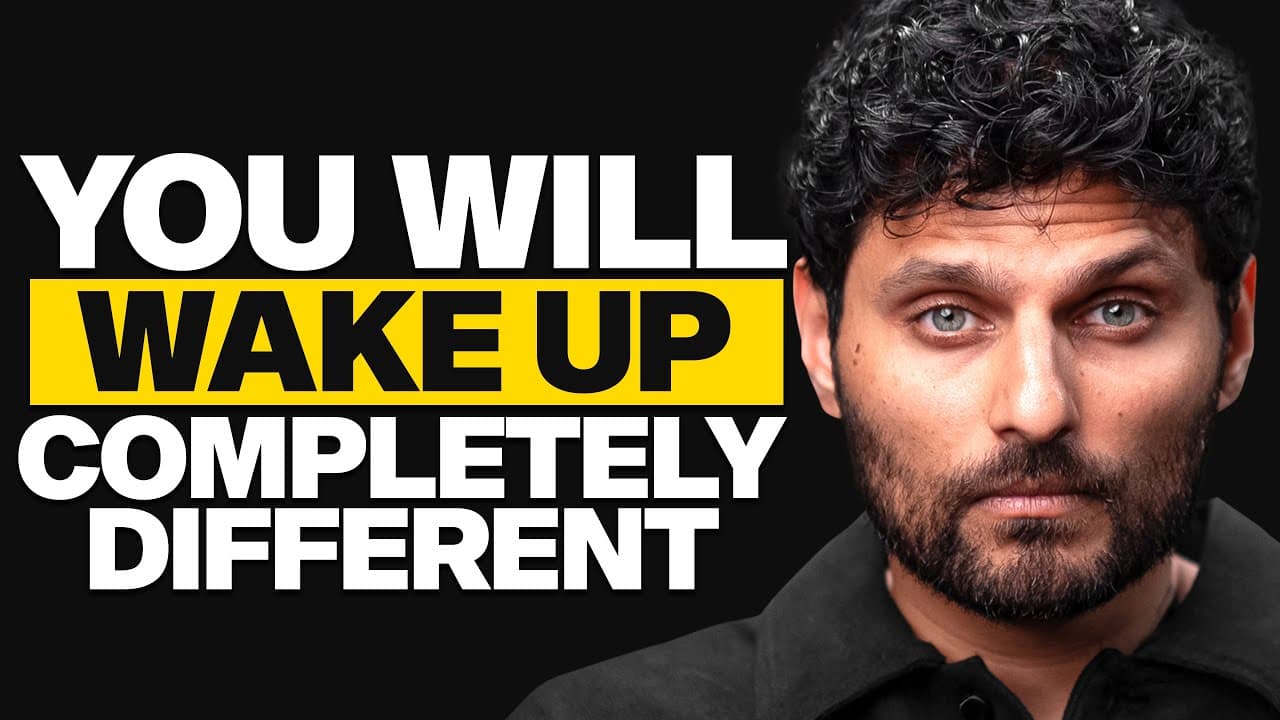
Your life changes through tiny decisions repeated for a year, not through motivation or willpower. Since your environment drives 45% of daily behavior, redesign your morning and night routines, remove friction from good habits, master one skill, repair key relationships, and move toward fear instead of avoiding it. Systems outlast motivation, which crashes within 3 to 5 minutes.
Transcript
Who do I want to become? It's not about the goal. It's about the growth you're willing to undertake in order to achieve the goal. Success is quiet mornings, late nights, and 100 almosts before one yes. Success is choosing discipline on the day's motivation doesn't show up. Success is doing the work when no one's watching and no one's clapping. Succ... Read More
Key Insights
- Life does not change in a year but in the tiny decisions repeated for a year, meaning consistency of small choices, not a single dramatic event, is what produces lasting transformation over 12 months.
- 92% of people never follow through on their new year goals, not because they lack the desire to change, but because they use hope as a strategy instead of building a repeatable system of routines and structures.
- Motivation spikes and crashes within only 3 to 5 minutes during moments of temptation, while systems such as routines, environments, and structures keep going long after motivation dies, making design more reliable than willpower.
- Your environment drives 45% of your daily behavior, nearly half your life, so redesigning physical surroundings like moving your phone to another room or laying out gym clothes makes discipline automatic rather than effortful.
- Making good habits easy to find and bad habits hard to find is the core rule of environment design, so keep gym clothes accessible and unhealthy snacks out of reach to reduce friction on the behaviors you want.
- Learning a new skill reduces anxiety and depression by up to 34%, and skills change identity, build confidence, increase opportunity, and compound, making one mastered skill more transformative than a year of hobbies.
- The Harvard Study of Adult Development, the longest happiness study ever done, found the quality of your relationships is the strongest predictor of your future well-being, so repairing and deepening bonds directly improves life quality.
- Fear grows bigger the further you stand from it and smaller the closer you move toward it, so action reduces anxiety while avoidance amplifies it, meaning you act while still feeling fear rather than waiting to feel unafraid.
Install to Summarize YouTube Videos and Get Transcripts
Explore YouTube Video Summarizer or Get YouTube Transcript Extractor
Questions & Answers
Q: Why do most people fail to change their lives in a year?
Most people fail not because they are lazy, untalented, or lack opportunity, but because they lack a system. They rely on motivation, hope, new planners, apps, and motivational speeches, then end up exactly where they started, exhausted and confused. As the video notes, 92% of people never follow through on their new year goals because they use hope as a strategy instead of building routines, environments, and structures that keep going after motivation fades.
Q: How does your environment affect your daily behavior?
Science shows your environment drives 45% of your daily behavior, almost half your life. Jay describes helping someone who could not stick to a morning routine by rearranging her nightstand, moving her phone to another room, placing her journal where the phone had been, and laying out gym clothes by her bed. She did not become more disciplined; she became supported, because her identity matched her redesigned environment.
Q: What is the difference between motivation and a system for change?
Motivation spikes and crashes, lasting only 3 to 5 minutes during moments of temptation, so it fails exactly when you need it most. A system, made of routines, environments, and structures, keeps going long after motivation dies. The video's first truth is that your life will not change when you try harder; it changes when you redesign the system you live inside, making the right behaviors your new default.
Q: How do you make good habits easier to follow?
Remove friction from good habits and make them easier than bad ones. Make the things you need easy to find and the things you don't want hard to find. If you want to work out, keep gym clothes easy to find; if you want to avoid a midnight snack, make chips hard to reach. The video notes people make health hard with snack drawers full of bad snacks, gyms 30 minutes away, and cluttered desks.
Q: Why should you focus on identity instead of goals?
Instead of asking what goal you want, ask who you want to become, because change is about the growth you are willing to undertake, not just the goal itself. The video reframes success as quiet mornings, choosing discipline when motivation doesn't show up, doing work when no one is clapping, walking away from what drains you, staying patient when results are late, and becoming the person your future requires rather than your past expects.
Q: How can learning one skill change your life in a year?
A year is four seasons of learning, long enough to master a skill that reroutes your life. Skills change identity, build confidence, increase opportunity, and compound, and learning reduces anxiety and depression by up to 34%. Jay describes a woman who practiced public speaking 20 minutes a day and within a year was leading meetings and interviewing for a promotion. He recommends immersion weekends of courses, seminars, books, and podcasts to find what to invest in.
Q: What does the Harvard study say about relationships and well-being?
The Harvard Study of Adult Development, conducted by Robert Waldinger and described as the longest happiness study ever done, found the quality of your relationships is the strongest predictor of your future well-being. The video advises repairing one relationship that matters, releasing one draining connection, deepening one meaningful bond, and scheduling a weekly connection ritual, noting that loneliness is the absence of understanding, safety, and someone you can be honest with, not the absence of people.
Q: How should you deal with fear when trying to take action?
Fear becomes bigger the further you stand from it and smaller the closer you move toward it, because action reduces anxiety while avoidance amplifies it. Rather than a to-do list, make a fear list, break each fear into five microactions, and reward action not outcome. You don't overcome fear before acting; you start the business, feel scared and anxious, and still move forward, doing things even with the feelings you think are holding you back.
Summary & Key Takeaways
-
Most people fail to change not from lack of intelligence, discipline, or opportunity, but from lack of a system. Motivation spikes and crashes within 3 to 5 minutes, while routines, environments, and structures keep going after motivation dies. Real change comes from redesigning the system you live inside.
-
Because environment drives 45% of daily behavior, redesign your morning and night anchors, make good habits easy and bad habits hard, and upgrade your identity by asking who you want to become rather than what goal you want. Then master one skill, since learning cuts anxiety and depression by up to 34%.
-
The Harvard Study of Adult Development shows relationship quality is the strongest predictor of future well-being, so repair, release, deepen, and schedule connections. Finally, replace to-do lists with fear lists, break each fear into five microactions, and reward action not outcome, because you move forward while still feeling the fear.
Read in Other Languages (beta)
Share This Summary 📚
Summarize YouTube Videos and Get Video Transcripts with 1-Click
Try YouTube Summary with ChatGPT & Claude or YouTube Transcript Generator
Explore More Summaries from Jay Shetty Podcast 📚

Summarize YouTube Videos and Get Video Transcripts with 1-Click
Try YouTube Summary with ChatGPT & Claude or YouTube Transcript Generator