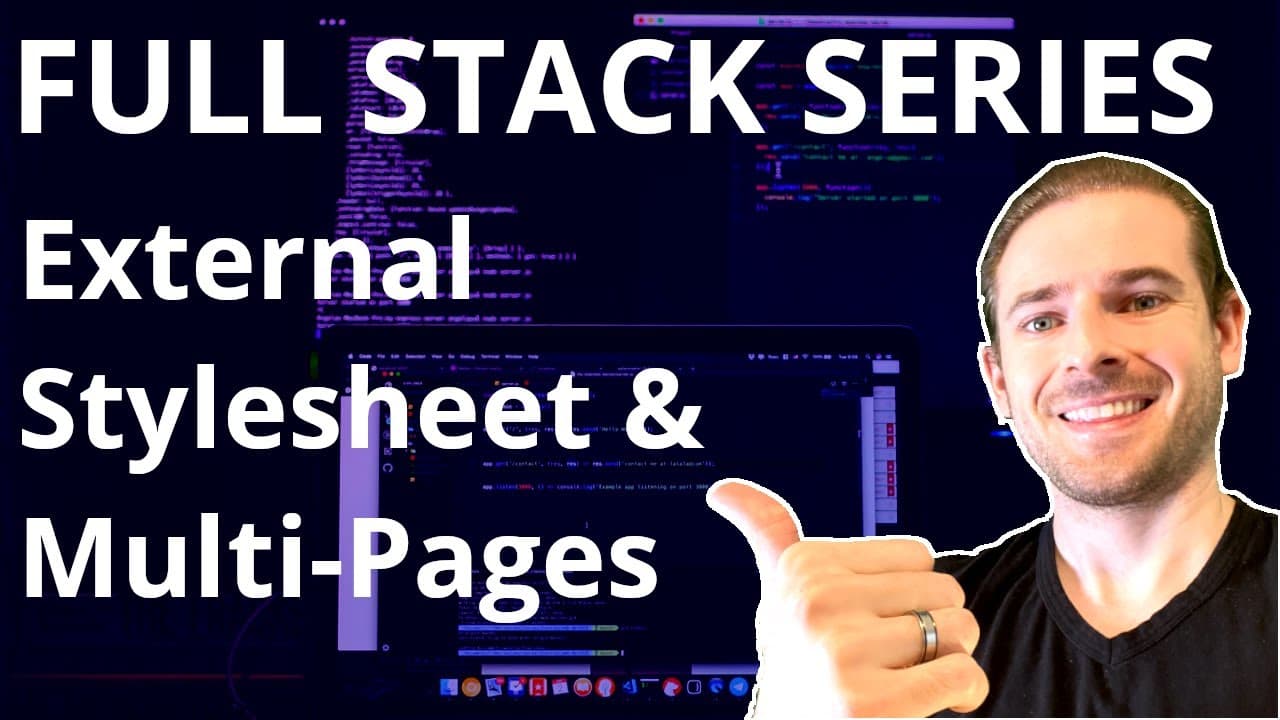
How to Create a Blog Layout with External Stylesheets
TL;DR
To create a blog layout with external stylesheets, structure your HTML using section and div tags for posts, manage images with local paths, and link multiple pages with relative paths. Establish a global stylesheet for consistent design across the blog, ensuring proper directory organization to fetch resources correctly.
Transcript
all right so in the last video we kind of talked more about inline styling how to pull the styling out into a style sheet like so and in this video i want to kind of continue to build upon that knowledge that you learned about html and css and just keep building out this blog page so down here where it says hello world let's just go ahead and remov... Read More
Key Insights
- ⚡ The importance of structuring HTML correctly using tags like section and div to improve blog organization is highlighted.
- 📁 Managing local images through proper directory paths ensures that they render correctly in the browser, avoiding common pitfalls.
- 👤 Creating separate HTML pages for different blog posts enhances user navigation and engagement with the content.
- 👻 Using a global stylesheet allows uniformity across multiple pages, which is crucial for professional web design.
- ⛩️ The tutorial emphasizes the need for responsive design, hinting at the possibility of addressing it in future sessions.
- 💄 The integration of JavaScript will help automate repetitive tasks, making website management more efficient.
- 😥 It’s pointed out that hard-coded text can become cumbersome, necessitating future lessons on data dynamic management and possibly server-side rendering.
Install to Summarize YouTube Videos and Get Transcripts
Explore YouTube Video Summarizer or Get YouTube Transcript Extractor
Questions & Answers
Q: What HTML tags are discussed for structuring a blog layout?
The tutorial emphasizes the use of div and section tags to organize the blog layout. The section tag is particularly useful for delineating different content areas, similar to how a div works. By properly using these tags, the blog becomes more semantically correct, improving both structure and accessibility for users and search engines.
Q: How does the video approach adding content to the blog posts?
The content for the blog posts is added using placeholder text, often referred to as "lorem ipsum," to demonstrate how the layout can accommodate real text. The tutorial also shows how to implement titles and links for "Read More" options that will direct users to full articles, which enhances the usability of the blog.
Q: What challenges did the tutorial face with image links?
The tutorial encountered issues when trying to load images from the internet directly into the HTML file due to security restrictions of browsers. To resolve this, the presenter opted to download images and store them in a local directory, ensuring they can be accessed through relative paths, thus avoiding unsolvable security issues.
Q: How is the global stylesheet integrated into the blog pages?
The video demonstrates integrating a global stylesheet by including a link to the CSS file in the head section of each HTML page. It uses a relative path to ensure that the styling is applied consistently across all blog pages, thus helping maintain a cohesive look and feel throughout the site.
Q: What future topics are hinted at for the tutorial series?
The series suggests covering JavaScript to facilitate dynamic content management, such as abstracting repetitive header code into functions. This is essential for better organization and efficiency in managing changes across multiple pages, especially in the context of creating an admin dashboard for easier post management.
Summary & Key Takeaways
-
The video covers the process of creating a blog layout using HTML and CSS, focusing on structuring sections for blog posts with appropriate tags like div and section.
-
Viewers learn how to manage images and content using local paths, emphasizing the importance of proper directory structure for fetching images in HTML.
-
The tutorial also introduces creating multiple pages, linking them with relative paths, and establishing a global stylesheet for consistent styling across the blog.
Read in Other Languages (beta)
Share This Summary 📚
Summarize YouTube Videos and Get Video Transcripts with 1-Click
Try YouTube Summary with ChatGPT & Claude or YouTube Transcript Generator
Explore More Summaries from Web Dev Cody 📚

Summarize YouTube Videos and Get Video Transcripts with 1-Click
Try YouTube Summary with ChatGPT & Claude or YouTube Transcript Generator