What Is Taste Perception and How Is It Processed?
TL;DR
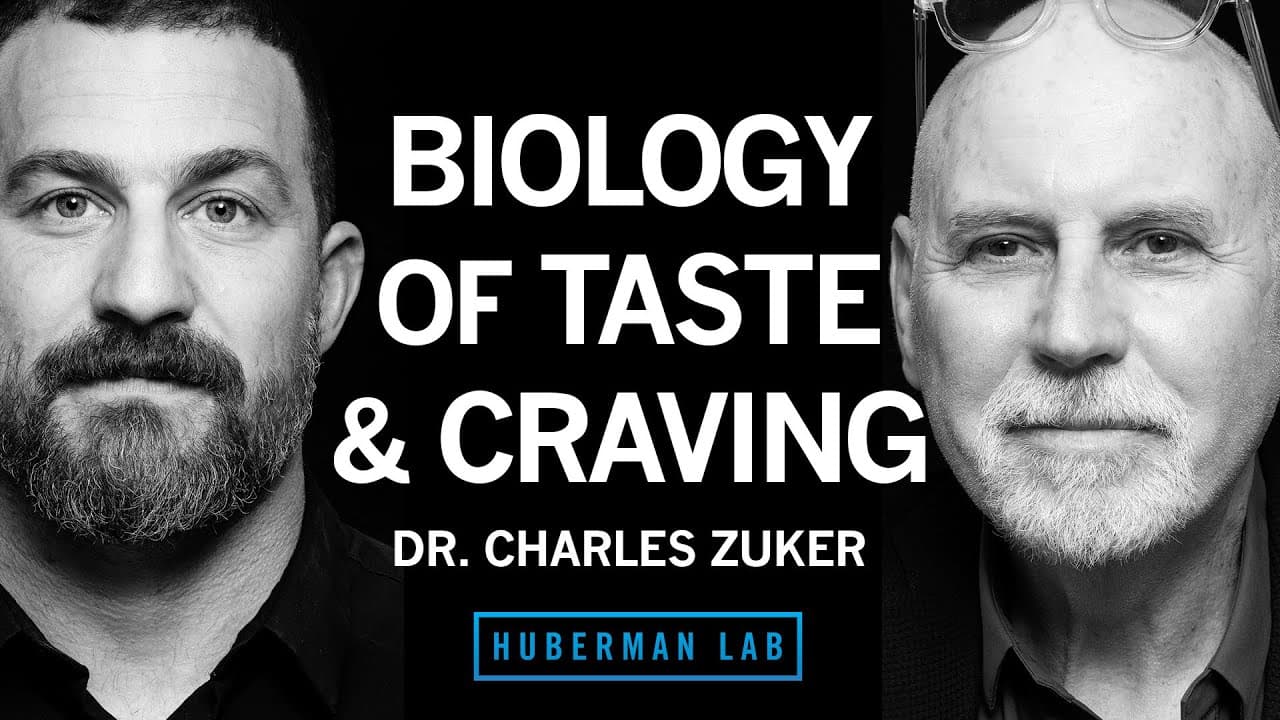
Taste perception is the process by which the tongue's taste receptors detect physical stimuli and convert them into neural signals for the brain to interpret. Different tastes, like sweet and bitter, have distinct identities and valences—sweet is appetitive while bitter is aversive. The brain processes these signals to establish taste preferences, which can change based on learning and experience.
Transcript
[light rock music] - Welcome to the Huberman Lab Podcast, where we discuss science and science based tools for everyday life. I'm Andrew Huberman, and I'm a professor of neurobiology and ophthalmology at Stanford School of Medicine. Today my guest is Dr. Charles Zuker. Dr. Zuker is a professor of biochemistry and molecular biophysics and of neurosc... Read More
Key Insights
- 🧠 Taste perception involves the conversion of physical stimuli into neural signals that are processed by the brain.
- 👅 Different tastes have predetermined identities and valences, with sweet being attractive and bitter being aversive.
- 👅 Taste receptors are located in taste buds throughout the tongue, and their signals follow a neural pathway to the brain.
- 👅 Taste preferences can be influenced by learning, experience, and associations with positive or negative valences.
Install to Summarize YouTube Videos and Get Transcripts
Explore YouTube Video Summarizer or Get YouTube Transcript Extractor
Questions & Answers
Q: How does taste perception work in the brain?
Taste perception involves the activation of taste receptors in the tongue, which send electrical signals to the brain. These signals are processed by separate groups of neurons that represent different taste qualities, such as sweet, sour, bitter, salty, and umami. The signals then travel through multiple brain regions, where meaning is imposed on the taste stimuli.
Q: Can taste preferences change over time?
Yes, taste preferences can change based on learning and experience. For example, some individuals may acquire a taste for bitter foods or develop aversions to certain tastes. The context and associations of a taste, such as positive feelings experienced after consuming a particular food, can influence taste preferences.
Q: Is there a connection between taste and smell in perception?
Yes, taste and smell are closely interconnected in the perception of flavor. Taste receptors in the tongue detect basic taste qualities, while olfactory receptors in the nose detect odors. The brain combines taste and smell information to create the overall flavor perception of food. This is why food may seem tasteless when the sense of smell is compromised.
Q: How does a one-time negative experience with a food impact taste preferences?
One trial learning can occur when a negative experience, such as nausea or discomfort, happens after consuming a particular food. This negative experience can create an aversive association with the taste of that food, leading to a preference to avoid it in the future. However, individual factors and context can also influence taste preferences, and tastes can change over time with repeated exposure and positive associations.
Summary & Key Takeaways
-
Taste perception involves the detection and processing of physical stimuli in the tongue by taste receptors.
-
Different tastes, such as sweet and bitter, have predetermined identities and valences, with sweet being attractive and bitter being aversive.
-
The taste system follows a neural pathway from the tongue to the cortex, where meaning is imposed on the taste signal.
-
Taste preferences can change based on learning and experience, and the brain can associate positive or negative valences with specific tastes.
-
The context, such as the smell and texture of food, can influence taste perception and preferences.
Read in Other Languages (beta)
Share This Summary 📚
Summarize YouTube Videos and Get Video Transcripts with 1-Click
Try YouTube Summary with ChatGPT & Claude or YouTube Transcript Generator
Explore More Summaries from Andrew Huberman 📚

Summarize YouTube Videos and Get Video Transcripts with 1-Click
Try YouTube Summary with ChatGPT & Claude or YouTube Transcript Generator